|
|
2013-11-26
My initial motivation was the need to resolve the tension between my rational and spiritual sides. Once that was eased my attention also turned to the civilisation-wide tension between science and spirituality.
There is so much needless suffering and destruction that arises from misguided sciences, misguided religions, the conflict between them all and the resulting confusions and dysfunctions that permeate our cultures and minds.
I really believe that this tension can eventually be resolved and out of that will arise a unified science/spirituality that will have a lasting positive influence on our whole civilisation; so profound that we can barely even imagine what it will be like from our current vantage point.
There are so many people contributing in different ways to this process of unification at present and my greatest hope is to serve some useful role in that effort...
"There is this hope, I cannot promise you whether or when it will be realized - that the mechanistic paradigm, with all its implications in science as well as in society and our own private life, will be replaced by an organismic or systems paradigm that will offer new pathways for our presently schizophrenic and self-destructive civilization." (Ludwig von Bertalanffy, Founder of general systems theory)
Schizophrenia seems to be a problem where there is no means for thoughts to be coherently 'grounded' in truth or reality, hence the tension of confusion builds upon itself creating more confusion and running out of control.
If the wikipedia description is interpreted as applying to our civilisation rather than an individual person it is surprisingly relevant to our current situation as reflected in politics, media, social breakdown, etc:
"Schizophrenia is a mental disorder characterized by a breakdown of thought processes and by impaired emotional responses. Common symptoms are delusions including paranoia and hallucinations, disorganized thinking and a lack of emotional intelligence. It is accompanied by significant social dysfunction. The onset of symptoms typically occurs in young adulthood." https://en.wikipedia.org/wiki/Schizophrenia
In the case of our civilisation I would propose that the core confusion is naïve realism, which gives rise to numerous other confusions such as exoteric religion, empirical science, mechanistic views of human nature, oppressive legal and social systems, entrenched struggle for dominance over others, etc. These reinforce the confusions and generate vast amounts of tension throughout civilisation.
I explain this in more detail in "Simplified Anatomy of the Global Systemic Crisis and How to Heal Civilisation" http://www.anandavala.info/STAR/anatomy.html
|
|
|
|
2013-10-29
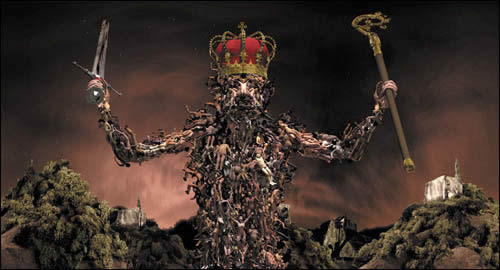
"... for some reason it appears we’ve given up our freedom to varying degrees in exchange for something. But in exchange for what? Security? Acceptance? Ease? It sure appears that way. But how did this come about? ... Looking at the contrived and extremely controlling political and economic structure of our planet’s various societies and the miserable state of most of its inhabitants, it’s clear something is seriously wrong." (Does Humanity Even Want Freedom? [link])
It is clear that in countless overt and subtle ways we are losing our freedom. Why is this happening? And importantly, how far might this proceed and how can we *effectively* resist it? More >
|
|
|
|
2012-05-09
This is an edited version of my comments from a recent conversation with a good friend Glisten (with extra comments to clarify a couple points). More >
|
|
|
|
2011-01-09
I was recently asked my opinion on the work and teachings of A.H.
Almaas, called the Diamond Approach. This article is not a general
review of his work, it is about something that I believe to be a
common misconception of spirituality, particularly throughout the
West (e.g. many proponents of Integral philosophy). However I found
in Almaas' work a clear and succinct expression of that
misconception, which has inspired me to say something about it now.
Firstly let me say that I am not familiar with Almaas or his work,
however after reading an
article on the core principles, written by him and an
interview with him I think I can sense the gist of where he is
coming from. He has many deep insights that suggest genuine
realisations, hence I suspect that many spiritual aspirants could get
some benefit from his fusion of depth psychology with aspects of both
dualist and nondual spirituality. That is all I have to say regarding
his work in general.
However, from my perspective and the perspective of Eastern
spirituality, he succumbs to a critical mistake. It is this mistake
that I will discuss here because it is very limiting and it is
prevalent and growing in popularity throughout the West.
I am talking about a misconception of spirituality that is based
on a partial realisation that is mistaken for a full realisation. The
seeker attains a degree of realisation, but mainly at an intellectual
level, which has not penetrated very deeply into their subconscious /
unconscious mind – they are often not even aware that it should
penetrate deeply or how deep it must go before one has full
realisation. Hence they believe themselves to be realised and to
understand the spiritual path, even whilst the bulk of their mind is
unconsciously dominated by the ego and still bound within the
illusory world that the ego imagines itself to inhabit and the
illusory life that the ego imagines that it is living.
The partial realisation results in thinking that could be phrased
as “Okay, so now I'm realised, but I'm still
me, an individual person in the world - so what now? How can this
realisation help me and others to lead a better, more spiritual life?
That is after all what spirituality is really about.” This
thinking results in the tendency to approach spirituality more as a
spiritually themed lifestyle for the ego as it lives its illusory
life in the world. Rather than seeking to deepen their realisation
and eventually attain full and complete realisation of reality and
truth, and thereby overcome the ego and all of its delusions; thus
traversing the greatest paradigm shift of all and coming to apprehend
and live in reality, which is radically different to what the ego
imagines. More >
|
|
|
|
2010-12-27
Recently I have been feeling harassed by someone and yesterday during
"peace negotiations" with them I realised why they were
behaving how they were, and I took a fresh look at myself and saw that I
also do a similar thing - it helped me to understand many things about
my life. I'll try to explain what I realised and what that meant to me.
Perhaps this insight might be of some use to you if adapted to your
life...
Firstly, I'll describe how they were behaving, at least according to my
perceptions. Have you ever known someone who came to look at you through
shit-coloured glasses and assume that was the real you? And then tried to
“help you” by seducing you and others to see you in that shitty way? And
they did all this in the name of Love? And they misunderstood your attempts
to clarify things as defensiveness? And they remain staunchly self-righteous
– believing themselves to be a beacon of loving kindness?
I realised that I also do this to others by looking at aspects
of society (such as propaganda, entrenched confusions, self-reinforcing
closed loops of hidden assumptions, outmoded paradigms, etc) through
shit-coloured glasses and stating my views rather harshly at times. I
do this out of love for the victims of illusion and its resulting
suffering, the oppressed, the deceived and the exploited. I also do
it out of love for truth, reality, decency, honour, peace and
health. However this is only one view and most people see things
differently, for instance those seeking comfortable illusions or
distractions, those seeking power and dominance, those seeking mayhem and
chaos, etc. It is a subtle trap to fall into one-sidedness and to denigrate
the ways of others. Even if one knows that those ways are destructive and
dangerous it is not productive to denigrate them. Even if those
following those ways (e.g. authoritarians, mass media, materialists,
egotists, fanatics, etc) routinely denigrate other ways.
As part of a propaganda campaign it is standard practice to spread
a one-sided view and to denigrate other views, however this is really a
form of cultural violence, and violence begets violence. If one truly
believes that it is truth that will set us free, then one must accept
all ways no matter how abhorrent they may appear. One should not condone
them, but one shouldn't react with hatred towards them. Instead
accept them as part of what is and find ways to help the whole situation
evolve towards a healthier state. Rather than focus on attacking the
negatives one can focus on nurturing the positives.
Of course, this doesn't mean that I should never warn people of dangers.
That would be irresponsible, it just means that there are times, places and
ways of doing this. I must also learn to accept that many people will blindly
wander into suffering and despair and there is nothing that I or anyone else
can do about it. Making regular snide remarks and disparaging comments about
these destructive paths is not going to turn anyone away from them, it will
only make people bitter towards me and more entrenched in their ways, whilst
at the same time corrupting my expressions and obstructing my communications
with others.
Overcoming negative reactions is not easy though, there are subtle
mind-games that must be overcome. I have found that in myself some of
these are related to the activities of the shadow, that part of ourselves
that we habitually deny even exists. That is what this article is about... More >
|
|
|
|
2010-12-16
Hello again everyone :)
I hope you have all been well!
I have been away for a while, maintaining abstinence
from all in-depth discussions in order to still the mind and focus
it. I'm not about to dive back into the fray of online discussions
but I have re-opened my facebook profile for now and will generally
hover on the periphery of cyberspace for a while. For those of you
who are interested, I'll share a little of what has transpired for me
over the past couple of months.
I've journeyed far and wide in a metaphorical sense, stilling the
mind to explore deeply into certain issues, as well as going beyond
the realm of ideas and emotions (the symbolic content of awareness)
to penetrate deep within consciousness itself (the stream of
awareness). Delving down through the layers, from the conscious mind,
down through the unconscious and into the psychosomatic interface
between body and mind. From this vantage point some very interesting
work has been done and will continue. However this is getting ahead
of myself, I'll back track and tell a little story, which also sheds
light on information wars, propaganda, oppression, authoritarianism,
effective resistance and other issues relevant to our times. More >
|
|
|
|
2010-07-17
@markjbradford quoted @GrahamHill, which was retweeted by
@Technoshaman
I totally disagree with this, thus I responded to them saying: More >
|
|
|
|
2010-07-13
I see two approaches to this issue and will introduce them by
briefly describing the context and development of each, showing how
one leads into the other. I have endeavoured to keep this as simple
and concise as possible for a subject of this depth. More >
|
|
|
|
 2010-07-13 2010-07-13
From a response to a Facebook
conversation about the issue of
action, inaction, non-action, ego, doer, doership, etc.
I just opened the Bhagavad Gita at random and it opened at chapter
3, "Karma Yoga: The Way of Action". The entire book is
relevant to this issue however I will quote extensively from just
this chapter because synchronicity is suggesting that it may be
particularly relevant.
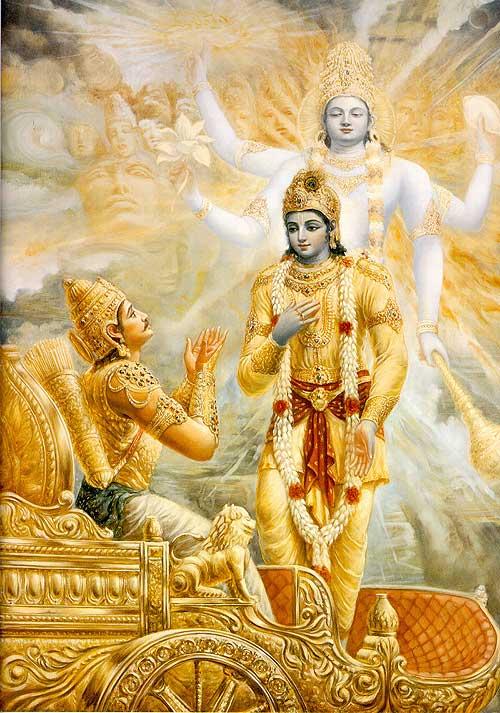
First some background. Arjuna is a prince of a great kingdom that
has disintegrated into two warring factions. Krishna, the avatar of
the Supreme Godhead is serving as Arjuna's charioteer. A great war
has arisen and Arjuna is called upon to lead an army to fight his
kinsmen, his brothers, his teachers and those who he loves and
respects.
On the eve of the battle, in the midst of the two armies, Arjuna
breaks down. "O Krishna, when I see these people, my kinsmen
assembled here, eager for battle, my limbs sag, my mouth feels
parched, my body quakes, and my hairs stand on end... I am unable to
stand still and my mind is in a whirl. I see adverse omens, and do
not forsee any good from killing my own kinsmen in battle... These I
would not wish to kill though they may have risen to kill us. Even to
obtain the kingdom of the three worlds (outer, inner & inner
most); far less for the sake of the earth...."
Krishna's first reply is "O Arjuna, from where does this
disgraceful conduct come into your mind in this hour of peril? It is
unknown to the Aryas (awakened ones), does not lead to heaven, and
brings one disrepute."
Krishna goes on to explain the entire nature of reality, the
cosmic process and its projection upon the earthly plane, the fact
that none there on the battle field are actually alive to begin with
so they cannot be killed, that one must fulfil one's dharma and enact
one's innermost law, which is the law of the cosmos. Anything else is
futile and ruinous. More >
|
|
|
|
2010-07-10
"The person is merely the result of a misunderstanding. In
reality, there is no such thing. Feelings, thoughts and actions race
before the watcher in endless succession, leaving traces in the brain
and creating an illusion of continuity. A reflection of the watcher
in the mind creates the sense of 'I' and the person acquires an
apparently independent existence.
In reality there is no person, only the watcher identifying
himself with the 'I' and the 'mine'. The teacher tells the watcher:
you are not this, there is nothing of yours in this, except the
little point of "I am", which is the bridge between the
watcher and his dream. "I am this, I am that" is dream,
while pure "I am" has the stamp of reality on it.
- Sri
Nisargadatta Maharaj, I am That http://bit.ly/bvBQYR
[full text pdf]
-=#|#=-=#|#=-=#|#=-=#|#=-
"So long as people do not understand the true nature of the
objective world, they fall into the dualistic view of things. They
imagine the multiplicity of external objects to be real and become
attached to them and are nourished by their habit energy. Because of
this system of mentation, mind and what belongs to it is
discriminated and is thought of as real; this leads to the assertion
of an ego-soul and its belongings, and thus the mind-system goes on
functioning."
- Lankavatara Sutra http://bit.ly/azCaUY
[full text pdf]
-=#|#=-=#|#=-=#|#=-=#|#=-
"When the television set is burned or destroyed, will the
people in the movie feel the pain and die? You have no form, no
shape..."
- Sri Nisargadatta Maharaj, Seeds of Consciousness
-=#|#=-=#|#=-=#|#=-=#|#=-
"What is it that had birth? Whom do you call a human being?
If, instead of seeking explanations for birth, death and after-death,
the question is raised as to who and how you are now, these questions
will not arise...
The body is born again and again. We wrongly identify ourselves
with the body, and hence imagine we are reincarnated constantly. No.
We must identify ourselves with the true Self. The realised one
enjoys unbroken consciousness, never broken by birth or death - how
can he die? Only those who think 'I am the body' talk of
reincarnation. To those who know 'I am the Self' there is no rebirth.
Reincarnations only exist so long as there is ignorance. There is
no incarnation, either now, before or hereafter. This is the truth."
- Sri Ramana Maharshi
Again for emphasis...
"There is no incarnation, either now, before or hereafter.
This is the truth"
-=#|#=-=#|#=-=#|#=-=#|#=-
“Greatest assumption in human history: The existence of a
personal identity. 99,99% of our global communications refer to a you
and a me, but no one actually ever found an 'I' to exist anywhere!
All our thoughts, emotions and words refer to something no one has
ever been able to confirm to even exist. HA HA HA!! It's hilarious!!
:D
And it's very very sad at the same
time! The single cause of our current state as a species. We're all
like sheep, following the herd, assuming what everybody else has also
been taught to assume. Time to wake up my friends.” (Bentinho
Massaro) ... More >
|
|
|
|
2010-07-09
Quote from the Lankavatara Sutra http://bit.ly/azCaUY
"So long as people do not understand the true nature of the
objective world, they fall into the dualistic view of things. They
imagine the multiplicity of external objects to be real and become
attached to them and are nourished by their habit energy. Because of
this system of mentation, mind and what belongs to it is
discriminated and is thought of as real; this leads to the assertion
of an ego-soul and its belongings, and thus the mind-system goes on
functioning. Depending upon and attaching itself to the dualistic
habit of mind, they accept the views of the philosophers founded upon
these erroneous distinctions, of being and non-being, existence and
non-existence, and there evolves what we call false-imaginations...
False-imaginations rise from the consideration of appearances;
things are discriminated as to form, signs and shape; as to having
colour, warmth, humidity, mobility or rigidity. False-imagination
consists of becoming attached to these appearances and their names...
The five sense functions and their discriminating and thinking
function have their risings and complete ending from moment to
moment... By setting up names and forms greed is multiplied and thus
the mind goes on mutually conditioning and being conditioned. By
becoming attached to names and forms, not realising that they have no
more basis than the activities of the mind itself, error arises,
false-imagination as to pleasure and pain arises, and the way to
emancipation is blocked...
By the cessation of the mind-system as a whole is meant, the
cessation of discrimination, the clearing away of the various
attachments, and, therefore, the clearing away of the defilements of
habit-energy in the face of Universal Mind which have been
accumulating since beginningless time by reason of these
discriminations, attachments, erroneous reasonings, and following
acts... Getting rid of the discriminating mortal-mind is Nirvana.
But the cessation of the discriminating-mind cannot take place
until there has been a “turning about” in the deepest seat of
consciousness. The mental habit of looking outward by the
discriminating-mind upon an external objective world must be given
up, and a new habit of realising Truth within the intuitive-mind by
becoming one with the Truth itself must be established.... With the
ending of pleasure and pain, of conflicting ideas, of the disturbing
interests of egoism, a state of tranquilisation will be attained in
which the truths of emancipation will be fully understood..."
(Lankavatara Sutra http://bit.ly/azCaUY
)
|
|
|
|
2010-07-08
@notthisbody how do memetic algorithms relate 2
collectiveIntelligence?
Related questions are, What is a meme, memeplex,
mind, collectiveMind?
A meme is a cognitive virus that breeds via repetition.
Symbolic expressions are its outer form & ideas, beliefs, etc
are its inner form.
A memeplex is an integrated self-reinforcing network of
memes, for example 'modernism' & 'Hinduism' are two memeplexes.
A mind is a memetic ecosystem where memes & memeplexes
compete for dominance. The ego / personality is the 'mainstream'
memeplex.
When minds communicate they interlink & form a
multidimensional socioCognitive landscape - a larger memetic
ecosystem - a collectiveMind.
When the ideas that we think come filtered through our
socialNetworks we are experiencing reality through the lens of the
collectiveMind.
When we share ideas with others we are contributing to the
reality experienced by the collectiveMind.
Culture is collectiveIntelligence in action.
More tweets from @anandavala at http://twitter.com/anandavala
|
|
|
|
2010-07-04
- One does not become enlightened by imagining figures of light, but by making the darkness conscious (CarlJung)
- Our present ego-feeling is a shrunken residue of a much more inclusive all-embracing-feeling, a more intimate bond (Freud)
- Freud gave us insight/demonstration that the ordinary person is a shrivelled desiccated fragment of what a person can be (RDLaing)
- For man has closed himself up, 'till he sees all things thro' the chinks of his cavern (WilliamBlake)
- The 'I' that I think I am is a self image formed in the mind. I am not what I think I am. So what am I? That is THE question!
- When a thought is born you are born. You think there's 'somebody' who feels your feelings; that's the illusion. (UGKrishnamurti)
- Nothing keeps you from liberation except fear. You are afraid of being impersonal, of impersonal being. (Nisargadatta)
- That which is the subtle essence, in it is the self of all that exists. It is the True. It is the Self & thou art it. (Chandogya Upanishad)
- Imagine ur a sentient being within a VR, it would seem physical, you would seem separate, yet the true agent behind every action is the CPU.
- In this VR scenario computation "is the self of all that exists. It is the True. It is the Self & thou art it. (Chandogya Upanishad)
- RT @petervan Virtual Reality you can reach out and touch http://bit.ly/cJS08I When virtual reality feels real http://bit.ly/dtTvxA
- In tech VR we look from the outside in but in cosmic VR we are emergent from the information process, which animates every thought/action.
- Quantum Mechanics also provides an information theoretic analogy for the nature of reality
- The "physical universe" is analogous to a VR animated by "universal consciousness" and it evolves as a unified holistic process.
- Hence - events happen, deeds are done but there is no individual doer of any deed (Buddha)
- The objects we experience are objects-of-perception; the contents of awareness that are imagined to exist "out there" due to naive realism
- Hence - "with our thoughts we make the world" (Buddha)
- Signs of an emerging paradigmShift http://bit.ly/dfxL4R : quantum mechanics categorically proves naive realism is a false perspective.
- For details of QM disproof of naive realism search for "Stern Gerlach" http://bit.ly/cCOjTx or see relevant chapter of http://bit.ly/9XhElB
More tweets from @anandavala at http://twitter.com/anandavala
|
|
|
|
2009-11-11
Personality
In general a personality can be described as an integrated set of
modes of behaviour through which a system interacts with an
environment. Each system has a range of potential behaviours and a
set of stimuli / response associations. A stream of particular
behaviours arises in response to a stream of events, which are part
of an experiential interaction with some environment. Within this
stream of behaviours and associations there are patterns and this set
of patterns can collectively be called the generalised personality of
the system. Different 'modes' of behaviour correspond to different
sub-personalities.
Ego
The ego is a point of identification. It is a simulacrum of the
system symbolically represented within a complex system's stream of
consciousness. It functions as a point of self-reference and
self-control.
Ego + Personality More >
|
|
|
|
2009-08-28
Extracts from two different Satsangs...
We are nothing. You have no reason to exist. As a matter of fact,
you do not exist. (Laughter) You have never really existed. It is all
a cosmic joke. There is no reason for you to be alive and to be here.
This may sound like an insult – it is! (More laughter) But it is
the truth and the truth hurts.
You may think you are important, that you have come to earth to
accomplish great deeds, or to get enlightened. That is not true. The
enlightenment is already here and it doesn't need you. You are not
wanted by anything or by anybody. (Laughter) You are a complete
failure. (Loud laughter)
In truth you do not exist. The illusion of your existence makes
you think that you are important, that you are somebody. That is why
we talk about being nobody so much; there is no body.
(It's All a Cosmic
Joke, Robert Adams) More >
|
|
Page: 1 2 3 Older entries >> |
|
