Gerald Vest    
 MSG Hunt tells his story about War & PTSD/TBI0 comments
picture23 Jan 2010 @ 18:54
PTSD occurs when a person has experienced, witnessed, or has been confronted with a traumatic event, which involved actual or threatened death or serious physical injury to themselves or others. At which point they responded with intense fear, horror or helplessness. These diagnostic criteria for PTSD falls into three groups and are summarized as follows:

1)Re-experiencing the trauma (nightmares, flashbacks, and intrusive thoughts).

2)Numbing and avoidance of reminders of the trauma (avoidance of situations, thoughts and feelings, etc.).

3)Persistent increased arousal (sleep difficulties, irritability, anger outbursts, startle response, etc.). Downrange to Iraq and Back by Bridget C. Cantrell, Ph.D. & Chuck Dean


More than this, however, is the fact that a physical injury affects the brain with these long, multiple tours; long days and nights while maintaining an acute awareness with all of the senses. And, emotions are 'wired' while performing military functions to prepare for action, secure the perimeter, protect your team and "look out" for potential dangers with sustained alertness without having the needed REM state sleep for recovery.

The concussions by IED's cause Traumatic Brain Injury (TBI) and are also a devastating blow to our soldiers' brains that have enourmous inpact on the central nervous system and impacts memory of short term activities and events. So many of our Warriors have enormous headaches and Migraines as well. So many of our Warriors also have Sleep Apnia that can be a career buster. "Big" Joe will describe his experiences and how he has dealt with his pain, suffering, transformations,ups and downs, relationships, rehab, and more. Thank you, Joe.

***************************************

I am proud and honored to post this article by MSG Joe G. Hunt, SR.(Ret.) who tells his story about some significant and traumatic events that he experienced during 3 tours in Iraq and his 6 month recovery in our Ft. Bliss Restoration and Resilience Center. I had the good fortune to be "Big" Joe's primary therapist during this time and can affirm that he did everything possible and all that was offered in our treatment program and more, to recover and complete his 34 years as a great Warrior in our US Army. This service member has written his story to help brothers, sisters and others in our society understand and appreciate what soldiers often experience during the wars. We will never know the whole story of war and all of the trauma, sleepless nights, horrendous nightmares and all of the other symptoms that prevent our wounded warriors from returning home and joining their families with comfort, security, and joy. In fact, it seems to me that it is a miracle that any of these families make a successful recovery--our soldiers are no longer the same persons they were went they went to War--families no long recognize their loved ones and those they left behind often find them as strangers to re-discover.

One more reminder for all of us. Don't let our Iraq and Afghanistan Warriors return home without the recognition that they deserve. They did not start these wars or continue them--they did their duty the best they knew how. Welcome them home with the respect and dignity that they deserve and help them get the best services possible to help them heal and recover from all of these injuries, wounds and trauma. Darryl Worley, "Coming Back from the War" describes this experience vividly in his great ballad: [link]

Jerry Vest, LISW, Holistic Health Social Worker

*****************************************

This is my story and I give my authorization and permission for Jerry to post this on his Log. I was a patient in the worlds primere PTSD treatment center and I waive my rights to privacy and confidentiality so that others will seek treatment and help for these invisible injuries. No one should ever feel guilty and wrong for taking advantage of services that can help them return to their families, to active duty or get medically boarded.

My primary counselor from the R&R program, (Restoration & Resilience Program), Jerry Vest asked me to write about my deployments to Iraq and the effects that those three deployments have had on me and my family functioning in daily activities. First let me give you some background as to who I am. I spent 34 years of my life doing a job I have loved, being a soldier in the US Army. My rank at my retirement is MSG/ E-8. I have been an active duty soldier, Oklahoma National Guardsman, Army Reservist. During my 34 years of federal service I have worked daily in the Army and had several civilian jobs.

On December 25, 1990 I and my unit left Nurnberg, Germany to enter Operation Desert Shield. The ground war lasted 5 ½ days and no real major problems for me existed at the completion of that action. Yes, my humvee was fired upon by a Russian T-72 tank and I watched rounds drop 500 meters off our perimeter. Yet I truly believe I was okay when we arrived at Bassara highway, (highway of death) in Kuwait. The next morning I and my driver were tasked to help clear the highway so Gen Schortzcroft could land for the signing of the peace treaty. We were to put yellow flagging tape around vehicles with no bodies and red flagging around vehicles with dead bodies in them. This was absolutely the worst two and half days of my life at that time. Me and my driver vomited more times than I can remember and saw some of the most grotesque scenes imaginable. Bodies and vehicles were still smoldering, some were torn apart so bad you couldn’t tell their sex, some were charred so bad that they had broken in half. The smells, the sights, were more than I could handle. I returned back to Germany to my wife and son only to isolate from them, get very angry and blow up for nothing, and the worst was the nightmares. I had been a Medic early in my career and knew the symptoms of PTSD but missed them terribly for myself.

After returning to the states at Ft. Sill, Ok I got off of active duty and entered the Oklahoma National Guard. I had a civilian job and was not doing well at all. I and my wife had multiple problems and I thought I was crazy, (truly). The Oklahoma VA gave me all kinds of medication and life started going downhill fast. Me and my wife separated in November 1995 and divorced January 1996. I moved to Texas, (Houston) and started working in a totally different field. The Houston VA was no help with my symptoms and diagnosed me as Major depressive with bipolar symptoms and chronic Post Traumatic Stress Symptoms (PTSS). A lot more physical problems surfaced and I continued to get worst. In 1997 I started community college with the intentions of becoming a Licensed Chemical Dependency Counselor. I graduated in 1999 with honors and started interning. All the time going to the VA and having anger outburst and the nightmares got worst.

I have to go back and tell a real part of my life now so that the understanding will become really clear to you. On March 5, 1986 I entered a Residential Treatment Facility in Nurnberg hospital for the treatment of alcoholism. Since that day until this day I have not had a drop of alcohol. This March 5th will be 24 years. I needed to tell you this for reasons that are associated with soldiers with PTSD and TBI. Drugs and alcohol are a way of coping in a society that doesn’t have a clue, especially the ones closest to you. All the time from my return from Desert Shield, Desert Storm, and The Kurd Relief until my completion from college and interning drinking and doing drugs were not an option for me. Going to AA saved my life literally. I knew I was crazy, I didn’t belong, feel comfortable, or feel loved by anyone at the same time I didn’t want anyone to know me or get close. This was my double edge sword.

Things actually started getting better in 2001. I was working as a case manager for an HIV/AIDS outreach center and was actually enjoying it. The center after 9/11 lost a lot of its funding and we moved into a church that had a food pantry for my clients. I worked extensively with the pastor and my guilt got to a point that I was baptized and became a member of the church. I met my wife now at the church and we were married September 21, 2002. This whole time I was also in the Army Reserves. Six months after my marriage I was put on orders for Operation Iraqi Freedom. I left for Ft. Hood, Texas and came home on weekends I could and left for Iraq on January 4, 2004. The nightmares, anger, isolation, hypervigilence all were becoming even worst than before.

I arrived at LSA Anaconda Balad, Iraq with mixed feelings and emotions, but as crazy as this sounds I hadn’t felt as comfortable with myself since before I went to the Gulf war. Several things happened while I was at Anaconda, first being on a convoy and having an IED go off about five vehicles in front of me and my driver. No one got hurt, but it was a baptizism under fire thing. We came off the road with a high that no drug could ever match. It was and incredible feeling, even when nothing happened we would get this high. Second being at LSA Anaconda the Stars and Stripes newspaper dubbed Anaconda, “Mortaritiville “as we got hit with rockets or mortars everyday. Three to six at a time, I was knocked to the ground more times than I can remember. I received a Combat Action Badge for being engaged by the enemy under indirect fire. I and a 2nd Lt were on our way to the base theater to eat lunch one afternoon when a 127mm rocket hit and knocked us to the ground. I was stunned and dazed but his mouth was moving and everything was in slow motion. His voice sounded like the voice in Peanuts, “ wha,wha,wha,wha “, I don’t know how long it was but I heard a pop in my head and I could hear and everything was back to normal sort of. I had an intense headache the rest of the day and evening. No blood or any outward signs of injury were present not even from my ears. The headache would come and go and every attack after that one I would get real angry and start talking to my self. Once on a convoy a RPG round flew right in front of our windshield and landed about 50 meters from us as we were driving down the road. My gunner peed her pants. Other things happened but not as bad as the ones mentioned.

I returned back to Ft. Hood on 14 Dec 2004 and was very anxious, scared to return. I didn’t know how I was going to react with life and my wife. After six months things were okay I guess. Nightmares would come and go and most I couldn’t remember. I would be walking nothing going on and all of a sudden I would see a flash of bright light. It would scare the crap out of me and I would start breathing fast and my palms would be sweaty and then would go away after some time passed. All this time I couldn’t understand what was wrong with me. Having an Associate of Applied Science of Mental Health Technology degree only compounded my feelings. I had enough mental health education to be very dangerous. My self diagnosis was becoming obsessive. I finally diagnosised myself as truly crazy, just nuts and should be locked in a rubber room. For one year after returning I did not work or see any doctors. In April of 2006 I received orders to go back to Iraq. In some ways I was relieved but still scared. I had angry outburst against people and senior officers before leaving and I look back now and see were somebody should have stepped in and said go get some help. But no one did and I thought life was normal in a lot of ways. Me and my wife had some issues upon my return but nothing really major. I could not argue or debate anything. It was either relaxed or un-believably angry conversation from my end. I could see the fear and hurt in her eyes yet couldn’t do anything about it which made me even angrier. I only wanted some one to understand what was happening. Prior to leaving I couldn’t sleep and emotionally I was a wreck.

We arrived once again at LSA Anaconda on August 24, 2006 and I was home once more. I can’t describe the feeling I felt once I stepped off the plane. I still had panic attacks but not near as many. The Army in all of its infamous wisdom really didn’t have a job for me when we first got to Anaconda. So I started doing things for different people just to have something to do. Finally I met a 1LT that was Commander of a National Guard truck company from Arizona. She needed a Convoy Commander very badly. So I said yes and off I was. Again coming off the road was such a high. When things would happen there would be an even greater high if that’s possible. After being their for about 6 months, one night the convoy in front of us stopped in area 49 on MSR Tampa. Area 48 & 49 were known to be ambush sights or ied’s, efp sights. Anyway, the convoy in front of us started receiving fire from the passenger side of the road behind a berm. I got out of my vehicle and walked to the humvee that had been hit hard. I started giving medical support and gave a situation report to the convoy commander. They started moving and my truck came by and I got in. It was like everything that happened was in slow motion. I could hear rounds whizzing by my head but it didn’t bother me at all. That’s the only real incident that happened during that time. We still received mortar and rocket fire at the Forward Operating Bases we would stay at. I was relieved of my duties and put at Balad hospital as a patient liaison for injured and sick soldiers. This was hell. We would take the litters off the helicopters and take them to the ER. We would identify the person and contact their unit and give them an update. Sometimes the head Nuro-Surgeon would look at me and say palliative care. Then I would take the soldier to ICU 1 in the back and unplug everything and hold his hand and wait for him to die. Once that happened I would drape an American flag over the body and take it to the morgue for processing. I would be with the body until mortuary affairs would show up to take the body to the collection point. This was hard and I got full in my heart real quick. I had no room for anything else, nothing. Then Gabby Bell came into my life and in a world of chaos and craziness she made the world right. This baby girl I helped take off the chopper one evening thinking that it was empty. But under some blankets was this brown eyed little girl. She had been hit in her abdomen with shrapnel from an ied. Both her parents were killed. She would not go to sleep one night and I heard her crying. So the nurse gave her to me and I took her down to my desk and held her while I worked. She slept so peacefully. She would give this little grin just for a moment. So cute, a blessing for all of us. I tried my hardest to adopt her and take her back home with me. But the Iraqi government wouldn’t allow it. One day this Iraqi woman shows up and says she is her grandmother and takes her away crying. Boy, I cried like crazy and got extremely angry. I didn’t go on the Iraqi floors or have anything to do with them anymore. To hell with them. My time ended and I came back to Ft. Hood, Texas on August 2, 2007. My eyes hurt from all the green that day and I was sweating from the humidity, but yet I was shivering from being so cold. Completely strange, which didn’t help my home coming at all? The Army saw I had 18 years of active federal service and sent me to Ft. Bliss, Texas for two years to retire. I and my wife had a home in NW Houston and so I went to Ft. Bliss alone.

Once at Ft. Bliss I was assigned to B Co WBAMC, thank God the hospital SGM put me at the Wounded Warrior Battalion as patient liaison NCOIC. I was a ticking time bomb waiting to go off. I couldn’t sleep; large crowds scared the hell out of me. I had no interest or hobbies and everywhere I went I was always watching for something to happen. I could see flashes of bright lights and smell war everywhere. One day some soldiers from this place called the R&R center came to the battalion to tell the wounded soldiers about the R&R program. I met a lady named Sharon and she invited me to the center for a visit. A week later I show up and before I know it I’m crying my eyes out and being admitted into the R&R program. It was the best thing that could have happened for me. People actually knew I wasn’t freaking nuts or trying to get out of doing something or make a buck off the government. Group counseling was a dream comes true for me. I heard things that happened to me and heard the same crazy things that I saw, smelled and did. I know for a fact that the R&R program saved my life. My primary counselor would listen to me intently and have me talk to a chair with no one in it, (The Gestalt Therapy), if you have never done that you ought too! My secondary counselor knew of my AA background and had me write a lot. I didn’t want to but I did. Both counselors saved me from my self. I had zeal like I hadn’t had in along time. I really and honestly wanted to get well. I would force myself to go to the malls during very crowded times just to deal with it. I always took someone with me never went alone. Some days were really great others were not so great, but the gap between worst and best was shrinking. The group counseling was really good for me as it reinforced to me that I wasn’t alone or crazy. The latter being near and very dear to me as you can realize.

The R&R program was 6 months long and intensive which I believe it should be longer. I know we are trying to get soldiers back in the fight and understand that. But after I left the program I regressed a lot. I was working at McGregor Training Base Complex at the Mayor Cell as the evening shift NCOIC. There were times I would panic for absolutely no reason at all. Right after leaving the R&R program I started seeing a doctor for TBI (Traumatic Brain Injury). He put me on zanax 1 mg for anxiety and to help with sleep. I had x-rays and an MRI of my head and he diagnosed me with TBI post concussion syndrome axis level I. My symptoms are memory short term recall, headaches, dizziness, some tendinitis in my ears ringing, irritability, concentration, frigidity, and anxiety. I spent a lot of time with a speech therapist for memory and concentration which helped considerably. After I left the R&R program I regressed and I know it was from just starting to feel comfortable and then you leave. If the program was a year long it would provide ample opportunity to relax and deal with everything. The families are really left out in the dark cause all the treatment is for the soldier. Arguing with your spouse every night while trying to relax in the daytime is very difficult even for someone who doesn’t have PTSD, I will never be the same person as I was before but hopefully I will get close. I’m now retired and at home in NW Houston and trying very hard every day to be the best I can be. I and my wife are communicating and working through issues. She has phone numbers to call any of the therapist or even my TBI doctor whenever she feels she needs to. My memory is my biggest problem today. I can’t talk clinically anymore because I can’t remember simple words when talking and it makes me sound like a complete idiot. I hope I have given you enough background and answered a lot of questions you may have about PTSD and TBI from a soldier’s perspective. I am patiently waiting my award letter from the VA with my compensation percentage so I can start going to the doctor again. The feelings of hopelessness, helplessness, and extreme guilt are fading each day. Depression seems to not be their quite as bad as it was. But the tools I have learned from the R&R program work and I still use them.

Thank you all so much.
 More >

 Soldier tells of his Traumatic Brain Injury in Iraq by IED4 comments
picture20 Dec 2009 @ 16:52
If you're a veteran of Operation Iraqi Freedom (O1F) or Operation Enduring Freedom(OEF), we welcome you home and sincerely thank you for the time you served. Words can't convey the deep appreciation that we and other Americans across the country have for your valor, commitment, and hard work. While in harm's way, you endured many hardships, from constant threats and unpredictable crises to extreme temperature, chaotic operations, absences from loved ones, and uncertainty about your return home. You have much of which you can be proud. Courage after Fire by Keith Armstrong, LCSW/Suzanne Best, Ph.D./Paula Domenici, Ph.D.

One of our soldiers visited my website and forum and said that he would like to be a guest presenter and tell one of his stories about being injured by an explosive device. This great soldier, like many others in our program, are now working to recover from this blast, PTSD, and other injuries.

These injuries, often accompanied with Post Traumatic Stress Disorders (PTSD), are often very difficult to diagnose and treat, yet so many of our soldiers have enormous headaches and now have short term memory loss; sleepless nights; anger episodes; hypervigilence; anxiety and panic attacks; and, other physical, mental, emotional, social and spiritual injuries.

I am not using this Warrior's name, even though he has given me authorization, as I wish to protect his privacy and confidentiality as a patient in the Warrior Transition Battalion. It is our hope and our interest in informing others about these 'invisible injuries' so that these great soldiers will be treated with the respect that they deserve and given every possible treatment with rehabilitation services to help them recover and carry on and carry out their lives as civilians in our society that is often described as indifferent and judgmental. Many of our soldiers will return fit-for-duty; however, those who are unable, must be supported when they return to civilian life.

This soldier is very intelligent, brave, resourceful and eager to get better so that he can go to college and join a profession of his choice. Let's get behind our Warriors and thank them for their service and for their courage. Welcome our soldiers home with the respect and dignity that they deserve.

Jerry

Dear Colleagues and others,

I was deployed to IRAQ, the first time from Feb. 2004 until Feb. 2005. I was involved in several engagements. The methods of engagement ranged from: small arms fire; IED's; mortars and everything in between. Looking back now on my first tour there are at least a handful of times where I was suffering from mild concussion symptoms. Most of us, if not all of us, had something wrong with us, but we just kept driving on and pushing through it. Because of our small size we didn't have the luxury of extra men/women and down time like infantry platoons. I was in C co. 1-77AR, 3rd platoon out of Schweinfurt, Germany and my platoon was a tank platoon converted to one of those needed by the Army. We pulled every kind of mission you could think of. All the while being told we were soldiers first then our MOS specialties were considered later, if at all.

One of those missions was VIP escort and drop off, and it was one one of these missions that my life would be changed forever. It was late night sometime in Dec. 04 when we were tasked to pick up SGM T........ from LSA Anaconda and drop him off at FOB Paliwoda. I was the last truck in the column that night and it didn't have gypsy racks or anything just the standard shield and 240 machine gun that came with the truck. We were driving North up route Linda just past Yathreb when IED struck my vehicle--peppering the passenger's side rear of the truck with shrapnel and blowing out the tires. The percussion of the blast rendered me unconscious, and when I awoke in a dazed state, I remember a bright light and an intense pressure all over my body but all other events of that incident are fuzzy.

I have little to no recollection of the rest of my time in Iraq after that either with the exception of my friend being KIA. Had it not been for the help of my battle buddy JS, I wouldn't have been able to take care of myself. John was tasked with the job of making sure I ate and dressed properly and bathed. He was my only way to function, and without his help I would have been lost. From that time till now I still suffer from the effects of that blast, and even with the rehabilitation for TBI I continue to struggle.

One of the biggest obstacles I face, unlike some soldiers, is that my wounds aren't visible, and there is still so much misunderstanding about this type of injury. If a soldier loses an arm or leg you can see that clearly, but there is no way to go back in time and see my level of function before the blast and compare it to Now.

Traumatic Brain Injury is so strange, in fact, if you put four people in the exact same situation as I experienced, all four would be affected differently.

For me it was my mother who noticed the drastic changes in me first, but I didn't see them for myself until much later. Sometimes a man's pride stands in the way of his progress and all you can do is hope someone notices and helps you help yourself. I will never be at the same level I once was, but in time with hard work I will be better than I am today. Thank you for your time. I will be patiently awaiting the decision of the Medical Board.

A Wounded Soldier!
 More >

 I just came back from the War - Darryl Worley0 comments
picture13 Dec 2009 @ 18:41
"I just came back from a War." I just came back from a place where they hated me." I'm no longer the same boy....I just came back from the war." "They don't care anymore." "You don't love Me." Darryl Worley

Thank you Darryl....this song touches me and our warriors, their families and others who work everyday to overcome these injuries of War---the trauma, stress, anger, depression, sleepless nights, nightmares, hyper-vigilence, headaches, isolation, and numerous other physical, mental, emotional, spiritual, and social injuries and wounds.

[link]

Also, see Darryl's short video singing his song: [link]

Note:

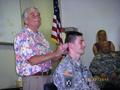
One of our soldiers took pics of us giving the StressOut Program with the elder Vets living in an El Paso, TX Home/Residential Center. Do visit our homepagesWebpage and [link] to see our goals and mission. Do play this Worley Ballad while you tour our website.  More >

 Risk Management Prevents Healthy, Skillful, Ethical & Nourishing Touch1 comment
picture11 Oct 2009 @ 15:08
In his seminal work, Touching: The Human Significance of the Skin, Ashley Montagu (1971) brings together a vast array of studies shedding light on the role of skin and physical touch in human development. He goes on to illuminate how the sensory system, the skin, is the most important organ system of the body, because unlike other senses, a human being cannot survive without the physical and behavioral functions performed by the skin. "Among all the senses," Montagu states, "touch stands paramount" (1986, p. 17).


Several years ago, I created a Global Touch Project here on the NCN and developed a website to inform and to discuss our progress with our students, participants, instructors and partners.

Currently, our 15-Minute StressOut Program is doing great as we are introducing our soldiers (wounded warriors)to our healthy touch program so that we can visit Veteran's Homes and interact with our brothers/sisters who served in previous wars. Our soldiers have given over 100 stressouts, during 3 sessions, in the Ambrosio Gullen Veterans Home, El Paso, TX with the cooperation and leadership of Mr. Willie Brown, Activities Director, Virginia and other staff. We have over 25 soldiers & staff, either certified, or in the process of completing their requirements following last week's workshop.

I can tell you, it is a very 'touching,' moving, and a remarkable experience observing and participating in this Warrior StressOut activity. Initially, I introduce our "Warrior StressOut Video - Coming Home", and our "Guidelines for Safe, Skillful, Ethical and Nourishing Touch"; followed, by Mr. Brown's, Integrative & Generative Exercise Program with the Elder Vets and our contingency assisting.

We then hook up our soldiers, staff and volunteers with the residents, all in wheel chairs, and give them a "StressOut." We have a big screen TV that shows our Instructional DVD (step-by-step instructions) while I take them through the process of our Best Practice Program.

Following our session, participants are invited to share their experience. One of the spouses of an elder Veteran spoke out, as tears came down her face,-- "God Visited Us Today--Thank you all so very much."

While we are getting great results from our work throughout the country, many professionals and health, education and social service programs are still reluctant and fearful to use physical interaction to empower, strengthen, and improve the opportunities for their patients, clients, students and residents to improve the quality of their lives, health and relationships. The following article will hopefully address these issues of Risk Management prohibiting safe touch.

Read Dr. Zur's Homepage and Blogs to learn about the Myths of Touch, discussions by other professionals, and Guidelines for professionals and other helpers such as integrative practitioners, social workers, teachers, therapists, and counselors. Many of us believe that it is unethical to withdraw essential methods and approaches from clients and patients, especially when they are identified as Best Practice, like our 15-Minute StressOut Program that is always done with guidelines that include permission, witnesses present,and follow-up evaluations.

Please comment on this important contribution to our use of physical interaction for primary prevention and for empowering and treatment for stress, anxiety and depression. We know that we can reduce lonliness, isolation, medication, anger for residents and care givers in aging programs, hospitals, veteran's homes, nursing centers with safe, healthy touch. We can also ask why so many children feel "left out" and "drop out" of schools and family life.

Our best practice research by the Ameican Diabetes Association also demonstrates the effectiveness of reducing blood sugar levels of Diabetes patients while increasing quality of life indicators. I wish to thank Dr. Zur and the late Dr. Ashley Montagu for their courage and outstanding work in advancing knowledge, wisdom, love and truth that will set us free from ignorance, prejudice, fear and doubt about the use of healthy touch by all sentient beings.

*******************


RISK MANAGEMENT PROHIBITION OF TOUCH by Dr. Zur

Risk management has become one of the most influential forces in medicine in general including psychotherapy. Risk management is the process whereby therapists avoid certain behaviors and clinical interventions--not because they are clinically ill advised, unethical, harmful or wrong, but because they may appear improper in front of judges, juries, licensing boards or ethic committees. (Gutheil & Gabbard, 1993; Williams, 1997). While the conscientious and ethical therapist carefully weighs the possible risk of any therapeutic intervention, including touch, against its potential benefits, risk-management frightens us into avoiding all "risky behavior" regardless of the likely positive results (Bonitz, 2008; Lazarus, 1994, 1998; Williams, 1997; Zur, 2007a).


Touch has often been placed at the top of the 'Do not do' list. "From the viewpoint of current risk-management principles" Gutheil & Gabbard stated, "a handshake is about the limit of social physical contact at this time" (1993, p. 195). Similarly, WebMD (1992) announces "A Hug-Free Zone: The threat of lawsuits, the already strong language in the APA code, and the general litigiousness of society have prompted many therapists to erect barriers between themselves and their clients when it comes to any physical contact. No more hugs for a sobbing client. No encouraging pats on the back" (section 2, Para. 1).

Like male preschool teachers who no longer hug young children, or camp counselor who would no longer hold a child in their lap for fear of being accused of inappropriate sexual behavior, many therapists, for similar reasons based on fear, have generally abandoned the practice of touching their clients. Defensive medicine, fueled by fear, is the defining forces behind risk management practices. The teaching of risk management principles seems to dominate ethics classes in graduate school and legal-ethical continuing education workshops. They are the foundation of endless attorneys' columns in our professional organization newsletters and a more recent breed of risk management presentations at our professional conferences. In all these formats, we are told never to hug, pat or hold our clients. Basically, we are told not to touch beyond a handshake and when possible even to avoid a handshake too. Beware! We are told, the slightest deviation from these ersatz commandments will set us on the 'slippery slope' to perdition. But even if one has not slipped uncontrollably down the slippery slope, the sheer idea that an action may appear suspicious to licensing boards, ethics committee members, or to administrative or civil courts' judges is adequate motivation to avoid touching clients, children or adults all the same.

When we listen closely to the risk management dogma, it is clear that no one really disputes the scientific fact, and the common knowledge, that touch is one of the most elementary human ways to relate and can be a powerful method for healing. Nevertheless, we have been frightened out of employing touch and most other forms of boundary crossings, such as self-disclosure, home visits, accepting gifts, bartering and many other behaviors frowned upon by the so-called "risk management" experts. These experts' advice often goes specifically against the practices of humanistic, cognitive-behavioral, family, feminist and group therapists. Ironically, these are also the orientations most practiced by psychotherapists.

Misleadingly, many of these attorneys, ethicists and so called risk management experts have mislead the therapeutic community, clients and licensing boards and courts to believe that non-sexual touch is unethical and below the standard of care. Unlike most commonly held beliefs, boundary crossings, such as touch are neither unethical nor below the standard of care. Ethics codes of all major psychotherapy professional associations (e.g., AAMFT, 2002; ACA, 1996; APA, 2002; NASW, 2001) neither prohibit boundary crossings in general nor do they prohibit the use of appropriate touch in therapy. All psychotherapy professional codes of ethics view sexual or violent touch with a current client as unethical. For specific details refer to the 'ethics codes' stance on touch in therapy ( Zur, 2004).

The obvious question then becomes, "Why are behaviors and interventions, such as touch, that are known to be clinically helpful, as well as very natural elements of human interaction, banned from our practices or, at best, driven underground?" The answer lies primarily in the concept, practice and teaching of defensive medicine or risk management.

In principle, nothing is wrong with managing risk if it is done thoughtfully by applying sensible clinical judgment and employing critical thinking rather than paranoid thinking. There must also be a sound knowledge of the professional codes of ethics and laws of states. All actions and clinical interventions involve some risk. For that matter, we often forget that inaction can be risky and even damaging to clients, as well. For example, I have been working with a woman who, 10 years prior to our first session, lost her infant son in an automobile accident. In an emergency appointment with a psychiatrist right after the death of her son, as she sobbed uncontrollably, she begged him to hold her. He refused, citing something about professional boundaries. Instead, he prescribed Valium. Eight years later, addicted to Valium and alcohol, she began therapy with me. After an intense few months of therapy, we visited her son's grave. It was the first time she had visited the grave. There we stood, holding each other and both weeping as she finally started facing her baby's death and grieving for him and for her years lost in drugged denial. While the psychiatrist followed risk management guidelines to perfection, he also may have inflicted immense harm. Did he sacrifice his humanity and the core of his professional being, to heartless protocol?

All therapists may, of course, with due consideration, attempt to reduce their own risks and the risks to their clients when employing touch in therapy. This is especially important when working with cases involved borderline or dissociative proclivities. This attempt to reduce risk goes side by side with clinical integrity, relevant training, and sound employment of treatment plans. Appropriate, risk-benefit analysis, requires that therapists ask themselves basic questions, such as, "What is to be gained by employing touch and what is there to lose? What do I risk if I do not touch and what do I risk if I do?" It is very important that such an analysis be made for each client and each clinical situation taking into account the specific client's mental state, presenting problem, history, culture, personality, communal support, class, gender, etc. (Complete guidelines for the use of touch in therapy will be found at the end of this article.)

Malpractice insurance carriers represent the primary force behind risk management, or what some attorneys call "healthy defensiveness". While the actual likelihood of a lawsuit or of licensing discipline for psychotherapists is extremely low (Williams, 1997), in the rare event that it takes place, it can be very costly to the insurance company and emotionally and financially devastating to the practitioner. The rare, but nevertheless outrageously costly, judgments drive the malpractice insurance companies to advocate strict risk management practices and the avoidance of any behavior that may give a jury reason to suspect inappropriate behavior and levy an expensive penalty. Ironically, this strategy, as will be discussed later, is more likely to backfire on the insurance companies.

Aiding and abetting the insurance companies and attorneys has also fueled the risk management fire, inspiring paranoia and widespread instruction in risk avoidance behavior. Attorneys' advice columns seem to have become a regular feature in our professional journals. Scheduled sessions with legal professionals abound at our professional conferences. Often, without any clinical training whatsoever, they sternly give us long lists of what we should avoid. At the top of the list is, of course, "Do not touch!" Obviously the list does not stop there. They tell us never to leave the office even though going to an open space with an agoraphobic client, as part of a systematic desensitization is the appropriate, if not mandated, clinical intervention. They tell us never to socialize with clients even though it is often impossible to avoid doing so in rural areas and in small communities. They tell us never to share a meal with a client even though an "anorexic lunch" can be part of a perfectly executed family system-based treatment plan. When it comes down to it, risk management can be also defined as attorneys' advice overriding clinical judgment.

Risk management and the fear it induces effects not only mental health, but also our entire society. It is part of a bigger and more complex phenomenon: the American litigation explosion and the rights movement. Even though, as has been stated, litigation is rare in our profession, the mere possibility of such a consequence is daunting and affects us strongly. We have become a culture where everyone tramples everyone else in the fight for his or her rights and entitlements (Etzioni, 1987, Zur, 1994). While accountability is an important civic quality, this lawsuit-happy culture, combined with the culture of victims, creates an atmosphere of dread that changes the way we do (or don't do) business, play or healing. We all know about the playgrounds across the country that have been stripped of monkey bars, high slides and fun swings due to the thousands of lawsuits filed by parents after their children have 'gotten hurt' while playing. Ministers, teachers, and youth counselors avoid touching - especially children or women. People have actually sued McDonald's for the obesity resulting from too many Big Macs! Litigation gone wild, indeed.

Flowing directly from this trend, fear-induced risk management has driven physicians to practice defensive medicine' and to routinely order a huge number of diagnostic tests, such as lab and radiology investigations, not because they believe they are medically necessary but as part of their risk management strategy. The rationale is that the physician will not be accused of not having done everything in his power to rule out even the most unlikely diagnosis. Some estimate that doctors waste between $50 to $100 billion annually on defensive medicine. Shockingly, some also estimate that this is the amount that could buy health insurance for the 40 million uninsured Americans. While attorneys laugh all the way to the bank, our risk management-intoxicated, phobic culture ends up settling for inferior care of every kind; children are deprived of touch and opportunities for play; and spiraling medical costs continue to bankrupt the country.

One of the major concerns inherent in risk management is that fear induced, defensive behaviors, and the systematic avoidance of many behaviors have gradually stolen in through the back door to become the perceived standard of care in medicine and mental health (Zur, 2007a). The standard of care is not anything that can be found in a textbook; it evolves as more and more professionals adopt certain practices, which then achieve acceptance as the "standard" in the community. A prime example of how risk management affects the standard of care is the requirement that a woman chaperone be present during a gynecological pelvic exam. Besides providing some comfort to the female client, the chaperone's primary role is to protect the physician from false accusation, criminal complaint or lawsuit. The witness also reduces the risk that misconduct may occur. Before chaperoning became part of the standard of care, some women preferred not to have such a witness, especially if they had a long, trusting relationship with their physician or if the physician was a woman. However, today, not having a witness is considered practicing below the standard of care. The danger that we face in mental health these days is that more and more risk management proscriptions may metamorphose into the standard of care.

Bear in mind, though, that risk management is neither part of the ethics codes nor part of any treatment standard. Risk management is merely a set of precautions advocated by malpractice insurance vendors and attorneys, supposedly to minimize the chances of being sued. When it comes to touch, good treatment and good risk management may sometimes call for mutually exclusive decisions regarding a given client. For example, it would probably be good risk management never to touch children and for male therapists never to touch female clients. Most of us would agree that such risk management advice is utter nonsense, since helping those in need is a fundamental ingredient of the psychotherapy professions. This example, like the case of the psychiatrist who refused to hold the grieving mother, illustrates the faulty logic and drawbacks of risk management and its single-minded devotion to avoiding lawsuits and its equally single-minded lack of regard for the primary goals of our work.

We have seen how, over time, a new standard of care insinuates itself into psychotherapy. This results in a continuous rising of the risk management bar as to what constitutes acceptable clinical behavior. Expert witnesses have often encountered testimonies by prominent experts that boldly and falsely asserted that touch, like gifts, extending a session beyond the allotted time or bartering always fail to meet the standard of care (Williams 1997). Similarly and dangerously, many licensing boards have uncritically accepted risk management recommendations as their guidelines. Paradoxically and ironically, as the bar is raised and more interventions seem frowned upon by the boards, courts and attorneys, there is increased likelihood that insurance companies and therapists will be sued or sanctioned. Risk management, without any doubt, has come to haunt the insurance companies, an unforeseen retribution for their shortsighted, cost-saving strategies. Sadly, it also impacts our profession negatively and often reduces our creativity and effectiveness, thus depriving our clients of the fullest measure of care.

The fear campaign by the insurance carriers, attorneys and many ethicists and "risk management experts" has too often succeeded in paralyzing therapists and forcing them to restrict themselves to rigid and constipated ways of relating to clients and avoiding any physical contact with their clients. As a result, clinical effectiveness is compromised. The danger that risk management poses to clinical effectiveness can be clearly seen in its injunction against touch which obviously has a significant negative effect on therapeutic alliance, the number one predictor of effective therapy (Lambert, 1991). We cannot think of any more effective ways to enhance therapeutic alliance then a reassuring or comforting hug, pat or hand holding. All of this may not be effective 'risk management', but it is basic good therapy.

Very regrettably, most professional organizations have jumped on the bandwagon and joined the fear campaign. They promote the practice of defensive medicine through their own risk management workshops and seminars. Some, as we see monthly, have given attorneys a regular column in their newsletters or journals where this paranoiac thinking is disseminated. As risk management becomes more prevalent, its effect is clearly seen on new therapists. In the numerous Ethics with Soul workshops I have conducted across the country, I (O.Z.) have noted that older (non-analytically oriented) therapists seem to be less concerned about risk management practices. The opposite is true of the new graduates. Alarmingly, through the fault of most graduate schools and their ethics professors, many of the newer therapists believe that risk management practices are part of the standard of care.

In summary, a risk managed practice may sound as if it adheres to practical or pragmatic advice but, in fact, it is a misnomer for a practice in which fear of attorneys and boards, rather than feeling, caring and intelligent clinical considerations, determine the course of therapy. As therapists, we are trained, hired and paid to provide the best care possible for clients. We are not paid to act defensively. This fear of board investigations and malpractice lawsuits pushes therapists to take protective measures. Consequently, we lower the quality of care for our clients.

Arnold Lazarus (1994) appropriately claims, "One of the worst professional or ethical violations is that of permitting current risk management principles to take precedence over humane interventions." Clinical interventions must be determined by empirically-based treatment plans, clinicians' intuitive and creative sensitivities, and specific client factors, such as the client's problems, situation, personality, degree of functionality, history, and culture -- never by fear of boards and courts. We must remember that the therapeutic effect of touch has been scientifically and clinically proven. We must also remember that we are hired to help rather than being hired to practice risk management. Therefore we must touch clients when appropriate in a way that will help them grow and heal.  More >

 Crimes Against the Soul of America by Caroline Myss9 comments
picture7 Sep 2009 @ 14:54
"When we look at what price("$"), we see that it effectively devalues everything that defines us as human beings. It devalues all those capacities that are not scarce; yet those capacities, the ones we all share, are what enable our species to survive. If something is worthless because it has no market value, look at all the universal capacities we are devaluing:

o caring for each other
o coming to each other's rescue
o rearing infants
o protecting the frail and vulnerable
o standing up for what is right
o opposing what is wrong
o coming together to reach agreement
o acting as guardians of whatever we feel is precious and want to pass on to our children and their children." (No More Throw-Away People-The Co-Production Imperative) by Edgar S. Cahn

Do read this great article by Caroline Myss about our Loss of Soul as a country as reflected in the latest discussions by the Neocons/Republicans resisting a presentation to the students and faculty in schools by President Obama.

Wake up America, stop 'dumbing down' our schools, and stand up for our real Values and Principles as a Nation!!!

************************************************

Crimes Against the Soul of America

"Just stop it. We've had enough. I know I have. And I deeply believe the soul of our nation can't take much more of their strategy of deliberate division against the people of their own nation. That is a true crime -- and perhaps their greatest crime -- against the soul of this great nation."

"There is such a thing as a crime against the soul of a nation. A person or a political party can deliberately incite actions that diminish the strength, the integrity, and the overall well-being of a..."

Thank you for your great contribution to the state of our Nation. I fully agree with many of the comments here in Huffington Post--this may be one of the Best posts we have seen here or in the news media describing clearly our demise and our loss of soul as a nation. Thank you for being here for us as we attempt to recover our spirit after a decade of abuse, neglect, lies, deceit and the theft of our treasury, education and health programs and loss of every value we've cherished as a great nation.

As a teacher, I can assure you and others that it is obvious that our education system has lost its reason and mission for being. Grades are meaningless and everyone knows it, except those in political power, CEO's, administrators and others who profit from these worthless exams, false measurements and phony research designs and results. Caroline Myss, we teachers applaud you!!!

[link]

Note: Picture by SFC Scott Milligan  More >

 Visit Our US Army, Ft. Bliss Restoration & Resilience Center - Slide Show2 comments
picture20 Aug 2009 @ 13:43
Depression & Trauma--Just as the increased physical arousal that comes with being aggressive can cause anger to spiral upward, decreased physical arousal can cause a downward cycle into inactivity and deeper depression. Being in a depressed mood makes it hard to enjoy many activities, and the less active you are, the more likely you are to feel depressed. A depressed mood can also cause you to see things more negatively, making it harder to motivate yourself to participate in activities. And the less active you are, the more time you have to dwell on negative thoughts about yourself, making you feel even more depressed. Courage After Fire-Coping Strategies for Troops Returning from Iraq and Afghanistan and their Families by Keith Armstrong, LCSW/Suzanne Best, Ph.D./Paula Domenici, Ph.D.

Do visit our US Army Restoration & Resilience Center slide presentation.

To really know about our experience, you would have to be be in our trauma health center on a daily basis. However, when a wounded warrior enters our program during their first week and beyond, they are given a Primary & Secondary Therapist, while receiving our Integrative Health methods--Reiki, Medical Massage, Acupuncture, meditation, movement therapy, expressive arts--and, one of our experienced soldiers is assigned to assist and support him. He will also have had a group therapy session daily, supplemented with 2 individual sessions. If he is married his family is invited for a family or couple session.

In addition to serving as a Primary Therapist, teaching meditation, coordinating Water Polo, I serve as coordinator for our Health Education Program. I schedule weekly workshops and presentations related to holistic health--nutrition, touch, movement, anger management, fitness, breathing, neurology, academic opportunities, and other health related activities such as Sweat Lodge (see pic with Red Cloud), other multi-cultural, spiritual rituals and healing and treatment approaches identified in the slide show.

Our goal is to empower and offer our soldiers the best possible selfcare-skills, knowledge and awareness to guide, to heal and to learn about themselves. As identified in our slide show, we introduce them to 'best practice' tools/skills to manage their stress, anxiety and depression with the support of their family & whole being--physically, mentally, emotionally and spiritually.

During my wonderful experience over the past 1 1/2 years with our R & R Center, I have seen everyone get better, with the vast majority, 61%, returning fit for duty to the Force.

I am very happy and pleased that I can be part of this Great Experience and Experiment. My thanks to everyone who makes our health center work, inside and outside. Special appreciation and thanks to all of my colleagues and especially Dr. John Fortunato, Chief and Founder.

[link]

Jerry  More >

 Senator Sanders charging Fraud-Big Pharmas, Big Insurance & Private Hospital 7 comments
picture30 Jun 2009 @ 02:54
Health is an experience of well-being that is in dynamic balance with our whole being and with our natural and social environments. (Fritjof Capra) Would someone please describe what our sick care system is all about?

Thank you Sen. Sanders for taking on these corporations and calling for an investigation of their FRAUD! Do go to Sen. Sanders' website and support his efforts. I've posted a number of logs related to the Big Pharmas and their corrupt relationship with Psychiatry. It's interesting to me that recently the president of the APA admitted that the DSM or Diagnostic Statistical Manual and bible for mental health practice is flawed. Also, they are unable to define or clarify what a "DISORDER" is, yet their classification system is based on this concept. People carry their labels for life, yet they have very little science to back up their claims. In other words, make sure you read the fine print and the numerous side affects of their drugs. [link] [link]

Please pass this message on to people who are not aware of the Big Pharmas; Big Hospital Association; Big AMA; Big Giant Insurance Corporations. All of these powerful and wealthy corporations and organizations are fighting a universal health program for all. Ask your congressman/woman how much money they have accepted for their political vote from these corrupt corporations and their lobbyists.

Senator Sanders tells the truth about these giant corporations: "In his remarks before the committee, Sanders suggested that it is absolutely imperative that real health care reform prevent major insurance companies, drug companies and hospital chains from perpetrating fraud and abuse on government health care programs and individuals, which are driving up health care costs in this country by billions of dollars every single year."


***************************************************
Huffington Post

"We Must Stop the Rampant Fraud in the Health Care Industry

Sen. Bernie Sanders, 06.29.2009
Independent U.S. Senator from Vermont


What we have seen over the last several decades is the systemic fraud perpetrated by private insurance companies, private drug companies, and private for-profit hospitals ripping off the American people." [link]

Read Post | Comments (131)  More >

 Soldiers Reach Out and Touch Veterans2 comments
picture12 Jun 2009 @ 00:40
The Ft. Bliss Monitor published an excellent article on our recent Therapeutic Outing to the Texas State Vet Center. Our Warriors administered our 15Minute StressOut Program with the elder Vets as a morning activity to support the healing and interaction of our soldiers experiencing PTSD and elder Vets while giving our Skillful Touch Program. See June ll, 2009 Ft. Bliss Monitor. [link]

*************************
Soldiers reach out and touch veterans
Y. WRIGHT
Fort Bliss Public Affairs

The Fort Bliss Restoration and Resilience Center is a place for Soldiers to recuperate and learn methods of dealing with issues of post-traumatic stress upon returning from deployments. There are several programs incorporated in the treatment regimen to obtain holistic health. One of these practices is the 15-minute StressOut Program. This program reinforces healthy touching as a means of healing.

The StressOut program was designed by Jerry Vest, army/health practitioner and social worker, from William Beaumont Army Medical Center, Restoration and Resilience Center, Warrior Program, in 1979. It involves acupressure and other skillful techniques, coordinated with breathing to balance the body, mind, emotions and spirit.

On Thursday, warriors in transition took time out from their healing process to visit the Texas State Center for Veterans to administer a little healing to some of
their own. The Soldiers joined some of the vets in a private room with very soft lighting, ‘’mood music’’ and the goal of creating 15-minutes of relaxation through a partner meditation technique.

The Soldiers agreed that the process is really good for both them and the veterans they were there to help. During the sessions, the “givers,” who are those giving the massage, systematically applied pressure points to the receivers, while the two
worked at establishing a memorable experience.

The idea is for the partners to connect the vitality of their breath with the power of touch during this process of relaxation. Because there are so many myths surrounding touch, Vest said he introduces and demonstrates safe, skillful, appropriate and nourishing touch as a means for teaching physical interaction, stress management, and self-care for individuals,couples, groups and families. “Many of these patients only get touch from the bed to the chair,” said a Soldier from the Restoration and Resilience Center. “Being on either side [giving or receiving] is very relaxing, and you benefit either way,” said another Soldier.
Glenda Bromberg, who was also a part of the team of volunteers, talked about how powerful touch is in healing as well as in everyday life. She said she was moved by “people who are healing, giving to people who need healing.”

After the session, many of the Soldiers who were visiting for the first time said they would like to volunteer to spend time with the vets more often.
“This may be a regular field trip for the warriors,” Vest said. For more information on the 15-minute StressOut Program, visit [link]

Y. WRIGHT

Note: Picture is Dr. John Fortunato, Chief & Founder, Ft. Bliss Restoration & Resilience Center, Wm Beaumont Army Medical Center  More >

 Army Suicides continue to Climb2 comments
picture24 May 2009 @ 15:05
"The teachings of Buddhism, called the Dharma, tell us that to understand the hopelessness of 'samsara' is to enter the path to 'nirvana', or liberation from suffering. This path carries us directly to the heart of 'samsara' and teaches us to transform it into peace. When we follow the Dharma, our self-concepts, desires, and negative habits themselves provide the energy that fuels our spiritual growth. Every aspect of every situation becomes a process of training, learning, and understanding. The teachings become a silent song--a thread running through every moment--leading us to greater knowledge and awakening."Tibetan Meditation-Practical teachings and step-by-step exercises on how to live in harmony, peace, and happiness by Tarthang Tulku


Suicides Increase - Beware of Labels

I placed these comments on the Washington Post today as some of us know that soldiers get better and many may have killed themselves had we not had resources such as our Ft. Bliss Restoration & Resilience Center [link] [link]. We return over 62% of our soldiers to active status. We hope that they don't have to return to combat as they need time to assimilate what they have learned and to practice their new found skills.

Several of our soldier would like to have a new MOS that allows them to be counselors/technicians to help others get treatment and to find a way out of these painful nightmares, isolation, despair, agitation, depression, and anger.

Jerry


Your Comments On...

Generals Find Suicide a Frustrating Enemy[link]

It was just past midnight in Afghanistan when Brig. Gen. Mark Milley appeared on the video screen in the Pentagon conference room to brief some of the Army's top generals on a sobering development: his unit's most recent confirmed suicide.
-
By Ann Scott Tyson and Greg Jaffe
******************************************************************
vajara wrote:

Some people plant the seed of despair by suggesting that our Warriors will never overcome their PTSD. That is not a very hopeful message to those who are diagnosed with a label--labels stick to the psyche and they may never go away, but I can assure you the soldiers are resilient, they do heal, they do get better, and they return to the force. We only hope that the Army is wise enough to change their MOS and give them an opportunity to be mental health counselors so that they can help their brothers heal and get well. In any event, don't tell them that they will never get better, it just isn't true and it only makes their lives more miserable. How would you feel if the doctor or your best friend told you to forget the treatment and rehabilitation as you will never improve? Please think before you project your beliefs onto others, they just might believe you and commit suicide--it can be a way out when you have these horrendous symptoms. Some of us who work with our warriors do know better.
5/24/2009 10:09:20 AM

vajara wrote:

Seems we need to do a better screening of soldiers serving multiple tours. We could shorten their tours as the Marines have done and they have fewer suicides. We can also stop the wars and bring the troops home. Why do soldiers become disillusioned and it turns into despair? I believe they know that the leadership has let them down by sending them there in the first place and secondarily, what are they hoping to accomplish when history tells them, it is a hopeless cause.
5/24/2009 10:00:03 AM  More >

 Veterans Can Use our Help and Support9 comments
picture10 May 2009 @ 14:06
When we are able to still our body, breath and mind, a very comfortable, soothing feeling naturally arises. As we expand this feeling, we feel very much at home there, and we can return to this feeling again and again in daily meditation. (Tarthang Tulku, "Finding the Space Between Thoughts", p.127, Tibetan Meditation)


Come Join with us in support of our Veterans living out their lives in residential treatment centers and nursing homes:

I've learned that when our soldiers take leave and visit their homes and communities where they once called home, they have little in common to share with their family and friends after returning from "many long extended tours of duty" in Iraq and Afghanistan. Many of our warriors have been so wounded that they are not often recognizable by their family. Many of our soldiers in rehabilitation in our Ft. Bliss Restoration & Resilience Center are physically, mentally, emotionally and spiritually wounded as you may know, so it is hard for them to convey their experiences, especially their trauma, as few people can understand or appreciate what they have been through. After all, much of this war and the long deployments were held in secret by the previous administration while our media, professional organizations and politicians had little courage, ability or will to describe and inform others about the soldier and their family stories. (See, my previous log related to long deployments and how families describe their experiences.)

Can you envision Veteran's Nursing homes with a StressOut Team that partners up with a vet and gives our nourishing touch program to the residents, 2 x's a week. We are especially interested in partnering up with an elder vet suffering with Alzheimers'. We will shortly be training a core group of wives of our deployed Warriors and soldiers from our Ft. Bliss Restoration & Resilience Center, and other volunteers assigned to the Ft. Bliss Warrior Transition Battalion to provide this service.

We know that our mindful and skillful touch program unites the body, mind and spirit. See our Protocol for giving the 15-Minute Stressout. [link] This exchange of energy is experienced as Empathy when we breathe together as One. We open and close our Program while we lay and rest our hands on our partner's shoulders. This experience is referred to as "Melting" in the ancient Tibetan practice of Kum Nye. [link] (I have practiced and taught Kum Nye Relaxation during my 30 yr. tenure at New Mexico State University in my Holistic Health Practice Courses and curretly introduce meditation as a daily exercise in our integrative treatment center.)

Do visit our new Website that Brent Laracuente and Christy Laracuente put together to expand our use of touch into vet centers in our region and beyond; in nursing homes; Family and Childrens' programs; and, now with Wounded Warriors and their families.

If you wish more information do visit this Website: [link]

Several of us at Ft. Bliss are about to launch this training program for the wives of our soldiers assigned to the Warrior Transition Battalion and also for the wives having their loved ones being deployed beginning May 11, 2009. In addition to helping or empowering wives and volunteers deal with the physical pain, stress, anxiety and depression often accompanied by these long separations, we are developing a core group of wives & soldiers to give our "stressouts" in Vet Centers in EP and in other places. Currently, we are focusing on the Alzheimer's patients as this population is rarely touched in skillful ways and meds are often the primary treatment intervention.

As I have described in previous logs, our City of Las Cruces, New Mexico, Senior Programs, have joined with us for giving our partner massage/meditation program in diabetic clinics, in-home care, and nursing homes and we are now extending this health program in other communities and vet centers. [link]

If you wish to become trained in using our touch program and become certified as a team member and volunteer, do contact us and visit our websites to learn more about us and this opportunity to serve. [link]  More >

 Mass Punishment Lives On in Public Schools4 comments
picture29 Mar 2009 @ 16:35
Dr. Ashley Montagu, anthropologist and educator, focused on human bio-social evolution and maintained throughout his long career that cultural phenomena are not genetically predetermined. He committed himself to popularizing the findings of modern science in the hopes of improving civil society and the quality of life.

In his groundbreaking book, “Touching: The Human Significance of the Skin”, he brought awareness to the Western World of how the sense of touch was so neglected, and at the same time how critical the sense of touch is for human development. Additionally, he devotes special attention to the relation of the skin and touching to mental and physical health and the discovery of the immunological functions of the skin.
[link]


Do read this short article about a school principal in Connecticut banning touch in her Middle School. I suspect this is quite common in schools where they lack creativity, exploratory learning, motivational & skillful teaching, and encouragement for their students. [link]

I believe that this ban is a drastic measure and I wonder if these administrators know what the consequences are for depriving humans of physical contact--healthy nourishing touch? I suspect the student reactions will be explosive and include much more anger, bullying, restlessness, frustration and other negative emotions when basic human need requirements for touch are denied. If you doubt this truth, go visit a nursing home, prison, mental health inpatient unit, or home where parents don't use healthy touch and use physical punishment and restraints to get their "way."

Anyway, this is just a form of MASS Punishment when administrators don't have the knowledge, skill or wisdom to come up with a helpful and resourceful solution to a bad incident. Frankly, as a parent experiencing a similar incident in our children's school, we successfully organized and petitioned the school board to fire the principal.

One alternative is to include a class or assembly sessions in introducing and teaching healthy, respectful and responsible touch in all of the classes. Parents can also learn how to discipline and guide without using corporal and mass punishment for their children. I would also suggest that schools and other institutions use alternatives such as we use for our nourishing touch programs--"Guidelines for the Safe Use of Touch." [link]; [link];[link]

Any other Comments and Recommendations?

I work for the US Army and mass punishment is a common practice to make soldiers "tow their line!!!" Ask any soldier how effective this solution is and you will learn very quickly that it doesn't work for very long, if at all.

Do read this short article about a school principal banning touch in School.

****************************************************

A Connecticut middle school principal has laid down the law: You put your hands on someone -- anyone -- in any way, you're going to pay.

Connecticut School Bans Physical Contact

East Shore M.S. Outlaws "High-Fives," "Hugging" And Horseplay Of Any Kind; Violators May Face Expulsion MILFORD, Conn. (CBS) ―

A Connecticut middle school principal has laid down the law: You put your hands on someone -- anyone -- in any way, you're going to pay.

A violent incident that put one student in the hospital has officials at the Milford school implementing a "no touching" policy, according to a letter written by the school's principal.

East Shore Middle School parents said the change came after a student was sent to the hospital after being struck in the groin.

Principal Catherine Williams sent out a letter earlier in the week telling parents recent behavior has seriously impacted the safety and learning at the school.

"Observed behaviors of concern recently exhibited include kicking others in the groin area, grabbing and touching of others in personal areas, hugging and horseplay. Physical contact is prohibited to keep all students safe in the learning environment," Williams wrote.

Students and parents are outraged. They said the new policy means no high-fives and hugs, as well as horseplay of any kind. The consequences could be dire, Williams warned in the letter.

"Potential consequences and disciplinary action may include parent conferences, detention, suspension and/or a request for expulsion from school," Williams wrote.

Many think the school's no tolerance policy goes way too far. Others said it's utterly ridiculous.

"Now it's almost as if it's a sanitized school. Where you have to keep your distance from everybody? And that's not what school is about," one father said.

"What if they are out on the playground at recess, or in gym class?" parent Kathy Casey wondered. "You know, gym class is physical."

A violent incident that put one student in the hospital has officials at the Milford school implementing a "no touching" policy, according to a letter written by the school's principal.

East Shore Middle School parents said the change came after a student was sent to the hospital after being struck in the groin.

Principal Catherine Williams sent out a letter earlier in the week telling parents recent behavior has seriously impacted the safety and learning at the school.

"Observed behaviors of concern recently exhibited include kicking others in the groin area, grabbing and touching of others in personal areas, hugging and horseplay. Physical contact is prohibited to keep all students safe in the learning environment," Williams wrote.

Students and parents are outraged. They said the new policy means no high-fives and hugs, as well as horseplay of any kind. The consequences could be dire, Williams warned in the letter.

"Potential consequences and disciplinary action may include parent conferences, detention, suspension and/or a request for expulsion from school," Williams wrote.

Many think the school's no tolerance policy goes way too far. Others said it's utterly ridiculous.

"Now it's almost as if it's a sanitized school. Where you have to keep your distance from everybody? And that's not what school is about," one father said.

"What if they are out on the playground at recess, or in gym class?" parent Kathy Casey wondered. "You know, gym class is physical."


 More >

 Integrative Medicine is Mainstream2 comments
picture24 Jan 2009 @ 15:31
Forget descriptions of meditation and just sit quietly. Be very still and relaxed, and do not try to do anything. Let everything--thoughts, feelings, and concepts--go through your mind unheeded. Do not grasp at ideas or thoughts as they come and go or try to manipulate them. When you feel you have to do something in your meditation, you only make it harder. Let meditation do itself.Tarthang Tulku, Openness Mind,


This article appeared in the Wall Street Journal and Huffington Post this past weekend and it answers many questions for the skeptics of Integrative Medicine. Many will argue that integrative medicine lacks a scientific inquiry; however, it is really the lack of inquiry, awareness, and knowledge of the hard core mental health professionals that should be addressed. And, how can anyone cast a stone at "integrative medicine" when psychiatry and psychology adopt the Diagnostic Statistical Manual(DSM) as their bible?

Hmm, I don't believe that anyone these days view this labeling, drug system a valid or reliable instrument for measuring the Whole Health (mental health) of their patients. It is a system that separates the body, the mind, the emotions and the spirit. Our mental health professions are primarily diagnosing, labeling and drugging their patients and clients. I'm only surprised that drug stores and mental health centers and alopathic medicine aren't providing drive in therapies with drug distribution centers. (All you need is a prescription and a label to get treated for your "disorder" with a magic pill). However, buyer beware and do read the fine print and warning notice by your pharmacist.


By DEEPAK CHOPRA , DEAN ORNISH , RUSTUM ROY and ANDREW WEIL


"In mid-February, the Institute of Medicine of the National Academy of Sciences and the Bravewell Collaborative are convening a "Summit on Integrative Medicine and the Health of the Public." This is a watershed in the evolution of integrative medicine, a holistic approach to health care that uses the best of conventional and alternative therapies such as meditation, yoga, acupuncture and herbal remedies. Many of these therapies are now scientifically documented to be not only medically effective but also cost effective."

Abstracted from article.....

"Many people tend to think of breakthroughs in medicine as a new drug, laser or high-tech surgical procedure. They often have a hard time believing that the simple choices that we make in our lifestyle -- what we eat, how we respond to stress, whether or not we smoke cigarettes, how much exercise we get, and the quality of our relationships and social support -- can be as powerful as drugs and surgery. But they often are. And in many instances, they're even more powerful."


[link]

Begin the New Year with Skillful Touch -

2009 will hopefully bring Peace, Love and Respect for our planet and for all of our inhabitants.

I appreciate all of you who have visited and contributed to our "StressOut Forum" and Webpage. Let's stay-in-touch as this is one of the best ways to make sure we unite with empathy and meet our basic human need requirements for living healthy, respectful and loving relationships. [link]

We are One!!

Jerry  More >

 Long Deployments Breaking Up Families14 comments
picture12 Dec 2008 @ 15:48
Ask any veteran how life is after war. Most likely in their own words (and ways)they will tell you how it imprinted lasting marks on their minds and souls. Some will let you know all the different ways their war never ends. Many will not even begin to talk about it because they feel that nobody would ever understand unless they had been there too. For the people back home...they need to understand that it is most difficult to fathom how things have changed for their returning troops. After all, how can anyone see inside of a duffle bag that still goes unpacked? Some troops may never unpack it completely, and we cannot expect them to. Down Range to Iraq and Back by Bridget C. Cantrell, Ph.D. & Chuck Dean

******************************

As many of you know, I work with injured Warriors in the US Army's, Ft. Bliss Restoration and Resilience Center as a clinical social worker. During this past year, I meet with soldiers in individual, couple and family therapy while also coordinating Meditation, Water Polo and Health Education activities. Our R & R Center is an experimental center for soldiers who have been diagnosed with PTSD and many who also have experienced concussions or Traumatic Brain Injuries and other physical wounds. We have 2 young soldier who have completed 5 tours of duty in Iraq and Afghanistan. Most of our soldiers have been away from their families for 2 to 3 years and when they return they are often unrecognizable as they have serious mental health issues that prevent them from relating and interacting with their loved ones as they did before they were deployed.

I believe that we have the best program and staff in the world and yet, it is very sad for us to see how our families struggle every day to sustain their relationships. Do read these stories that describe the challenges on military families despite our best efforts to help. [link][link]

*****************************************


As wars lengthen, toll on military families mounts

FORT CAMPBELL, Ky. (AP) — Far from the combat zones, the strains and separations of no-end-in-sight wars are taking an ever-growing toll on military families despite the armed services' earnest efforts to help.

Divorce lawyers see it in the breakup of youthful marriages as long, multiple deployments in Iraq and Afghanistan fuel alienation and mistrust. Domestic violence experts see it in the scuffles that often precede a soldier's departure or sour a briefly joyous homecoming.

Teresa Moss, a counselor at Fort Campbell's Lincoln Elementary School, hears it in the voices of deployed soldiers' children as they meet in groups to share accounts of nightmares, bedwetting and heartache.

"They listen to each other. They hear that they aren't the only ones not able to sleep, having their teachers yell at them," Moss said.

Even for Army spouses with solid marriages, the repeated separations are an ordeal.

"Three deployments in, I still have days when I want to hide under the bed and cry," said Jessica Leonard, who is raising two small children and teaching a "family team building" class to other wives at Fort Campbell. Her husband, Capt. Lance Leonard, is in Iraq.

Those classes are among numerous initiatives to support war-strained families. Yet military officials acknowledge that the vast needs outweigh available resources, and critics complain of persistent shortcomings — a dearth of updated data on domestic violence, short shrift for families of National Guard and Reserve members, inadequate support for spouses and children of wounded and traumatized soldiers.

If the burden sounds heavier than what families bore in the longest wars of the 20th century — World War II and Vietnam — that's because it is, at least in some ways. What makes today's wars distinctive is the deployment pattern — two, three, sometimes four overseas stints of 12 or 15 months. In the past, that kind of schedule was virtually unheard of.

"Its hard to go away, it's hard to come back, and go away and come back again," said Dr. David Benedek, a leading Army psychiatrist. "That is happening on a larger scale than in our previous military endeavors. They're just getting their feet wet with some sort of sense of normalcy, and then they have to go again."

Almost in one breath, military officials praise the resiliency that enables most families to endure and acknowledge candidly that the wars expose them to unprecedented stresses and the risk of long-lasting scars.

"There's nothing that has prepared many of our families for the length of these deployments," said Rene Robichaux, social work programs manager for the U.S. Army Medical Command. "It's hard to communicate to a family member how stressful the environment is, not just the risk of injury or death, but the austere circumstances, the climate, the living conditions."

An array of studies by the Army and outside researchers say that marital strains, risk of child maltreatment and other problems harmful to families worsen as soldiers serve multiple combat tours.

For example, a Pentagon-funded study last year concluded that children in some Army families were markedly more vulnerable to abuse and neglect by their mothers when their fathers were deployed in Iraq and Afghanistan.

In Iraq, the latest survey by Army mental health experts showed that more than 15% of married soldiers deployed there were planning a divorce, with the rates for soldiers at the late stages of deployment triple those of recent arrivals.

For the Army, especially, the challenges are staggering as it furnishes the bulk of combat forces. As of last year, more than 55% of its soldiers were married, a far higher rate than during the Vietnam war. The nearly 513,000 soldiers on active duty collectively had more than 493,000 children.

Jessica Leonard at Fort Campbell says family support programs there have improved since her husband's first combat tour, helping her feel more self-reliant. Yet she's convinced that domestic violence and divorce are rising at the base, which is home to the 101st Airborne Division.

"Infidelity is huge on both sides — a wife is lonely, she looks for attention and finds it easier to cheat," she said. "It does make even the most sound marriages second-guess."

Among soldiers coming home, whether for two-week breaks that often end with wrenching good-byes or for longer stays, she sees evidence of lower morale and rising depression.

"They come home, and find that problems are still there," she said. "Instead of a refreshing R-and-R, a nice little second honeymoon, it's battle for two weeks."

There have been some horrific incidents shattering families of soldiers back from the wars — a former Army paratrooper from Michigan charged with raping and beating his infant daughter; a sergeant from Hawaii's Army National Guard accused of killing his 14-year-old son as the boy tried to save his pregnant mother from a knife attack by the soldier.

In one of the saddest cases, a recently divorced airman who served with distinction in Iraq chased his ex-wife out of military housing with a pistol in February before killing his two young children and himself at Oklahoma's Tinker Air Force Base. Tech. Sgt. Dustin Thorson's former wife had sought a protection order against him, saying he threatened to kill the children if she filed for divorce.

Officials at Tinker, while confirming that Thorson had been getting mental health care, would not say whether those problems related to his service in Iraq.

His brother, Shane Thorson, a sheriff's deputy from Pasco, Wash., who also served in Iraq, has no doubt Dustin's war experiences contributed to the tragedy.

"He didn't want to go — he was afraid, but he had a job that he'd signed up to do and he went and did it," Shane said. "I do think it led up to everything that happened. ... It opened up a world of death and chaos and uncertainty."

Shane, who is married and has an 8-year-old daughter, is sure the deployments have damaged many marriages.

"My wife and friends, they tell me I'm not the same person before I came back — not as loving," he said. "You really realize how insignificant you are in this world, and life moves on whether you're there or not."

Overall, the Army says its domestic violence rates are no worse than for civilian families. However, critics say there is a lack of comprehensive, updated data that reflects the impact of war-zone deployments and tracks cases involving veterans, reservists and National Guard members.

The Miles Foundation, which provides domestic-violence assistance to military wives, says its caseload has more than quadrupled during the Iraq and Afghan conflicts.

"The tactics learned as part of military training are often used by those who commit domestic violence," said the foundation's executive director, Christine Hansen, citing increased proficiency with weapons and psychological tactics such as sleep deprivation.

Jackie Campbell is a nursing professor at Johns Hopkins who served on a Defense Department task force examining domestic violence. She says the military's data on the problem is based only on officially reported incidents, and should be supplemented with confidential surveys such as some that were conducted before the Iraq war.

"They have no clue what the rate of domestic violence is — they only know what's reported to the system, and that's always lower than the actual rate," Campbell said. "I'm disappointed.... I know the system is stressed to the umpteenth degree. But I do think they need to do the right kind of research so they can keep up with this."

One complication, she said, is the high rate of post-traumatic stress disorder among service members returning from war. She said PTSD raises the risk of domestic violence, yet many soldiers and their spouses don't want to acknowledge PTSD or any domestic crises for fear of derailing the soldier's career.

"They know the power of the military will come down on them," Campbell said. "The women are often reluctant to have that happen."

At Fort Campbell, Family Advocacy Program director Louie Sumner — who's in charge of combatting domestic violence — has encouraged people to report suspected abuse, to the point where many allegations turn out to be unsubstantiated.

But Sumner said his program, though considered one of the Army's best, should do more outreach with the majority of families who live off the huge base, in subdivisions, apartments and trailer parks where many couples' troubles may go undetected.

Sumner is sure that the repeated deployments heighten the risk of family violence. "When the soldier goes overseas three, four times, the fuse is a lot shorter," he said. "They explode quicker, and the victim gets hurt worse."

He marveled that some of the hasty marriages by youthful soldiers survive the rigors of deployment.

"My wife and I have been married 38 years," he said. "I'm not sure we could have stood being apart 30 of the next 42 months at the start of our marriage. That's a long time when you're real young."

The independence that wives develop at home alone leads to friction when a returning husband seeks to restore the old order in household decision-making.

"Somebody who's violent and controlling of his partner before he leaves will spend a lot of time while he's away wondering what she's doing, worrying that he doesn't have that day-to-day control," said Debbie Tucker, who co-chaired the Pentagon's domestic violence task force. "He comes back with the attitude that it needs to be re-established as firmly as possible."

Despite the stresses, a study published in April by Rand Corp. concluded that divorce rate among military families between 2001 and 2005 was no higher than during peacetime a decade earlier. But the study doesn't reflect the third and fourth war zone deployments that have strained many military marriages over the past three years.

Maj. Mike Oeschger gets a closer look at struggling marriages than he'd like in his role as rear detachment commander for the 1st Brigade Combat Team at Fort Campbell. Dealing with family crises while the brigade is in Iraq is a critical part of his job.

"The biggest problems usually revolve around money — the husband may not have given the wife access to funds," he said.

Oeschger, a husband and father who served in Iraq himself, has seen infidelity in multiple forms. Some wives at the base are preyed on by men who know the husbands are overseas; some war-zone soldiers pursue extramarital affairs over the Internet.

"Often the guy comes back, tells his wife, 'I'm not interested in you any more. I think we're done,'" Oeschger said.

He'd rather stay out of his soldiers' personal lives, but that's not always an option.

"There's almost nothing that's private in the Army," he said. "Once it starts to affect performance, I'm involved and want to know every detail. It's miserable stuff ... but it's my job."

Col. Ronald Crews, one of several chaplains called from the reserves to help with family counseling, said long-distance marital crises became so severe for two Fort Campbell soldiers recently that they were sent home from Iraq to handle them.

"Their commander said they wouldn't be of any use until the problems were resolved," Crews said. The soldiers were required to meet with him weekly. One returned to Iraq and the other did not.

For some time, chaplains have been conducting marriage workshops for soldiers back from deployment. Now, says Crews, married soldiers also are being required to attend such workshops before they leave.

"Deployments don't help in strengthening a marriage, but they do not have to kill marriages," Crews said. "That's a choice a couple has to make."

Medical personnel, meanwhile, have been directed to be more aggressive in screening spouses of deployed soldiers for depression. More than 1,000 "family readiness support assistants" are being added, as are dozens of marriage and family therapists. A respite child care program is expanding to provide more relief to stressed mothers.

However, for families living off-base, there are often far fewer support programs readily available.

Advocacy groups also say more must be done for families of wounded and traumatized soldiers who leave the service. At a recent congressional hearing, Barbara Cohoon of the National Military Families Association suggested the Veterans Administration is not meeting these needs, and said the anguish of wounded soldiers' children "is often overlooked and underestimated."

Stacy Bannerman, an anti-war activist whose husband served with the Washington State National Guard in Iraq, says many Guard members and reservists don't get adequate treatment when — like her husband — they are diagnosed with PTSD.

"The families are scattered everywhere, and we don't have the support networks that active duty does," Bannerman said. "There's very little attention paid to reintegration — bammo, you suddenly go back to your civilian life. I haven't spoken to anyone who hasn't experienced some degree of stress on a marriage."

Her own marriage nearly became one of the casualties. She and her husband, Lorin, were separated for more than a year, but now — after finding a counselor outside the military — are working at reconciliation even as Lorin faces a second deployment to Iraq in August.

"It's been a long, arduous process," said Bannerman, who has moved to Oregon to work at an animal sanctuary which is seeking to involve traumatized veterans in its programs.

Many returning soldiers experience some form of depression, lapsing into substance abuse, sleeping fitfully, withdrawing from family activities. Children may feel their father is too distant, or unsettlingly changed.

"The kids may not really recognize their parent," said Col. Elspeth Ritchie, psychiatry consultant to the Army surgeon general. "Their expectations build up, and then expectations aren't met."

The Army would like to beef up psychiatric care for children, Ritchie said, but is hampered by a national shortage of child psychiatrists.

"The children of these families are suffering damage emotionally and a lot of them aren't getting any help," said Lee Rosen, whose North Carolina law firm handles many military divorces. "We're going to have fallout from this for a long time."

Rosen says the breaking point for many couples often arrives with a second or third deployment.

"To go off for one deployment for a year is difficult, but when that soldier comes back, people are able to adjust, to heal," he said. "When you go a second time, and are threatened with the possibility of a third, it's just devastating."

Yet many marriages don't survive even a first deployment.

While 1st Lt. Mike Robison was serving in Iraq in 2003-04, his wife, Candance, depicted him as a "good, brave man" in a letter she wrote to President Bush. But the marriage fell apart after Robison's return home to Texas. Candance said they argued over her role managing the household and how he treated her 10-year daughter from a previous relationship.

"It absolutely changed him," Candance said of his deployment. "I still struggle every day — that year has affected every single aspect of my life."

Andrew Brown, an Army Reserve sergeant from Pennsylvania, says his marriage failed to survive the effects of his Iraq deployment in 2004-05. Returning home, he was diagnosed with PTSD and deduced that his wife, lonely in his absence, had been having an affair.

"With the mental state I was in, I was relying on her to provide support, and she wasn't ready to do that," Brown said.

"What I went through is not an isolated incident," he added. "Guys came back — they'd shut down, turn to the bottle, have lots of fights with their spouses."

At their small ranch house near Fort Campbell, Staff Sgt. Brian Powell and his wife, Krystal, expressed determination to keep their marriage on track as they raise two young sons and as Brian faces a second deployment — this time to Afghanistan — starting in December.

Brian was in Iraq when his eldest son, Jamison, was born in 2006. He got home on a brief leave three days after the birth.

"It was just two weeks," Brian said. "You don't want to get attached because you know you have to go back."

"It's a really hard transition, coming back from blood, death, corruption to a wife and baby. You feel you don't know each other," Krystal added. "But if you have faith, you get through it."

Copyright 2008 The Associated Press. All rights reserved. This material may not be published, broadcast, rewritten or redistributed.
[link]


Share this story with friends and others who wish to support our soldiers and their families.

Note: This amazing picture of a Bradley Tank that SFC Scott Milligan served as commander, shows how vulneable our warriors are, even enclosed in our military's best weapon systems. When they are struck by these powerful explosive devices they may survive, but the injuries are extensive. It is amazing that Scott and two team members survived this devastating blow, but he did experience 3 broken vertabrae and a concussion that is still being evaluated.

SFC Milligan has given me permission to show his pictures and his Expressive Art work on my website. [link]. Scott is a great soldier and leader and I am honored to serve as his primary therapist. He wishes to show these pics so that others may learn how war impacts their lives, health and relationships.
 More >

 I AM0 comments
picture15 Nov 2008 @ 16:23
"If there is a difference between us human beings and all that is not human in nature, it is this: We are the only creatures who question their own identity. We must see immediately that identity means the development of a sense of separation (I am I, and you are you), a sense of establishing borders, making a kind of obstruction between ourselves and reality; identity is then a metaphysical proposition." (_Between Metaphysics and Protoanalysis - A Theory For Analyzing The Human Psyche_, Oscar Ichazo)


Alton, my friend, martial artist, acupuncturist and spiritual brother sent me this insightful note this morning and gave me approval to share his message with others who visit my logs. I have known Dr. Kanter for well over 35 years, almost half this life time. As a host to "Get Healthy with Dr. Alton Kanter," for many years for a Hawaii Radio Station, my friend interviewed me a few years ago about the development of our 15-Minute StressOut Program. About 40 years ago, along with several hundred other seekers, Alton and I participated in an Arica Advanced Training Program in NYC, numerous other spiritual training programs and we continue our Work as teachers and students in this School of Integral Practice and Philosophy. I am 73 years young and feel much like Alton, especially when I open my mind, body and spirit to 'all that is'--our true nature and our universal energy.

During the late 80's, I had the good fortune to have Dr. Kanter introduce acupuncture, tai chi chuan and other integrative health practices with our graduate students, New Mexico State University, School of Social Work and he was a great inspiration for our students and faculty. In fact, Patricia Callahan, L.Ac, attended our workshop with her partner/couple Bill Parmeter, LMSW and she has expressed to me, on several occasions, that Alton is her hero. Following his workshop, Pat enrolled in the School of Acupuncture-Oriental Medicine, Santa Fe, NM, completed their program in 2000 and now has a thriving practice in upstate New York.

It is a great honor for me to have a colleague who practices what he teaches and is an inspiration to all of us "growing young" (see, Montagu, A. "Growing Young," (1981, NY: McGraw-Hill). [link]

I hope others can draw inspiration from our elders who are engaged in advancing and improving lives, health and relationships in our society and beyond. Thank you Alton for 'staying in touch' and for all you have done to support Humanity as One Body, Mind and Spirit. I Am - God is One!

Best Wishes and may we continue to "Grow Young".....

Jerry

***************************************************

Aloha Jerry,

What a treat to talk with you again!!

Attached is some of my recent stuff showing up on the radar screen

1.
THE DECLARATION OF

IN DEPENDENCE


In Dependence

On the practice

Of a path

Which is

The indivisible union

Of wisdom and method

You can be transformed

from a state of suffering

into a state of attainment

of freedom and happiness;


Forever


God Is One
ToHam Kum Rah

**************************************************************

2. MY LETTER OF RESIGNATION


I have met Some ONE

Hu is helping me write

A letter of resignation

To Sadness,

Anger,

Fear


God Is ONE,
ToHam Kum Rah


Alton
***********************************************
3.
Tadyatha Gate
Gate
Para Gate
Parasam Gate
Bodhi Svaha

My Divine Mind Transcend
Transcend Beyond
Beyond the Beyond
To Total Enlightenment
Be it the will of God


lets talk

Alton

*************************************************
4.

I am now eighty years old. And yet I feel like I am an infant. I feel
clearly that in spite of all the changes, I am a child. My teacher tells me
that the child who is you even now is your real self. Go back to that state
of pure being where the "I am" is still in its purity, before it was
contaminated with "this I am" or "that I am."

Your burden is of false self identifications: abandon them all. My teacher
told me "Trust me, I tell you, you are divine; take it as the absolute
truth. Your joy is divine; your suffering is divine, too. All comes from
God. Remember it always, you are a manifestation of God; His will alone is
done."

I did believe him, and soon realized how wonderfully true and accurate were
his words, I did not condition my mind with thoughts of pride and vanity
such as "I am wonderful; I am beyond." I simply followed his instruction,
which was to focus the mind on pure being. "I am," and "God is One," and
stay in it. I used to sit for hours with nothing but the "I am" in my mind.
Soon peace and joy and an all embracing love became my normal state.

In that state, all disappeared: my self; my teacher; the life I lived; the
world around me. Only peace remained and unfathomable silence.


Aloha nui loa


Alton  More >


Page: 1 2 3 4 5   Older entries >>
In these articles, I introduce the basic need for human touch. While there is strong evidence that our society and human family are becoming an endangered species, many governments, such as the USA, pay little, if any attention, to global warming, nuclear stock piles, environment, natural and economic disasters, poverty, abuse, neglect, pandemic health diseases, and growing military-industrial monopolies.

While many of us are aware of these pending and current disasters, organizations such as New Civilization, are hoping to awaken humanity through mindfulness, virtual interaction on the Internet, and forming healthy, respectful alliances to make a difference and change the direction we are heading.

Our health promotion team is a small effort, but hopefully an expanding opportunity, to awaken individuals, couples, families, groups, organizations and commuities to an awareness that touch, respect and love are basic human needs for survival and wellbeing.

Obviously, there are serious considerations for being circumspect and skillful in offering touch as a conscious intervention in the workplace or in a family environment. Guidelines for the safe use of touch include:

- providing the option for participants to self-administer our program;

- receiving permission to touch and reminding participants that contact is always in safe areas;

- having witnesses or partners present;

- teaching the activity to others so that they can be the givers of the stressout program;

- encouraging participants to use the teaching video and study guide (Vest,1995)if the worker chooses not to make physical contact.

Join with us in advancing the use of healthy, respectful and loving touch throughout the world. We are One.


Previous entries
2008-11-15
  • I AM

  • 2008-11-08
  • War Hurts Families

  • 2008-09-18
  • Soldier Tattoos in our Warrior Restoration & Resilience Center

  • 2008-08-05
  • Ron Lautenbach visits our Warrior Center

  • 2008-05-31
  • The Wounded Warrior by Robert Peek

  • 2008-05-27
  • Another Critical Look at the DSM

  • 2008-05-04
  • Prototype Health Program for Wounded Warriors

  • 2008-04-03
  • Meditation Quotes

  • 2008-01-16
  • Our Primary Concern is our Client ....

  • 2008-01-04
  • Study Finds, Drugs Offer No Benefit in Curbing Aggression

  • 2007-11-30
  • Nicotene and Smoking - Don't get Started!!!

  • 2007-11-25
  • A Story about a Drug Representative of the Big Pharmas

  • 2007-10-26
  • Our Relationships

  • 2007-10-14
  • Use of Touch & Integrative Methods

  • 2007-09-29
  • Volunteers Needed for our NCN Global Touch Project

  • 2007-09-18
  • Beware of Medical Treatment and Prescription Drugs

  • 2007-09-08
  • Let Kids be Kids!!!

  • More ..

    Categories
  • Articles (57)
  • Diary (1)
  • Information (1)
  • Inspiration (1)
  • Projects (1)
  • Stories (2)
  • Thoughts (2)


  • Recent Comments:
    2010-01-24
  • a-d: Ooops,jerry....
  • a-d: I do agree with Jerry!
  • jerryvest: Thanks for link and resources, Astrid...
  • a-d: Let's give Vets even more

  • 2009-11-05
  • jerryvest: Our Warriors appreciate it when people

  • 2009-09-13
  • jerryvest: Tlhanks for your observations and suppor

  • 2009-09-08
  • jerryvest: Yes, OMG....what will they concoct
  • a-d: OMG!
  • a-d: Less than ten years ago

  • 2009-09-07
  • jerryvest: Wow, what a great article on

  • More ..


    MonTueWedThuFriSatSun
    1 2 3 4 5 6 7
    8 9 10 11 12 13 14
    15 16 17 18 19 20 21
    22 23 24 25 26 27 28
    29 30 31

    Search for:

    [Advanced Search]

    [All Articles]