|
Insights regarding the work of identifying and eliminating unquestioned false beliefs and unifying the best of modern science and ancient wisdom.
This is to help derive a firm foundation for a unified science upon which the new cycle of civilisation can make its stand.
It also offers a systemic perspective on the nature of various phenomena in the world from consciousness to economics to the global paradigm shift that is currently under way and more.
See the main website at www.anandavala.info for more detailed information.
Contact me via facebook or email.
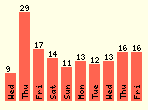
Unique Readers:
Syndication:
 ![[Valid RSS]](/pic/valid-rss.png "Validate my RSS feed")
Anandavala website
Related Links
Sites:
NCN
NCN Newslogs
|
|
|
2013-12-08
There is a fundamental inconsistency at the core of the scientific method / world-view that makes it unable to comprehend quantum mechanics (which seems paradoxical due to the inconsistency) nor can it comprehend consciousness or spirituality.
I have been identifying, explaining and challenging this inconsistency in a series of articles to help motivate the paradigm shift that will eventually make quantum mechanics understandable as well as making research into consciousness and spirituality understandable to modern science and recognised as vitally important.
There is an entry point here: http://anandavala.info/article/Are-we-today-as-wrong-about-any-scientific-fact-that-is-widely-accepted-as-geocentrism.pdf
If what I say is correct, which it seems to be, then these documents point towards the possibility for a radical paradigm shift!
Pass on the good news if you know people who would be interested, the more people who help figure this out, the sooner and the clearer the shift will be.
Especially people interested in the interface between science, consciousness and spirituality. As well as the hard problem of consciousness, psi-phenomena, scientific realist interpretation of quantum mechanics, cybernetic interpretation of quantum mechanics, virtual realism, virtual reality hypothesis, simulation hypothesis, computational metaphysics, reinterpretation of ancient mystic wisdom, etc... It's all connected!
Enjoy :)
|
|
|
|
2013-12-02
Only a few hours ago the I Ching urged me to commit to my highest
aspiration and to announce my intention. It said "Make known
the arrival of a message from heaven and announce it at the Earth
altar. If you don't deliver your important message you will be cut
off and isolated. Call out. Tell us now. Now!" Then along
comes an invitation to do so on Facebook, which motivated this... :)
So, what is the highest
perceived benefit or aspiration of my Life?
More >
|
|
|
|
2013-11-30
The quotes below discuss reasons for the entrenched culture of denial within physics (as well and philosophy and science in general) regarding the consequences that quantum mechanics has for naive realism (AKA classical objectivism).
"After more than 50 years (now over 80 years) of unquestionable success as a theory, questions about the interpretation of quantum mechanics continue to plague both physicists and philosophers. It is argued here that discussions about the meaning of quantum mechanics remain stymied as a result of the failure of physicists to formulate a cognitive paradigm adequate to their theory. The conventional interpretations which they offer can be seen as inadequate in one of two ways — implicitly, they retain one or the other of the two basic tenets of classical physics, the objectivity or the knowability of nature. This, it is argued, can be viewed as a form of cognitive repression of knowledge acquired, but not yet assimilated. A psychological explanation for the persistence of classical beliefs is proposed...
Piaget has invited the comparison between the historical development of scientific thought and the cognitive development of the child. Both, it is suggested, proceed through the emergence of discrete stages of structural organization, each stage brings with it new possibilities of conceptual integration, and concurrently, the possibility of a verbal articulation of the new level of organization perceived. Prior to the establishment of a new conceptual structure, knowledge already present in nonverbal forms (in e.g., sensorimotor rather than representation schemes) finds no avenue of expression, and, to the extent that it jars with the earlier established structures, demands cognitive repression. Piaget [1] tells us that an action schema which "cannot be integrated into the system of conscious concepts is eliminated... (and) repressed from conscious territory before it has penetrated there in any conceptualized form." Caught in a transition between stages, the child, when pressed to articulate perceptions requiring cognitive structures which are not yet available, displays confusion, denial and avoidance - a disequilibrium strikingly reminiscent of the mechanism of affective repression." (Cognitive repression in contemporary physics, Evelyn Fox Keller, http://dx.doi.org/10.1119/1.11911)
"There exists a cognitive repression of the interpretation problem by the majority of physicists. For that majority the questions concerning the meaning of quantum mechanics are answered once and for all by the Copenhagen interpretation, and all further inquiry is rejected as a sign that the inquirer does not understand the topic. Further questions are called "only philosophical" and thus not befitting a physicist. But if one inquires in depth what the Copenhagen interpretation says one gets a variety of different answers. According to Fox-Keller this, too, is a sign for evasion, whereby what is evaded is the necessity of a new cognitive structure which differs radically from the existing one. Fox-Keller calls the old structure classical objectivism. To her, the confusion concerning the interpretation of quantum mechanics exists, thus, in the attempt to retain one or more components of the classical position. While this may be as it is; I suggest that the search for interpretations different from the Copenhagen interpretation very often is motivated by trying to evade its radical consequences, that is, an act of cognitive repression on the part of the proposers." (On the Interpretation and Philosophical Foundation of Quantum Mechanics, Anton Zeilinger, http://typo3physik.univie.ac.at/fileadmin/zeilinger/philosoph.pdf)
|
|
|
|
2013-11-28
When one sufficiently overcomes the habit of naive realism one can
coherently understand the nature of reality rather than remain
trapped in a self-reproducing closed loop of unconscious assumptions
and resulting misunderstandings.
A coherent understanding can be attained personally and also
examined scientifically. A personal understanding will transform
one's life. A scientific understanding will transform civilisation.
The main features of a coherent understanding:
Reality is that which perceives rather than that which is
perceived. The objects of perception are not objective because they
depend on how we perceive them. The objective reality is the stream
of awareness within which the objects of perception arise and which
is our true self.
We have experiences of "being in a world", which is
how the situation appears from our perspective. However those
appearances do not reveal the true nature of reality, just as
experiences of a VR game world do not reveal its true nature to be
computation.
There are underlying processes that animate our stream of
awareness and give rise to the appearances that we apprehend. These
processes are that by which we perceive and cannot be apprehended as
objects of perception, thus they themselves seem unmanifest and
abstract.
All manifest forms are inferred to
exist from our perceptions, however they have no independent
self-nature. Hence the ideas of matter and a physical universe are
myths.
The underlying processes animate all systems and enable them
to experience, react and thereby interact. All system interactions
are driven by reciprocal experiences and there are no inanimate
systems.
The underlying processes that enable our individual streams
of awareness are part of a unified process that animates everything.
There is a global coherence to this unified process, which
imparts a global coherence to the realm of manifest forms. Thus no
event is local, every event is a 'movement' of the entire cosmos.
We can operate via sensory perceptions and thereby exert
influence locally, or we can operate via the inner-most animating
process 'within' us and thereby exert influence globally or
remotely.
Our individual state of being (both body and mind) arises
from the many levels of interacting sub-systems that comprise us. If
these sub-system interactions are dysfunctional we suffer.
Our interactions and relationships integrate us into many
levels of super-systems (groups and organisations) that comprise
society as a whole. The collective state of being emerges from this
integration. If our interactions are dysfunctional the emergent
collective suffers.
The main results of the work from which this world-view arises can be found
here http://anandavala.info/OIPVSE.pdf
|
|
|
|
2013-11-26
My initial motivation was the need to resolve the tension between my rational and spiritual sides. Once that was eased my attention also turned to the civilisation-wide tension between science and spirituality.
There is so much needless suffering and destruction that arises from misguided sciences, misguided religions, the conflict between them all and the resulting confusions and dysfunctions that permeate our cultures and minds.
I really believe that this tension can eventually be resolved and out of that will arise a unified science/spirituality that will have a lasting positive influence on our whole civilisation; so profound that we can barely even imagine what it will be like from our current vantage point.
There are so many people contributing in different ways to this process of unification at present and my greatest hope is to serve some useful role in that effort...
"There is this hope, I cannot promise you whether or when it will be realized - that the mechanistic paradigm, with all its implications in science as well as in society and our own private life, will be replaced by an organismic or systems paradigm that will offer new pathways for our presently schizophrenic and self-destructive civilization." (Ludwig von Bertalanffy, Founder of general systems theory)
Schizophrenia seems to be a problem where there is no means for thoughts to be coherently 'grounded' in truth or reality, hence the tension of confusion builds upon itself creating more confusion and running out of control.
If the wikipedia description is interpreted as applying to our civilisation rather than an individual person it is surprisingly relevant to our current situation as reflected in politics, media, social breakdown, etc:
"Schizophrenia is a mental disorder characterized by a breakdown of thought processes and by impaired emotional responses. Common symptoms are delusions including paranoia and hallucinations, disorganized thinking and a lack of emotional intelligence. It is accompanied by significant social dysfunction. The onset of symptoms typically occurs in young adulthood." https://en.wikipedia.org/wiki/Schizophrenia
In the case of our civilisation I would propose that the core confusion is naïve realism, which gives rise to numerous other confusions such as exoteric religion, empirical science, mechanistic views of human nature, oppressive legal and social systems, entrenched struggle for dominance over others, etc. These reinforce the confusions and generate vast amounts of tension throughout civilisation.
I explain this in more detail in "Simplified Anatomy of the Global Systemic Crisis and How to Heal Civilisation" http://www.anandavala.info/STAR/anatomy.html
|
|
|
|
2013-11-26
I was recently asked: "Is QM in its abstract mathematical proceedure that applies to particles, and just abstract conceptualisations, not considered naive realism?"
No, it is called scientific realism because it claims that aspects of reality can be known scientifically. Scientific realism can be naïve realist, for example via claims that particles are real. This is naïve realist because it is based on the assumption that that which is portrayed by our observations is real.
However in the case of QM it is not naïve realist - it is in fact the antithesis of naïve realism because it claims that the observables that we apprehend are not in any way objective, they are created in the act of observing and are thus totally dependent on how we observe.
Thus QM claims that anything that is portrayed by our experiences cannot be objectively real - whilst naïve realism claims that that which is portrayed by our experiences is objectively real. The two are diametrically opposed.
QM is realist because it claims that that which is represented by wavefunctions are real. I.e. they exist independently of our observations - in fact they are inherently unobservable. Whenever we try to observe them what we experience are the 'observables' that are created in the act of observing.
So QM doesn't claim that particles or waves are real, these are just observables. It is that which is represented by wavefunctions that are real and which give rise to observations of either a particle or a wave depending on how we observe it.
BTW QM doesn't claim that the mathematical proceedures are real - these are just symbolic models via which we comprehend quantum systems.
Hence this type of realism is scientific realism because the things that are considered to be real can only be apprehended by the mind via 'abstract' scientific conceptualisations. The fact that these are 'abstract' doesn't imply that they are unreal - in fact it implies the opposite.
Within a naïve realist paradigm 'abstract' means 'unreal' because it can never be portrayed by the content of an experience no matter how augmented that experience may be (e.g. by microscopes or telescopes or particle accelerators etc). Due to naïve realism we are in the habit of thinking that only the things portrayed by our experiences can be real and that everything else is abstract and unreal.
However, when we step away from naïve realism and seriously consider the role of experience we realise that if experience is fundamental and not just an anomaly then that which is most real must underlie our ability to experience. Furthermore, "that which underlies our ability to experience" cannot be "that which is portrayed by our experiences". Thus that which can be observed is unreal and that which is real would seem 'abstract' because it can never be observed.
In other words, to use a metaphor, reality is the sight within seeing rather than that which is seen. Hence the most real is the most abstract.
BTW it is very rare to find a coherent discussion of the non-naïve realist nature of QM. Most discussions try to introduce naïve realist features or apply it within a naïve realist context.
This is because over the past 80 or so years there have only been a handful of physicists who could think outside of naïve realism. Thus the standard attitude is that we should focus on the world that we know via naïve realism (i.e. the physical universe) and we should use QM to make calculation about that world. Meanwhile we should avoid any attempts to think about what QM really means, i.e. what it is really saying about the nature of reality.
Thus it has been declared over and over that QM makes no sense and that attempts to think deeply about it will drive you insane. This attitude arises because a naïve realist cannot conceive that there is anything beyond naïve realism, thus someone who thinks outside of naïve realism must be insane, or so it seems to them.
There are now a few physicists who are beginning to see beyond naïve realism, but the vast majority of physics and science in general is still thoroughly naïve realist.
Here is a very short article that I wrote for a fringe science newsletter regarding the paradigm shift that is slowly emerging within physics: http://anandavala.info/article/EmergingParadigm.pdf
A more detailed analysis is conducted here: http://anandavala.info/OIPVSE.pdf
Note: in order to conduct this research I had to break away from habitual ways of thinking by dropping out of academia, however this means that this work has no way of being heard by academics or others engaged in similar work. If these ideas resonate with you then you can help by bringing it to their attention.
Thank you for listening and helping! I hope that it helps you as much as it has helped me to develop a clearer understanding of the nature of reality.
|
|
|
|
2013-11-24
Here is a bottom up reformulation of the philosophical foundations of the virtual reality hypothesis, i.e. the idea that we could be living in a virtual reality.
I have noticed over the years that there are many subtle confusions that arise when people try to approach this subject, myself included. Even for those who are cautious and sincere in their approach, there are unexpected pitfalls that can cause misunderstandings.
This reformulation attempts to elucidate and minimise the impact of those pitfalls in order to create a coherent foundation from which to approach the topic.
It is still a work in progress and any feedback or constructive criticism would be much appreciated
The Objective Information Processes & Virtual Subjective Experiences Hypothesis
|
|
|
|
2013-11-11
A differend is a form of invisible oppression. It was first examined in the context of a post-modern analysis of the judicial system and oppressed classes, however it applies to all human interactions.
“A damage occurs when one being is harmed by another. Many kinds of damage may be litigated against, taken to court, proven, and compensated for. But sometimes a damage cannot be expressed, whether because the being who undergoes the damage is unable to speak in a language to which the judges will listen (as in the case of animals, children, the mentally ill, the dead), or because the judges are the ones who have done the damage, whether directly or through affiliation, or because the testimony of the one damaged is deprived of authority for whatever reason. Such a scenario is called a differend, and the person who suffers from both a damage and a loss of the ability to prove it is a victim...
... “subjects are constituted through exclusion, that is, through the creation of a domain of deauthorized subjects, presubjects, figures of abjection, populations erased from view.” It is a question of “who qualifies as a ‘who’” and hence of who can speak, whose testimony will be heard. The silencing of certain voices, the effacement of certain persons’ sufferings, is achieved through the denial that they are “whos,” or through their abjection, and this makes violence to them permissible, indeed invisible.” [link] More >
|
|
|
|
2013-10-29
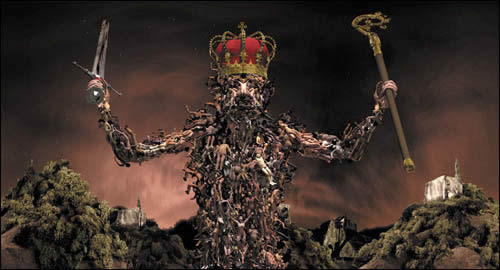
"... for some reason it appears we’ve given up our freedom to varying degrees in exchange for something. But in exchange for what? Security? Acceptance? Ease? It sure appears that way. But how did this come about? ... Looking at the contrived and extremely controlling political and economic structure of our planet’s various societies and the miserable state of most of its inhabitants, it’s clear something is seriously wrong." (Does Humanity Even Want Freedom? [link])
It is clear that in countless overt and subtle ways we are losing our freedom. Why is this happening? And importantly, how far might this proceed and how can we *effectively* resist it? More >
|
|
|
|
2012-05-31
I happened to answer a question on Linkedin and thought I'd share it...
Question:
Has someone an idea , about the relationship between a process and system? is it the same ? what are the differences?
Answer: More >
|
|
|
|
2012-05-09
This is an edited version of my comments from a recent conversation with a good friend Glisten (with extra comments to clarify a couple points). More >
|
|
|
|
2012-05-08
Some questions regarding the relation between a 'process' and a 'schema'.
Note: in this context a 'schema' is structured information that symbolically represents a process.
Examples of schemas are sheet music (for a musical sound-scape), written language (for a linguistic speech act), computer code (for a running application), DVD encoded data (for a digital movie) , html/php/... (for a website), wavefunction (for the dynamical evolution of a quantum system), neural activity (for a sensory or cognitive impression), etc. More >
|
|
|
|
2012-05-02
I was recently asked about introductory material to the
computational paradigm and its intersections with related fields of
ideas. Here's a bit of a brainstorm... More >
|
|
|
|
2012-05-01
My earlier work (up to 2010) focused specifically on understanding the transcendent context and the manner by which it gives rise to the empirical (virtual) context. The models attempt to capture core aspects of this situation.
I modelled these aspects first using mathematics then software and finally OWL ontologies. More >
|
|
|
|
2011-03-13
A brief preliminary brainstorm on the subject of open-source
social operating systems (systems of governance), from the
perspective of systems theory. This is just to put down a few
thoughts that immediately pop into my mind in regards to this
subject... More >
|
|
Page: 1 2 3 4 5 6 7 8 9 10 Older entries >> |
|
 |
Previous entries
2011-03-13
A system's perspective on open-source social operating systems
2011-03-09
Quantum Mechanics, Decoherence, Observables, Consciousness and Paradigm Shift
2011-03-06
Processual Metaphysics
Defending mind from anti-mind spirituality
Overview of information system metaphysics
2011-03-01
Exploring some patterns in the I Ching
2011-02-25
Decoherence and the Quantum Sentience Paradox
Interesting countup-countdown pattern
2011-01-09
A True Current of Western Spirituality or a Partial Realisation?
2010-12-28
Comments Regarding The Truth
Quotes regarding truth, reality and knowledge
2010-12-27
Shadow Personality and the Poisoning of the Mind
2010-12-16
Purifying one's mind and infowar both personal and global
2010-11-08
Mystic Perspective: Comments and Quotes
2010-11-02
Topics Related to Recent Thoughts
2010-09-30
Self-organising narrative on the nature of reality
2010-07-31
Innovation Yantra
2010-07-22
Is the Universe a Simulation? - My Answer on Quora.com
2010-07-17
Trusting Self-Organisation - TweetList
2010-07-16
About Coherence
What is knowledge and what is to be known?
What is a 'liminal' state?
2010-07-13
What is Consciousness? - My answer on Quora.com
Karma Yoga: The Way of Action - Quotes from the Bhagavad Gita
2010-07-11
Synthesising Whole Systems - CALRESCO
2010-07-10
The Jewel of Immeasurable Worth
Quotes Regarding Gnana, the Yoga of Supreme Knowledge
Quotes regarding the illusion of being a person
2010-07-09
Organisations, Collective Consciousness & Developing Human Potential - TweetList
Simulation Argument and Dualism
Naïve Realism Discussed in the Lankavatara Sutra
2010-07-08
Integral Theory and Naïve Realism
Memes, Minds & Collective Intelligence - Tweet List
2010-07-04
Tweet list re: the nature of reality, self, experience & the world
2009-11-11
Personality and Ego
2009-09-30
Memetic Map of Areas of Interest
Symbolism Brainstorm
2009-09-22
Overview
2009-09-13
A new strategy emerging in the war on drugs.
2009-09-01
Simulacrum Definition
2009-08-28
Liberation is not of the person, but from the person
Extracts from the Lankavatara Sutra
2009-07-03
The vision arising from my work in five sentences
2009-04-25
Discussing the Emerging Paradigm on the SSE Forum
2009-04-12
Ego Defence Mechanisms
Harmony and Oneness through Clarifying Dialogue
2009-04-07
Reclaiming 'Realism' for the Sake of Being Realistic
Biological Analogy for Agents of Change
2009-04-05
Advice on Nurturing the Emerging Memeplex
2009-04-04
Shape of the Emerging Memeplex and How to Nurture It
2009-03-23
Wisdom for this Phase of the Journey
2009-03-21
Descartes, Scepticism, Rationalism, Meditation and Intuition
Update on Recent Work
2009-03-18
What I Think in Simple Terms
2009-01-11
Consciousness, Self, World, Virtual Reality and Liberation
2009-01-09
Signs of a New Paradigm 01
2008-12-04
Profound Metaphysical Questions to Ask Yourself
2008-11-30
The Hard Problem of Conscious Experience
2008-11-10
Recent Work
2008-08-13
Seven Steps To Unified Metaphysical Awareness
More ..
|
| Mon | Tue | Wed | Thu | Fri | Sat | Sun |
|---|
|
|
|
|
|
1 |
2 |
| 3 |
4 |
5 |
6 |
7 |
8 |
9 |
| 10 |
11 |
12 |
13 |
14 |
15 |
16 |
| 17 |
18 |
19 |
20 |
21 |
22 |
23 |
| 24 |
25 |
26 |
27 |
28 |
29 |
30 |
31 |
|
|