|
|
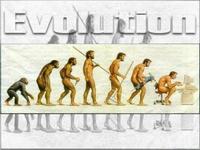 10 Jan 2005 @ 20:43, by ming. Science 10 Jan 2005 @ 20:43, by ming. Science
Edge posted this question to a bunch of smart people: "What do you believe is true even though you cannot prove it?" Which is a great question to ask, and particularly interesting to ask of scientific types who often try to insist they only believe things they can prove.
Now, at first I thought it was just going to be some inspiring things to quote from. But there are some interesting subtexts going through most of the answers. You know, most of these guys are materialist atheists. But yet the red thread that goes through all of them is *consciousness*. A bunch of them quickly move to very dogmatically declaring that there's no God, no design to the universe, and everything is just the result of random accidents. They seem very convinced of that. But of course they indeed are answering the question, because they can't prove it, and they know it. Another bunch of them make very hopeful declarations of being very sure that it is "just around the corner" that we'll discover what part of the brain consciousness comes from and how it works, and we'll able to duplicate it in computers or the like. And implicitly admitting that such things aren't in any way proven, and nobody actually have done so. But, again, they seem very sure of it. And, indeed, most of them are practically squirming and bending over backwards to try to make the case for what is essentially a negative belief. That there's no consciousness and anything that can't be proven in a materialistic sense is just stupid supersticious nonsense. Oh, none of them actually say there's no consciousness, but they wrap it up in it just being an illusion or some phenomenon that happens late in the evolutionary process or some chemical neuro-physiological phenomenon.
Quite remarkable, to see the amount of fear that is stirred up, and the convoluted beliefs that people construct in order to avoid the more simple and unified answers. And the peer pressure that obviously must exist amongst scientists, to look and sound scientific and objective at all times, even when the truth is that you can't really prove very much about anything.
Anyway, there are still many inspiring statements there, and a few of them aren't just hiding behind negative dogma. So, here are a few I liked:Anton Zeilinger:"What I believe but cannot prove is that quantum physics teaches us to abandon the distinction between information and reality. The fundamental reason why I believe in this is that it is impossible to make an operational distinction between reality and information. In other words, whenever we make any statement about the world, about any object, about any feature of any object, we always make statements about the information we have. And, whenever we make scientific predictions we make statements about information we possibly attain in the future."
Paul Steinhardt: "I believe that our universe is not accidental, but I cannot prove it. Historically, most physicists have shared this point-of-view. For centuries, most of us have believed that the universe is governed by a simple set of physical laws that are the same everywhere and that these laws derive from a simple unified theory."
Gregory Benford: "Why is there scientific law at all? We physicists explain the origin and structure of matter and energy, but not the laws that do this. Does the idea of causation apply to where the laws themselves came from? Even Alan Guth's "free lunch" gives us the universe after the laws start acting. We have narrowed down the range of field theories that can yield the big bang universe we live in, but why do the laws that govern it seem to be constant in time, and always at work? One can imagine a universe in which laws are not truly lawful. Talk of miracles does just this, when God is supposed to make things work. Physics aims to find The Laws and hopes that these will be uniquely constrained, as when Einstein wondered if God had any choice when He made the universe."
Alison Gopnik: "I believe, but cannot prove, that babies and young children are actually more conscious, more vividly aware of their external world and internal life, than adults are. I believe this because there is strong evidence for a functional trade-off with development. Young children are much better than adults at learning new things and flexibly changing what they think about the world. On the other hand, they are much worse at using their knowledge to act in a swift, efficient and automatic way. They can learn three languages at once but they can't tie their shoelaces."
Lynn Margulis: "That our ability to perceive signals in the environment evolved directly from our bacterial ancestors. That is, we, like all other mammals including our apish brothers detect odors, distinguish tastes, hear bird song and drum beats and we too feel the vibrations of the drums. With our eyes closed we detect the light of the rising sun. These abilities to sense our surroundings are a heritage that preceded the evolution of all primates, all vertebrate animals, indeed all animals. Such sensitivities to wafting plant scents, tasty salted mixtures, police cruiser sirens, loving touches and star light register because of our "sensory cells"."
Mihaly Csikzentmihalyi: "When I first read your question, I was sure it was a trick—after all, almost nothing I believe in I can prove. I believe the earth is round, but I cannot prove it, nor can I prove that the earth revolves around the sun or that the naked fig tree in the garden will have leaves in a few months. I can't prove quarks exist or that there was a Big Bang—all of these and millions of other beliefs are based on faith in a community of knowledge whose proofs I am willing to accept, hoping they will accept on faith the few measly claims to proof I might advance."
Randolphe Nesse: "I can't prove it, but I am pretty sure that people gain a selective advantage from believing in things they can't prove. I am dead serious about this. People who are sometimes consumed by false beliefs do better than those who insist on evidence before they believe and act. People who are sometimes swept away by emotions do better in life than those who calculate every move. These advantages have, I believe, shaped mental capacities for intense emotion and passionate beliefs because they give a selective advantage in certain situations."
Douglas Rushkoff: "I can't prove it more than anecdotally, but I believe evolution has purpose and direction. It appears obvious, yet absolutely unconfirmable, that matter is groping towards complexity."
But the only one that actually wasn't afraid of believing in consciousness is this guy:Donald Hoffman: "I believe that consciousness and its contents are all that exists. Spacetime, matter and fields never were the fundamental denizens of the universe but have always been, from their beginning, among the humbler contents of consciousness, dependent on it for their very being.
The world of our daily experience—the world of tables, chairs, stars and people, with their attendant shapes, smells, feels and sounds—is a species-specific user interface to a realm far more complex, a realm whose essential character is conscious. It is unlikely that the contents of our interface in any way resemble that realm. Indeed the usefulness of an interface requires, in general, that they do not. For the point of an interface, such as the windows interface on a computer, is simplification and ease of use. We click icons because this is quicker and less prone to error than editing megabytes of software or toggling voltages in circuits. Evolutionary pressures dictate that our species-specific interface, this world of our daily experience, should itself be a radical simplification, selected not for the exhaustive depiction of truth but for the mutable pragmatics of survival.
If this is right, if consciousness is fundamental, then we should not be surprised that, despite centuries of effort by the most brilliant of minds, there is as yet no physicalist theory of consciousness, no theory that explains how mindless matter or energy or fields could be, or cause, conscious experience."
Right. And that is to a large degree what I get from the eloquent statements of most of these other prominent folks I'm not quoting. They have failed to come up with any reasonable explanation, let alone proof, as to how mindless matter accidentally develops consciousness, or how a beautiful and very functional system of natural laws and evolution of life emerges by mere accident. They have no proof, so they make long explanations to try to delay that realization, and most of all they BELIEVE strongly that they're right, so they are willing to continue to the bitter end without any shred of evidence for that which they believe in. More >
|
|
|
|
 1 Jul 2004 @ 22:36, by bushman. Science 1 Jul 2004 @ 22:36, by bushman. Science
Wow, is all I can say, and just think this spacecraft is going to be out there sending back stuff for 4 years and is going to launch a probe to land on Titan. Voyager got some great pics of Saturn's rings, but Cassini-Huygens has beaten all, we accualy sent this craft thru one of the gaps in Satrun's rings and entered perfect orbit 1 second later than predicted. Man, they are getting good at hitting the target, lol. My first impression I got from this pic was wow, what the heck could make chunks of rock and ice that varys in sizes from sand grains to houses, in a mixed state to look like that. It looks like a sound vibrations frozen in time, it may never be solved how the rings have such sharp edges. I think maybe there was moons that vacuumed it up and somehow was ejected later by something. One other thing about Saturn is that it has a perfect magnetic field, this basicly means its axis of rotation is the same as the magnetic north and south, and considering that Earth and Jupiter are the only other planets with a magnetic field except the rotational axis and magnetic axis are not the same. Maybe the rings of Saturn give its magnetic field some stability? This spacecraft also got a pic of Jupiter's ring when it passed by. What a huge step, and even Nasa admited last night during the insertion into orbit, that they will have to rewrite the science books with all the data they have been getting since it was launched. Well you will just have to surf thru thier site, that spacecraft got all sorts of pics and data on the way, including the sound of that huge solar flare last year. :}
[link] More >
|
|
|
|
 7 Jun 2004 @ 18:15, by bombadil. Science 7 Jun 2004 @ 18:15, by bombadil. Science
Are you eating it? Or is it eating you?
An industrial spy is hired by an ice-cream corporation to uncover the secret ingredients of an addictive yogurt-like substance, called The Stuff...
"People associated with The Stuff behave in weird ways…we get a close up look at the effects of The Stuff in action as a young boy, who discovered the glop moving around in the fridge, refuses to eat it, but slowly sees his family going mad with it. They eat nothing but The Stuff and chatter in second hand advertising slogans about what a wonderful product it is."
----Michael Jacobson, Movie Central
More >
|
|
|
|
 10 May 2004 @ 15:56, by ming. Science 10 May 2004 @ 15:56, by ming. Science
From FutureHi, abstract of paper, "What is Natural Selection? A Plea for Clarification", by Neil Broom:I argue in this paper that any evolutionary theory of life that excludes from the living world a primary non-material or transcendent dimension or guiding presence, is no theory at all. The materialist's claim that natural selection supplies this evolutionary 'arrow' but is entirely material in its action, is a fundamentally dishonest claim. If there is no real purposive agenda that natural selection is pursuing then the expression "natural selection" is blatantly misleading and should be deleted from the evolutionary vocabulary. The paper is very readable and absolutely brilliantly argued, I think. He's right. Materialist neo-darwinism is a bunch of superstituous crap. Well, those are my words. It mostly consists of skipping over the evidence and bending over backwards to try to prove with mere words that life is based on a completely blind and unconscious and random process, and there's no purpose to anything. But that gets a little silly when you try to explain how things that do have a purpose come about. There are no half-eyes or half-flying animals or birds that are half laying eggs that sort of half have unborn chicks inside. Explaining how amazingly complex organs like eyes come about, or how animals end up flying through the air, all by miniscule and completely random accidents, requires arguing in circles for quite a while, until the reader sort or gives up, or decides he agrees with you. It is pretty much the same approach as in Creationism, just with the use of a sort of Anti-God, called Unconscious Randomness. Becomes just as silly as trying to explain that a God decided to create humans out of mud. Or that it is turtles all the way down. Anyway, I'm ranting. Neil Broom argues much more soberly and provides plenty of reference material.
And here, via Frank Patrick's Focused Performance Blog, is a quote from Agent(s) Smith in Matrix Reloaded: "Without purpose, we would not exist. It is purpose that created us, purpose that connects us, purpose that pulls us, that guides, that drives us. It is purpose that defines us, purpose that binds us." More >
|
|
|
|
 30 Apr 2004 @ 15:39, by bkodish. Science 30 Apr 2004 @ 15:39, by bkodish. Science
As I wrote in the book Dare to Inquire,"Serious misevaluating may complicate some of the current discussions about the "big bang" and the beginning of our presently known universe." More >
|
|
|
|
 24 Mar 2004 @ 01:05, by ming. Science 24 Mar 2004 @ 01:05, by ming. Science
Paul Hughes has an excellent article on FutureHi, "Defending Psychic Experience", arguing for the fundamental validity of inner experience, and discussing the difficulty in providing "objective scientific proof" for the same. Which gives rise to the various kinds of heated discussions that can happen between people who address the subject from different angles.[S]ince objective reductionist science has served us so well, so unbelievable well, it's become an addiction we can't let go of when it fails. Rather than blame objectivity itself, we instead say that anything that cannot be objectively verified is false. Which is why it comes as no surprise that many leading thinkers in the fields of cognitive and neuro-science actually believe that the inner experience is an illusionary falsity that doesn't exist!
This is where most often any further dialog on the subject comes to a grinding screeching halt. Because now they are resting on dogma. And once dogma enters the picture, there is no way to have a reasonable disucssion going forward. The basic assumptions are so different (i.e those who say they have an inner experience, and those saying it is doesn't exist), that dialog going forward becomes almost impossible. The same as if you were to argue about if God exists or not with an fundamentalist Christian. For those of you who've tried, you will understand what I mean by this. Yeah, I've tried arguing with various kinds of fundamentalists, and also with materialist fundamentalists, so I understand very well what he means. This is what I wrote in a comment:It is kind of a weird situation: arguing with people who believe they don't really exist, but that they nevertheless are right. To me, practices such as science and reasoning have to be based on a firm foundation of what you irrefutably can know by personal observation. Just about the only thing I know for sure is that I exist and that I perceive and think. The rest is guesswork which always will build on those primary factors, but it might be very useful guesswork if you don't lose your way. If somebody else decides to instead start off with some abstract theory, and they end up concluding that I don't exist, then I'd say they've done a bad job of reasoning, largely by starting in some arbitrary place, with data that they can't prove. This argument is an important one to me. I must admit that I once in a while write a long article about it, and half the time I don't post it. Because in reality I don't have the argument in person very often. I.e. an argument with a Fundamentalist Materialist Skeptic about the validity of subjective experience, particularly as it pertains to "psychic" phenomena of any kind. And it seems sort of strange to have a heated argument with somebody who isn't there. So I usually decide against posting it.
Anyway, from another comment to Paul's article comes a link to an absolutely excellent paper by Neal Grossman, Dept. of Philosophy, Univ. of Illinois at Chicago: "On Materialism as Science Dogma". He makes the arguments better than any of us could hope to do. Long and very readable article. He chooses to use NDE (Near Death Experiences) as a reference point, but as he says, it could well be about UFOs or a bunch of other "weird" subjects that happen to be extremely well documented and scientifically verified, but still generally ridiculed by both materialist and religious fundamentalists, who still, maybe for a while longer, are the ones with the most say and the most power in academics, in government, and, somewhat, in the media.Fundamaterialism is so deeply ingrained in the academic establishment that most researchers on the NDE fall prey to it. For, after presenting case after case which would satisfy any reasonable standard of empirical evidence against materialism, even sympathetic researchers almost always deem it necessary to add the disclaimer that their research does not prove that there is life after death. But no scientific hypothesis is ever proven in this sense. Theorems in logic and mathematics can be proved. In science, hypotheses are not proved; rather, empirical evidence renders a given hypothesis more or less probable. There is no such thing as logical, or mathematical certainty in science. The fundamaterialists are correct in that the hypothesis that consciousness exists independently of the body cannot be proven with mathematical certainty. But neither can any other scientific hypothesis, because empirical science deals with evidence, not proof. Evidence never "proves" a hypothesis, it just makes it more probable. And, when evidence for a given hypothesis accumulates to a certain degree, we accept the hypothesis as true. But "true" in this scientific sense never means "proven"; it means very very probable. In science there is always the possibility that a given hypothesis may turn out to be false. The fundamaterialist will not accept the hypothesis of an afterlife until it is "proven" beyond a logical possibility of being false. That is, he is using a concept of proof which belongs in logic and mathematics, not in science. And NDE researchers are playing the fundamaterialist's game when they utter caveats that their research does not prove the hypothesis of an afterlife. What researches should say, in my opinion, is simply that they have amassed sufficient evidence to render the hypothesis of an afterlife very probable, and the hypothesis of materialism very improbable.
In the above paragraphs, I have been using the terms "science" and "scientific" in its epistemological sense. Science is a methodological process of discovering truths about reality. Insofar as science is an objective process of discovery, it is, and must be, metaphysically neutral. Insofar as science is not metaphysically neutral, but instead weds itself to a particular metaphysical theory, such as materialism, it cannot be an objective process for discovery. There is much confusion on this point, because many people equate science with materialist metaphysics, and phenomena which fall outside the scope of such metaphysics, and hence cannot be explained in physical terms, are called "unscientific". This is a most unfortunate usage of the term. For if souls and spirits are in fact a part of reality, and science is conceived epistemologically as a systematic investigation of reality, then there is no reason why science cannot devise appropriate methods to investigate souls and spirits. But if science is defined in terms of materialist metaphysics, then, if souls and spirits are real, science, thus defined, will not be able to deal with them. But this would be, not because souls and spirits are unreal, but rather because this definition of science (in terms of materialist metaphysics) has semantically excluded nonphysical realities from it scope. So, obviously it is hard to discuss a subject matter with somebody who has the fundamental, unshakable belief that it doesn't exist at all and that it is impossible. Like my comment above about the difficulty of discussing existence and inner experience with a person who believes that they don't really exist.
I believe it will all turn around, and before very long. And that will change our lives and our societies immensely. We might indeed find that we can very well understand a large chunk of life, the universe and everything - material as well as non-material - inner as well as outer, and we can understand all of that in a rather unified and very rational way. And we might realize that we had been lead astray from time to time by high priests who made us believe they had a direct line in with universal truth, when really they were just listening to their own voices in their own heads. Which will all be quite forgivable at that time. It is a noble and formidable goal to try to understand how existence works, and not hard to get stuck in a blind alley along the way. More >
|
|
|
|
22 Jan 2003 @ 13:02, by mmmark. Science
Last night (1/21/2003) PBS aired a show titled "The Journey Of Man," which profiles the work of geneticist Spencer Wells, who also stars in the two-hour episode. This program is based on fifteen years of research profiling the genetic codes in thousands of blood samples taken from all known ethnic groups around the world. It was not possible to do this science prior to genetic testing technologies on blood.
It’s now official! Just in case there was any doubt in your mind about where you come from, where your roots are, or who you are related to, Spencer has proven that we are all of the same extended human family. By tracking a Y chromosome marker passed on to each generation through men, he has plotted the path of human migration over the entire planet from a single tribe in Namibia, Africa beginning 50,000 years ago. We are all their children. We are all related to people of all cultures, religions and skin colors.
So now I feel obligated to wish everyone of you family members belated happy birthdays wishes and missed holiday greetings. Please take good care of all my cousins, aunts, uncles, mothers, fathers, nieces, nephews and send photos often so I can keep track of my six-billion relatives!
Hugs and Kisses From Your Brother > > > Mark
PS > See ya at the next family reunion!!! More >
|
|
|
|
27 Nov 2002 @ 13:18, by beto. Science
The real author of this text and theory is Beto Hoisel. However, it's presented as written by Sir Philip Quarks FRS, a fictitious character. Why? I'll explain latter; read the paper first. More >
|
|
|
|
16 Jun 2002 @ 10:37, by gaiatech. Science
I invented (or perhaps reinvented) the pulser pump about 15 years ago. I call it the worlds simplest water pump. It is powered by a small stream or river and there are various uses. It has no moving parts! Usually I have used it to pump water to sheep and cattle in a shed or to water vegetables in a garden. But I have used it to
Wash and clean sand for mortar
Take waste heat from a chimney into a room
Make vacuum to try to quickly sundry vegetables
Make mist in a greenhouse
Power a "geyser" in a pool
Rot cow slurry quickly with better aeration.
Please look it up online. a google search will bring up my homepage
I would really appreciate it if anybody made a basic model and email me or reply to this posting (because a lot of people doubt that it works). The pulser pump has not yet been tested by scientists (but it works and has done so for 15 years
Brian White More >
|
|
|
|
20 Mar 2002 @ 16:13, by bushman. Science
This , my friends, is electromagnetic thrust. Now those of you that have heard of those big black triangular objects people have been seeing flying around, we have the home owner version right here.
[link] More >
|
|
<< Newer entries Page: 1 2 3 4 5 Older entries >> |
|
