 |
New Civilization News: The Only Answer To Organized Money Is Organized People |
Category: Ideas, Creativity 48 comments 26 Mar 2007 @ 23:42 by quinty : Vax -You have a problem with democracy. You trash those who advocate it as hopelessly romantic and sentimental. No good can come from good intentions because the floor we all stand on is corrupt. Rotten wood. And the reality makes a sham of all such proselytizing. For the proselytizer is either a fake or a laughable fool. There is a problem, though, with your logic. At least as I see it. And it is this. Those of us who uphold this form of romantic idealism actually believe it. You see, that makes a very big difference. While a just and fair and democratic society may only remain a dream it is one nevertheless worth striving for. "Freedom is a constant battle," as the saying goes. I have it, others have it. Knowing that this is true within my own heart and mind and intentions I know then that it must be true in the hearts and minds and aspirations of others, countless others. You see, don’t you, that that truly does make a difference? Don't you concur, Vax? Don't you too wish it were true too? And that is why your cynicism is so narrow, Vax. You see the dark, but the light eludes you. The light is only a dream you don’t share. You speak as if you were somehow disconnected to this human predicament we all must endure, both outside and within ourselves. Have I ever been foolish? Of course. Have I ever been wrong? Undoubtedly. Too many times to count. As 'matter o'fact I would say it is almost impossible to be sure of anything with any form of complete certainty (excepting death and taxes, of course.) A quick survey of the history of philosophy will reveal that precious few of the great philosophers had an eye to eye view. In fact, the history of philosophy can be summarized by simply claiming it is the progression of one philosopher attempting to correct another over time. So the cards may be stacked against us. What's more, we can't even know if someone somewhere didn't sit in the mouth of his cave staring out at the blue with a full comprehension of Everything! No one can make that sweeping claim. If we ourselves don’t know then how can we know if others have ever known? So cynics will often be born out. Bad things will happen. There will be failures. Mistakes. Horrible errors. But if the cynics are right then why even live? Why strive forward? Why even care? Why not let the floor, rotten as it is, collapse beneath us and take us all down? Because life is precious. That's why. Because all this mystery surrounding us is not a mere nothing. Because an irrational force within us drives us onward. Why do artists create? Why do men and women build things? Why sing or marvel in numerous ways? Or ever attempt to achieve anything? Because if cynicism were true then we should all just cash it in. And even the cynic's words ring empty. Even if in his own ear they ring profound and true: a reflection of the mysterious world. 27 Mar 2007 @ 09:28 by jazzolog : Are You The "Good" American? you know, like the "good" German? I've written before during the last year how I've spent all my life wondering how Germans let their society deteriorate through the decade of 1935-1945...but that now, viewing my own country, I'm coming to understand it. Given the public education about the United States that I received from 1945-1955, it's almost impossible for me to express my disillusionment. Today I receive emails and hear from colleagues and acquaintances evidence there is a new Golden Rule---perhaps a "pre-emptive" Golden Rule: get him first before he gets you...or at least give it back worse than you got it. Did Germans have a similar attitude as their government marched through Europe and terrorized at home and abroad? Three items hit me between the eyes this morning. First was an op-ed piece Saturday about the startling confessions of Khalid Shaikh Mohammed and whether torture was employed to get them? Did you see his photograph in that T-shirt? Do we now take it for granted that of course “enhanced interrogation techniques” were used? Is that OK, or do I feel there's nothing I can do about it? Is that how the Germans felt? Are those British sailors being tortured in Iran? Do I care? Slavoj Zizek, the international director of the Birkbeck Institute for the Humanities, wrote the Saturday piece http://www.nytimes.com/2007/03/24/opinion/24zizek.html?_r=2&th&emc=th&oref=slogin&oref=slogin . The second article I read today is a dispatch from Tom Engelhardt musing about what an "imperial frame of mind" must be. He's wondering about that because he went to a vigil marking entry into the 5th year of US pre-emptive invasion of Iraq, and almost nobody showed up. The streets are empty and quiet. "Reality" TV is on. I didn't go to my friend Elahu Gosney's organized vigil in Athens this time, because I figured it would be similarly depressing. Did "good" Germans feel that way? Depressed but helpless? "There's nothing anyone can do to stop him"? Engelhardt expands on the theme: "Was it actually like this in Rome while the legions were off fighting on the German frontiers? Was this the way it felt in London while the imperial forces conducted their frontier wars in Afghanistan, or Paris when the Foreign Legion was holding down North Africa? Was this how it felt in Washington when Douglas MacArthur's father was suppressing the Filipinos and General Jacob Smith was turning the island of Samar into a 'howling wilderness'? Is this the way it usually feels in the heartlands of great empires until the barbarians actually do come knocking at the gates?" http://www.tomdispatch.com/index.mhtml?pid=179009 And then a few minutes ago the family of Pat Tillman responded to the Pentagon's statement yesterday that nobody did anything really wrong in attempting to conceal the true nature of his death by "friendly fire." "The briefing we just received was shamefully unacceptable... "These cases will further establish a pattern - now well-known by the American public - of spin and deception by the Pentagon and the administration it serves. "Our family has worked hard to stay out of the spotlight. "We have continued to be optimistic that we might receive satisfactory answers from the Pentagon and the Executive Branch. "Now we ask the assistance of Congress. "Human beings continue to be sacrificed on the altar of a dual foreign military occupation. "Thousands of Americans and Afghans, hundreds of US allies, and hundreds of thousands of Iraqis lives have been lost and shattered. "The deception surrounding this case was an insult to the family; but more importantly, it (sic) primary purpose was to deceive a while (sic) nation. "We say these things with disappointment and sadness for our country. "Nonetheless, we will continue our search for the truth. "The truth is not what we received today. "Once again, we have been used as props in a Pentagon public relations exercise." http://www.mercurynews.com/breakingnews/ci_5528198 Good for them! Let us all stand up and speak Truth to power. 27 Mar 2007 @ 09:43 by jazzolog : The Zizek Op-Ed The New York Times March 24, 2007 Op-Ed Contributor Knight of the Living Dead By SLAVOJ ZIZEK London Since the release of Khalid Shaikh Mohammed’s dramatic confessions, moral outrage at the extent of his crimes has been mixed with doubts. Can his claims be trusted? What if he confessed to more than he really did, either because of a vain desire to be remembered as the big terrorist mastermind, or because he was ready to confess anything in order to stop the water boarding and other “enhanced interrogation techniques”? If there was one surprising aspect to this situation it has less to do with the confessions themselves than with the fact that for the first time in a great many years, torture was normalized — presented as something acceptable. The ethical consequences of it should worry us all. While the scope of Mr. Mohammed’s crimes is clear and horrifying, it is worth noting that the United States seems incapable of treating him even as it would the hardest criminal — in the civilized Western world, even the most depraved child murderer gets judged and punished. But any legal trial and punishment of Mr. Mohammed is now impossible — no court that operates within the frames of Western legal systems can deal with illegal detentions, confessions obtained by torture and the like. (And this conforms, perversely, to Mr. Mohammed’s desire to be treated as an enemy rather than a criminal.) It is as if not only the terrorists themselves, but also the fight against them, now has to proceed in a gray zone of legality. We thus have de facto “legal” and “illegal” criminals: those who are to be treated with legal procedures (using lawyers and the like), and those who are outside legality, subject to military tribunals or seemingly endless incarceration. Mr. Mohammed has become what the Italian political philosopher Giorgio Agamben calls “homo sacer”: a creature legally dead while biologically still alive. And he’s not the only one living in an in-between world. The American authorities who deal with detainees have become a sort of counterpart to homo sacer: acting as a legal power, they operate in an empty space that is sustained by the law and yet not regulated by the rule of law. Some don’t find this troubling. The realistic counterargument goes: The war on terrorism is dirty, one is put in situations where the lives of thousands may depend on information we can get from our prisoners, and one must take extreme steps. As Alan Dershowitz of Harvard Law School puts it: “I’m not in favor of torture, but if you’re going to have it, it should damn well have court approval.” Well, if this is “honesty,” I think I’ll stick with hypocrisy. Yes, most of us can imagine a singular situation in which we might resort to torture — to save a loved one from immediate, unspeakable harm perhaps. I can. In such a case, however, it is crucial that I do not elevate this desperate choice into a universal principle. In the unavoidable brutal urgency of the moment, I should simply do it. But it cannot become an acceptable standard; I must retain the proper sense of the horror of what I did. And when torture becomes just another in the list of counterterrorism techniques, all sense of horror is lost. When, in the fifth season of the TV show “24,” it became clear that the mastermind behind the terrorist plot was none other than the president himself, many of us were eagerly waiting to see whether Jack Bauer would apply to the “leader of the free world” his standard technique in dealing with terrorists who do not want to divulge a secret that may save thousands. Will he torture the president? Reality has now surpassed TV. What “24” still had the decency to present as Jack Bauer’s disturbing and desperate choice is now rendered business as usual. In a way, those who refuse to advocate torture outright but still accept it as a legitimate topic of debate are more dangerous than those who explicitly endorse it. Morality is never just a matter of individual conscience. It thrives only if it is sustained by what Hegel called “objective spirit,” the set of unwritten rules that form the background of every individual’s activity, telling us what is acceptable and what is unacceptable. For example, a clear sign of progress in Western society is that one does not need to argue against rape: it is “dogmatically” clear to everyone that rape is wrong. If someone were to advocate the legitimacy of rape, he would appear so ridiculous as to disqualify himself from any further consideration. And the same should hold for torture. Are we aware what lies at the end of the road opened up by the normalization of torture? A significant detail of Mr. Mohammed’s confession gives a hint. It was reported that the interrogators submitted to waterboarding and were able to endure it for less than 15 seconds on average before being ready to confess anything and everything. Mr. Mohammed, however, gained their grudging admiration by enduring it for two and a half minutes. Are we aware that the last time such things were part of public discourse was back in the late Middle Ages, when torture was still a public spectacle, an honorable way to test a captured enemy who might gain the admiration of the crowd if he bore the pain with dignity? Do we really want to return to this kind of primitive warrior ethics? This is why, in the end, the greatest victims of torture-as-usual are the rest of us, the informed public. A precious part of our collective identity has been irretrievably lost. We are in the middle of a process of moral corruption: those in power are literally trying to break a part of our ethical backbone, to dampen and undo what is arguably our civilization’s greatest achievement, the growth of our spontaneous moral sensitivity. Slavoj Zizek, the international director of the Birkbeck Institute for the Humanities, is the author, most recently, of “The Parallax View.” Copyright 2007 The New York Times Company 27 Mar 2007 @ 09:47 by jazzolog : The TomDispatch A project of the Nation Institute compiled and edited by Tom Engelhardt -------------------------------------------------------------------------------- Tomgram: Americans in the Opinion Polls, Not in the Streets This post can be found at http://www.tomdispatch.com/index.mhtml?pid=179009 Demobilizing America Outsourcing Action in an Imperial World By Tom Engelhardt Excuse me if, at 62, and well into my second era of protest against yet another distant, disastrous, and disabling American war, I express a little confusion. Was it actually like this in Rome while the legions were off fighting on the German frontiers? Was this the way it felt in London while the imperial forces conducted their frontier wars in Afghanistan, or Paris when the Foreign Legion was holding down North Africa? Was this how it felt in Washington when Douglas MacArthur's father was suppressing the Filipinos and General Jacob Smith was turning the island of Samar into a "howling wilderness"? Is this the way it usually feels in the heartlands of great empires until the barbarians actually do come knocking at the gates? I went marching against the President's Iraqi war of choice in my hometown last Sunday. I found myself in an older crowd, many visibly from the Vietnam era. It was relatively quiet, small-scale, and lacking in energy; all in all -- for me at least -- a modestly dispiriting experience, given the crisis at hand and the disillusioned state of public opinion here in the U.S. I came home wondering whether some Bush-era version of the old Roman formula had indeed been working. Had bread and circuses become croissants and iPods, or Bud and American Idol, or Sony PlayStation 3 and 24? I couldn't help puzzling over the gap between public opinion on the President's war and public action, or between the conclusions opinion polls tell us so many Americans have reached and those generally reached in Washington as well as in the mainstream media. I know I'm not alone in wondering about such things, so here's my provisional exploration of some of what's puzzled me most. I don't claim to have the answers, only perhaps some of the questions. Think of this, then, as a guided tour of a few of the trees on our landscape -- with the hope that you'll be able to spot the forest. An Imperial Frame of Mind For four years now, journalists have reported on Iraq; editorial pages have editorialized; and pundits -- that special breed of Ciceros -- have opined; while the retired generals who fought our last frontier wars have trooped onto FOX, MSNBC, and CNN to analyze this one; and experts and political figures of every expectable sort have appeared again and again on the Charlie Rose Show, Meet the Press, and their ilk, without our general fund of wisdom seeming to improve appreciably. The same people who once thought Bush's war was a great idea, or a good idea, or at least an okay idea, or something we should all support no matter what, are still at it. Now, some of them claim the war was a lousy idea but, following Colin Powell's Pottery Barn rule, are convinced that, since we "broke" Iraq, it's "ours" anyway. Some, like the Washington Post editorial page's editors, still think the invasion was a good idea, just somehow poorly -- the word you always see is "incompetently" -- carried out, making the mess the Iraqis are in still ours. Of course, many of those who once praised the war have revised their opinions and judgments somewhat (and were usually exorbitantly praised for doing so). Still, just about all of them, not to speak of just about everyone in Washington who hasn't gone numb or mum, seems to agree on one thing. As the Washington Post put it in its fourth-anniversary-of-the-war lead editorial, "It's tempting to say that if it was wrong to go in, it must be wrong to stay in. But how Iraq evolves will fundamentally shape the region and deeply affect U.S. security. Walking away is likely to make a bad situation worse." Under the many conflicts between George W. Bush and most of his opponents in the Democratic and Republican parties lies an area of agreement seldom challenged in the mainstream political or media world (or, when challenged, given remarkably little attention). On the deepest points, major politicians and the most influential parts of the media are actually in remarkable accord. In fact, you could say that, in the world of our media gatekeepers, there's just another version of the sort of accord that existed before the invasion of Iraq. That country, it is said, is crucial to "American interests" -- "vital national security interests in Iraq" was the way, for instance, Hillary Clinton put the matter recently. There is also agreement (as there was about such things in the Vietnam era) that if we were to leave Iraq totally or "precipitously," American credibility would take a terrible hit, that the terrorists would be "celebrating." It is similarly agreed that, while all sorts of partial withdrawals from Iraq might sooner or later be possible, actually withdrawing from the country is hard to imagine, even if staying seems hardly less so. This is why, as in the recently passed House legislation, withdrawal of all American forces has been replaced by the withdrawal of all, or most, American "combat troops" (or "combat brigades"), a technical term that actually accounts for less than half of American forces in Iraq. The two categories are now so conveniently blurred that it would be pardonable if few Americans grasped the difference any more than did Charles Gibson, anchor of ABC's World News Tonight. On last Friday's news, he claimed the House had voted to get "all U.S. forces" out when his own White House correspondent used the correct phrase, "combat forces." Americans lived through endless similar non-withdrawal (or partial withdrawal) "withdrawal" plans back in the Vietnam years. Now, it seems, we must do so again. At that time, a crucial argument against full-scale withdrawal was the "bloodbath" sure to follow. It was common knowledge in Washington then that any American withdrawal would result in an unimaginable version of the bloodbath already long underway in that country. That it didn't, of course, hasn't stopped the Vietnam playbook from being pulled out again. Now, we have the "Iraqi bloodbath" to contend with. It's not just that those "vital national security interests" would be endangered by a withdrawal from Iraq. On one predominant "fact," just about everyone who matters in Washington agrees. We cannot leave Iraq because only we protect the Iraqis from themselves; only we have any hope of "stabilizing" the country. Even the Pentagon has finally acknowledged that a brutal civil war is underway in areas of Iraq; nonetheless, if we were to up and depart, it is agreed, a near genocidal-level bloodletting would certainly be in the cards. We are, in other words, the only force standing between the Iraqis and the "gates of hell." Yes, we may have loosed all this on them in the first place; yes, our tactics in the field may only clear the way for greater bloodshed; yet our "presence" remains their sole remaining hope. This is considered a reality of our world, a clear, if understandable, limit on American policy-making, whether Republican or Democratic. That this common Washingtonian wisdom is but a prediction about a future yet to be made is seldom noted; that it is being offered by people who often, however unconsciously, have a stake in its coming true is not commented upon either; that, for many of them, such a bloodbath might justify much that has gone wrong, conveniently highlighting the "depravity" of the Iraqis we tried to help, isn't a subject for discussion; that most of these seers have had uncommonly poor records when it comes to predicting any developments in Iraq over the last four-plus years is seldom brought up either. There is also, of course, something grimly self-fulfilling about this particular prophesy. If a single conclusion can be drawn about the U.S. presence in Iraq, it's this: The longer we have been there, the worse it's gotten. We've now reached the point where, with Americans "protecting" Iraqis from themselves, nearly one in five of them have nonetheless either fled their country, been forced into internal exile, or died in the mayhem. If you were projecting into the future, it would be far more logical to assume that, with us present, this situation would only worsen. (Of course, by now, both predictions might prove accurate.) Even the President's surge plan, a version of the old Vietnam-era "oil spot strategy," is but an attempt to extend the control of the American military and the dependent, largely Shiite Iraqi government from the citadel-microstate of the fortified Green Zone inside the Iraqi capital to most of Baghdad. It is aimed at turning our "Iraq," at best, into a full-scale city-state, while driving much of the internecine killing to the outskirts of the capital or surrounding provinces. How such a plan could possibly "stabilize" the situation there in any long-term way remains beyond serious explanation. But perhaps this sort of deep agreement on the "realities" of our world should not surprise us. After all, we're talking about a literal "conspiracy" here -- in the original Latin sense of the word: to con-spire once essentially meant to breathe the same air. Indeed, our politicians and top media figures do breathe the same air and, in a way that wasn't true decades ago, cohabit in the same rarified class atmosphere. Not surprisingly, then, they often agree on the basics, holding in common, above all else, an essentially imperial mindset. In this way, they are genuine representatives of what was -- before a ragtag minority insurgency fought the U.S. military to a stand-still -- hailed as the planet's "last superpower," its only "hyperpower," its "global sheriff," the ultimate inheritor of Western civilization, not to speak of the mantles of the Roman and British empires, and so on. This imperial mindset can, at its most kindly, be expressed in this way: In any situation where American "interests" are at stake, the United States can only be imagined as part of the solution, not part of the problem. In the present Iraqi situation, such thinking also represents an imaginative failure, your essential deck-of-the-Titanic strain of thinking. So call all this the fog of imperial war and, if you want to see it in action, just turn on your TV and check out David Brooks, or Tom Friedman, or Richard Perle, or George Packer, or various of the New York Times or Washington Post reporters who regularly double as pundits, or retired General Jack Keane, or Senator Joe Biden, or countless others nattering on about our prospects in Iraq. Sometimes it seems as if all the major figures on our television landscape were simply in some hypnotic state, claustrophobically recycling the same stale air. Oddly enough, as far as I can see, the only disqualification for being a pundit or expert in our TV world, when it comes to the President's Afghan and Iraq wars (or his prospective Iranian one), is having been right in the first place, having imagined from the start something of what actually did occur -- as, for instance, was the case with Nation columnist Jonathan Schell and Boston Globe columnist James Carroll, or, for that matter, any of the millions of protestors who took to the streets in early 2003. The Protesting Public: Erased from the Story Among the missing-in-action of these last years are all those Americans who went out into the streets before the invasion of Iraq began, part of the largest global antiwar demonstrations ever mounted. Even a fine piece like Frank Rich's "The Ides of March 2003," his recent return to the countdown to war, leaves out that mass of people -- a distinct minority in the U.S., but already part of a global majority. They carried a plethora of handmade signs, including "No blood for oil," "Contain Saddam -- and Bush," "Uproot Shrub," "Oil for Brains, We Don't Buy It, Liberate Florida," "The Bush administration is a material breach," "Pre-emptive war is terrorism," "W is not healthy for Iraqis and other living things," "Use our Might to Persuade, not Invade," "Give Peace a Chance, Give Inspections a Chance," "How did USA's oil get under Iraq's sand," "Peace is Patriotic," and thousands more. In their essential grasp of the situation, they were on target and they marched directly into the postwar period in vast numbers before seemingly disappearing from the scene and then being wiped from history. It wasn't, as people now often claim, that almost everyone was gulled and manipulated into supporting this war by the Bush administration, that no one could have had any sense of what a disaster was in the making. Millions of Americans had a strong sense of what might be coming down the pike and many of them actively tried to stop it from happening. I certainly did and I found myself repeatedly in crowds of staggering size. Women traced out pleas for peace naked on beaches, while in the Antarctic well bundled bodies formed similar peace signs in the snow. And almost everywhere on the planet hundreds of thousands, millions, marched. After the invasion was launched and we had broken Iraq like a Pottery Barn vase, Americans in startling numbers went to the effort of officially apologizing in photos at the Sorry Everyone website. The demonstrations of that moment were impressive enough that my hometown paper, the New York Times, which loves to cover large demonstrations as if they were of no significance, had a fine front-page piece by Patrick Tyler claiming that we might be seeing the planet's other superpower out on the streets. Here is a description I offered of an enormous demonstration in New York City four days after the shock-and-awe invasion was launched: "Twenty to thirty minutes after the group I was with ended our march at Washington Square and dispersed, I called my son -- thanks to the glories of the cell phone -- and he told me he was stuck at the end of the march over 30 blocks north of us. And we hadn't even been near the front of the march. That's a lot of people and there were sizeable crowds of onlookers, cheering from the street side as well as people waving or offering V signs from windows all along the way. It was a remarkably upbeat experience. We were all, perhaps, stunned by the evidence of our existence. Many, many young people. Wonderful signs. Drums and music. Roaring waves of cheers at the end. I think we felt something like shock and awe -- of the genuine kind -- that we had not gone away, that we were not likely to go away." And then, in a sense, we were gone. And yet, in another sense, we never left the scene. At the time the invasion was launched, polls showed over 70% of Americans in support of the President's war (or in a state of terror about terror, should we not stop Saddam Hussein from nuking us). Now, here we are, four years later, and the pundits who were telling us that we should indeed do it are still familiar fixtures on our TVs, while the faces of the pundits who didn't, and of the Americans, in their millions, who arrived at similar conclusions and tried to stop possibly the maddest, most improvident war in our history, have been erased from memory. And yet, to offer a little hope to those who believe that the mainstream media holds the idling brains of hundreds of millions of Americans helplessly in its thrall, that we are all merely the manipulated, let's consider something curious indeed: The general point of view of the minority represented in those giant prewar demonstrations took deep hold as time passed and has now been embraced by a striking majority. Back in December 2006, when James Baker's Iraq Study Group released its report -- and was hailed in the press for finding genuine "common ground" on Iraq -- I argued that the American people, without much help from politicians or the media, "had formed their own Iraq Study Group and arrived at sanity well ahead of the elite and all the 'wise men' in Washington." The Bush administration, of course, rejected the findings of the Iraq Study Group, while the Democrats, by and large, accepted them. But no one turned out to be particularly interested in the "Iraq Study Group" formed by ordinary Americans whose "findings" were expressed in that least active of all forms: the opinion poll (and later, the midterm election). Nonetheless, the numbers in those polls represent a modest miracle, if you think about it. According to a poll released that December by the reliable Program on International Policy Attitudes (PIPA), 58% of Americans wanted a withdrawal of all U.S. troops from Iraq on a timeline -- 18% within six months, 25% within a year, 15% within two years; 68% of Americans wanted us completely out of that country with no permanent bases left behind, including a majority of Republicans -- despite the fact, that you could search the American press, most of the time, in vain for any indication that the Bush administration had built a series of vast military bases, big enough to have multiple bus routes and capable of housing 20,000 or more American troops and contractors. In addition, according to PIPA, by the end of 2006, 60% of Americans had reached the conclusion that the U.S. military presence was "provoking more conflict than it is preventing"; while only 35% still thought it a "stabilizing force" in Iraq. Too bad we don't have similar polls for politicians, opinion-makers, and media gatekeepers. They would surely bear little relation to PIPA's findings. In 2007, if anything, such polling figures have only grown more emphatic. A recent Newsweek poll, for instance, offered the following figures: 69% of Americans disapprove of the President's "handling" of the Iraqi situation; 61% think the U.S. is losing ground in Iraq; 64% oppose the President's "surge" plan; 59% favor Congressional legislation requiring the withdrawal of all U.S. forces by the fall of 2008. In the most recent CNN poll, 61% of Americans feel the decision to launch the invasion of Iraq was "not worth it"; 54% think the U.S. will not win there; 58% believe we should either withdraw "now" or "in a year"; in the most recent USA Today/Gallup poll, 58% favor total withdrawal from Iraq either immediately or within 12 months. So it goes in poll after poll, while the President's approval ratings continue their slow slide into the low 30s. Let's remember, by the way, that, unlike mainstream Democratic "withdrawal" plans, the American public is talking about actually leaving Iraq, as in that old, straightforward slogan of the Vietnam era: Out now! In other words, there is a hardly noted but growing gap -- call it, in Vietnam-era-speak, a "credibility gap" -- between the Washington consensus and what the American people believe should be done when it comes to Iraq. Add in one more odd fact here: It's possible that American public opinion is now actually closer in its conclusions to its Iraqi equivalent than to the Washington consensus. A number of recent polls, in which Iraqis expressed grim feelings about what has happened to their country, have been released and, like the American polls, they seem to reflect a belief that American forces are anything but "stabilizing" and an urge simply to have the Americans out. A PIPA September 2006 poll found "that seven in ten Iraqis want U.S.-led forces to commit to withdraw within a year." Outsourcing Protest And yet the translation of all this sentiment, of these conclusions, into visible action, despite inspirational moments, has generally been less than overwhelming. Yes, in the years since the invasion, there have been a few enormous marches; and yes, there are groups that protest regularly, even heroically; and yes, in cities and towns across the country, protesters have gone out weekly with their signs, sometimes to freezing mid-winter street corners, simply to make a point. Nonetheless, given the extremity of the Bush administration and its acts, it's hard not to wonder why, most of the time, the levels of mobilization have been so relatively weak. Those of us who can use the tumultuous mobilizations of the Vietnam era as a point of comparison -- there was even a group called The Mobe then -- are certainly aware that this time around nothing comparable has happened. It's crossed my mind that there might even be a silver lining in the disappearance of those large, boisterous prewar crowds, in the fact that, generally speaking, the country seems, in protest terms, strangely demobilized. In the Vietnam era, though few realize this, antiwar sentiment was strongest at the bottom, in the blue-collar world. As Vietnam scholar Chris Appy has pointed out, for instance, a Gallup poll in January 1971 "showed that the less formal education you had, the more likely you were to want the military out of [Vietnam]: 80% of Americans with grade school educations were in favor of a U.S. withdrawal from Vietnam; 75% of high school graduates agreed; only among college graduates did the figure drop to 60%." What largely neutralized the full development of antiwar sentiment among the majority of Americans in that era was, I believe, the strength of anti-antiwar-movement sentiment, the visceral reaction of many working-class Americans against the crowds of protestors, against the look of that far wilder moment (and a media that invariably focused its cameras and attention on the wildest-looking of the demonstrators, especially those carrying the flags of the enemy and chanting, "Ho, Ho, Ho Chi Minh, NLF is going to win"). That visceral dislike for antiwar sentiment, as expressed in the streets, was strongest at the bottom. In other words, in those years, angry feelings about the disastrous war in Vietnam were offset by angry feelings about the most visible of those demonstrating against it. Interesting enough, according to John Mueller of Ohio State University, an expert on the subject, the loss of support the Bush administration has experienced for its Iraqi adventure has followed the same arc as in the Vietnam era (and the Korean War era as well); but, in the Iraqi case, support has eroded far more "precipitously," based on far fewer American casualties and, Mueller wrote back in late 2005, "there is little the Bush administration can do to reverse this decline." On this he proved correct. If anything, the decline in support seems only to have intensified in recent months, leaping well ahead of equivalent figures for the Vietnam era. Only four years into the Iraqi catastrophe, polling figures match or exceed those for 1970 (perhaps seven years into the Vietnam conflict, depending on how you count) on questions like whether you favor the complete withdrawal of American forces. In 1970, for instance, 56% of Americans thought going into Vietnam had been a mistake, already way below figures for Iraq. In the latest ABC News/Washington Post poll, for example, a record 64% of Americans say the war was "not worth fighting." Given that, why were antiwar Americans so mobilized in the Vietnam era and why are they so relatively demobilized now? (And don't think, by the way, that the Vietnam-era mobilization in the streets, with all its wildness and excesses, made no difference. Seymour Hersh, for example, points out in The Price of Power: Kissinger in the Nixon White House that President Nixon was considering a major escalation of the war in 1969 when vast crowds of demonstrators descended on the capital. "Those Americans who marched in Washington on October 15 to protest the war," Hersh wrote, "had no idea of their impact; they were protesting the policies already adopted by the Nixon administration and not those under consideration. Nixon came out of the crisis convinced that the protesters had forced him to back down [from his secret plans to escalate the war]. The protestors thought the Moratorium had been largely a failure.") The reason most often cited for the Vietnam-era mobilization is the draft. After all, we still had a citizen army then. Usually, the draft explanation is linked only to fear -- the fear, in particular, that middle-class kids had of going to Vietnam; and fear was certainly a factor that drove some young men into the streets. But it wasn't, to my mind, the predominant one. The draft had a more important effect. It reminded young men (and also young women, who couldn't be drafted) and their friends, relatives, and parents that the killing going on in Vietnam wasn't just some distant event, that it touched and affected them. The draft made the war, and anger about it, real in a mobilizing way as nothing has done today. Here's a second difference of eras: The young in revolt in the 1960s, whether on campuses or in the military, even those who claimed they were out to change the "system" or bring down "the establishment," had grown up with a deeply embedded belief that this was a system that could be challenged, could be changed; that real democracy (or "participatory democracy" in the phrase of the moment) was actually possible; that each person could make a difference. We still retained -- whether we knew it or not -- a kind of faith in the American system and its ability to respond. We had hope. Similarly -- and this is a third point seldom mentioned today -- the young in the streets, however frustrated by the moment, however unresponsive or even criminal they found their leaders, still believed that, at some level, they would be, and should be, listened to. And the fact is they were being listened to. When President Lyndon B. Johnson complained about "that horrible song" ("Hey, hey, LBJ, how many kids did you kill today?"), he was listening; when Richard Nixon went out of his awkward way to claim that he would be watching a Washington Redskins football game as demonstrators arrived in town, he was signaling that he knew they were coming. Today, it crosses no young minds that the top officials in the White House might be listening. Many fewer young people, I suspect, have any remnant of that deep faith that our political system could be responsive to them or that anything they could do might change it. When they look to Washington, what they see is fraud, dysfunction, conspiracy, cronyism, cabal, influence-peddling, corruption, fear -- in short, a system, a world, beyond response, possibly beyond repair, and utterly alien to their lives. In such a situation, despair or apathy tends to replace anger and hope. The Iraq demobilization, then, is certainly part of a larger demobilization, a deeper belief that, as Bill Moyers made vividly clear in a recent speech, your vote doesn't matter; that democracy is a-functional; that none of this has anything to do with you, or your ballot, or your feet, or your sign, or your shout. Our world has changed radically since the Vietnam era. Today, an increasing part of what matters in public life (and work life) has been "privatized" and subcontracted out, or simply outsourced. The U.S. military has essentially been subcontracted out to small-town and immigrant or green-card America -- to, that is, the forgotten or ignored places in our land; as a result, for most people in draft-less America, the war is not part of our lives or that of our children. (The draft itself has been carefully kept off the table by the Bush administration, despite the desperation of a body-hungry, overstretched military.) In addition, war-fighting has been outsourced to private corporate contractors who deliver the mail and the fuel, do KP, wash the laundry, build the bases, and, in the case of tens of thousands of rent-a-cop mercenaries, do some of the guarding, fighting, and interrogating in Iraq and Afghanistan. And yes, the political system has increasingly been subcontracted out, with malice aforethought, to thieves, looters, cronies, and absolute dopes. Little wonder that Americans, living through the Age of Enron, scanning the horizon from Iraq to New Orleans to Walter Reed Army Medical Center, and watching Halliburton head for Dubai, generally believe their system no longer works; that those high-school civics texts are a raging joke (that, in fact, fierce joking, à la Jon Stewart, is the only reasonable response to the extreme, roiling absurdity of this administration as well as our world); and that, if you took to the streets of the capital, no one in either party would be paying the slightest attention. No wonder Americans have arrived at a series of striking conclusions on Iraq, but haven't done much about them. In an interview with the President, Jim Lehrer recently inquired about why he hadn't asked the public (other than the military) to "sacrifice" more. Bush, who had urged Americans to show their post-9/11 mettle by heading for Disney World and intensifying their shopping behavior, fumbled around before replying this way: "Well, you know, I think a lot of people are in this fight. I mean, they sacrifice peace of mind when they see the terrible images of violence on TV every night. I mean, we've got a fantastic economy here in the United States, but yet, when you think about the psychology of the country, it is somewhat down because of this war." Perhaps the formula wasn't so much bread and circuses as terror and consumerism. (Stop al-Qaeda, use more gas.) Same idea, though. This was, after all, an administration intent on terrifying and demobilizing most Americans (while mobilizing the foot-soldiers of the political right), all so that they could create a Pax Americana world and a Pax Republicana "homeland." It was a mad dream, now in ruins. In response -- and this is just my own hunch -- Americans performed their own acts of privatization, even as they came to reject this administration, its war, and the way it was gambling with all our lives. That's not so surprising. After all, we really do all breathe the same air, live in the same world. And so, while they were at it, many Americans may have subcontracted out their war protest to others, to the pros maybe (even if those pros were actually dedicated amateurs, some of whom really were sacrificing something in their place). That, I think, is the forest I see. Tom Engelhardt, who runs the Nation Institute's Tomdispatch.com ("a regular antidote to the mainstream media"), is the co-founder of the American Empire Project and, most recently, the author of Mission Unaccomplished: Tomdispatch Interviews with American Iconoclasts and Dissenters (Nation Books), the first collection of Tomdispatch interviews. Copyright 2007 Tom Engelhardt - - - - - - - - - - - - - - - - - posted March 25, 2007 at 4:45 pm 27 Mar 2007 @ 09:49 by rayon : Standing for President Quinty? That is some speach! Applause. But I also know where Vax is coming from, I call it "just over the horizon" either ahead or behind, and it reminds us of some other realities. The thing is with Vax's rhetoric is that it is the work of groups of people or groups of organisations, never just one unless in the exceptional like the Hitzers, Stalings, etc. Take the individual out of the organisation, sit him down and he will come round to Quinty's thoughts if he is not already there. We had a gobstopping, amazing piece of information documentary here on Sunday. On the Loss of Freedoms. This comes down apparently to the Philosopher in Chief of the NeoCons (who decided that US foreign policy should not support regimes using torture (Nicuaragua etc, Pot Pot,) So they adopted what is called by I Berlin, as simple democracy. This just voting for your guys and seeing them in place doing governing, while they carry on planting rise in the paddies. Complex democracy is when there is change of land ownership, this usually creates a new elite in society, and is brought about by what is called "shock therapy". This is what is happening in Iraq now. It happened in Russia when the rouble fell, and all the internationals pounced to gain new ownership and paid their workers in share certificates which they sold at rock bottom prices for food. So two forms of democracy are being used by the US and UK. Simple and complex. One brings what is called negative freedom, not working or fighting for anything in particular and the other is positive freedom which is defined as having a goal, with difficulties and wars, but at least a goal. This is Quinty's stand point from here. You have to be an advanced society to survive positive freedom. France is seen to have espoused Positive Freedom. And they say that a Muslim thinker called Shariarti translated Jean Paul Sartre who advocated the use of violence as a justified means for the human condition into Shia Muslim and added some new Muslim thought too. And suddenly here was a credo for all the terrorists. A Mulah called Sistoni warned the west what was happening, no one took any notice. Isaiah Berlin, Foremost Western Philosopher http://en.wikipedia.org/wiki/Isiah_Berlin This is the chap responsible for our disappearing middle classes, our wars, and it would seem many other things. As I said to Jazzolog earlier, most documentaries repeat certain facts ad nauseum, but this one sped through the facts faster than one could jot them down whilst maintaining full comprehension and flabberghastness at the same time. If this does not make much sense here, I will try again later when my notes make more sense. 27 Mar 2007 @ 10:41 by jazzolog : The Tillman Family Statement Thank you Nicola, I shall try to find more time soon to comment...but I must get to work and need to put up the entire statement delivered last night~~~ Statement from the family of Pat Tillman Mercury News Article Launched:03/26/2007 11:03:49 PM PDT Statement by the Family of Pat Tillman, following the Pentagon Briefing on the Investigations of Pat Tillman's Death by Friendly Fire. Transcribed by Julia Prodis Sulek from a hardcopy handed to her at the Tillman house Monday evening. March 26, 2007 NOTE: These remarks are the family's reaction to the briefing, and may be duplicated on certain points within the document distributed by the Department of Defense. The briefing we just received was shamefully unacceptable. Our family is therefore compelled to continue our pursue (sic) the full truth about the circumstances of Pat Tillman's death and the so-called "missteps" and "deficiencies" of Pat's unit, the Army, the Department of Defense, and this administration. The characterization of criminal negligence, professional misconduct, battlefield incompetence, concealment and destruction of evidence, deliberate deception, and conspiracy to deceive, are not "missteps." These actions are malfeasance. This attempt to impose closure by slapping the wrists of a few officers and enlisted men is yet another bureaucratic entrenchment. The Army continues to deny the family, and the public that pays for the Army with its taxes, access to the original investigation and the sworn statements from that investigation. His investigation contained the unaltered statements, taken when memories were still fresh, by witnesses to the events surrounding Pat's death. We know from subsequent sworn statements that more than one of the original statements was altered, after Captain Scott's investigation "disappeared." This is not a misstep. It is evidence tampering. The Army has yet to provide the family with a copy of the original narrative required by Army Regulation to support the award of the Silver Star. While they admitted today that there were improprieties in the submission of the award, they appear to have intentionally stopped short in every single "misstep" of actual criminal actions. Submitting fraudulent awards is a crime. More than one person participating in the construction of a fraudulent award is evidence of a systematic cover-up. Investigators from the Army claim that Secretary Rumsfeld was not even aware that Pat's death was friendly fire for almost a month. Anyone familiar with former Secretary Rumsfeld's reputation as an unforgiving micromanager must find this claim to be extremely disingenuous. The Army Regulation on the award of the Silver Star requires a detailed summary, confirmed by witness statements, of the exact circumstances of the event, which precipitates the award. The award was directed before the unit had even returned from the field for debriefing. The original draft of the award falsely claimed that Pat was killed by enemy fire, when Pat was not subjected to enemy fire throughout the entire incident. We know, from sworn statements, that the draft was changed to exclude explicit reference to enemy fire - probably as a precautionary legal measure - while maintaining the impression that Pat was killed in an intense firefight with the enemy ... which he was not. The Army can still not cite a single instance of any Silver Star, before Pat, that was awarded in the case of fratricide, when the subject of the award was never fired upon by the enemy. No one who knew Pat ever doubted his physical or moral courage. But the award of the Silver Star appears more than anything to be part of a cynical design to conceal the real events from the family - but most especially, from the public - while exploiting the death of our beloved Pat as a recruitment poster. The characterization of this fraudulent award as a list of "deficiencies" has the powerful odor of intentional minimization to a level just below criminal, in a case for which the accumulation of errors and missteps has long past the laws of probability for coincidence. Emails discovered in the conduct of investigations refer to a "Silver Star Game Plan." This certainly at least suggests conspiracy. The entire military, we believe, compelled by the Secretary of Defense's office, was seeking to accentuate the positive and eliminate the negative, as it was embroiled in a huge tactical setback in Iraq in April 2004, and as the Pentagon was preparing to deal with the public affairs crisis engendered by the about-to-be-revealed horror stories from Abu Ghraib. This investigation draws conclusions, conclusions that are meant to be implanted in the minds of the American public, that say the wrongdoing flowed from bottom to top. We base our beliefs on the relentless pattern of the administration of deception, evasion, and spin in the conduct of the entire dual-occupation of Iraq and Afghanistan. We remain convinced that the priority of the Pentagon was to prevent the public knowing that Pat was killed by the military's highest priority shock infantry unit; and that he was killed by a combination of shoddy leadership and clear violations of the Rules of Engagement, as well as violations of the Law of Land Warfare. We detail only two major themes in a much larger story. These themes exemplify the way this case had been handled, and the way it continues to be handled. These examples show that we are not dealing with "missteps" and "deficiencies." There is an overpowering suggestion of violations of law, regulation, and policy that reaches from the vehicle that fired on Pat and took his life to the highest levels of the Pentagon, who - with his reputation as a world-class micromanager - was certainly aware of every move made in this case. In three years of struggling with the Pentagon's public affairs apparatus, we have never been dealt with honestly. We will now shift out(sic) efforts into Congress, to which we appeal for investigation. Perhaps subpoenas are necessary to elicit candor and accuracy from the military. We do not think that Pat's notoriety - about which Pat himself was self-effacing - gives him a special qualification for Congressional attention. But if that notoriety can serve as a catalyst to open dozens of cases - many of the families known to us - of troops who were killed in Iraq and Afghanistan by fratricide, and whose families, like us, were deceived about the circumstances of these deaths. The fact is, the malfeasance with regard to this case only happened because of Pat's notoriety. The reenactment graphics shown to the press and the public were designed to emphasize enough exculpatory evidence to lower the level of actions during and after Pat's death below the bar of criminality. These cases will further establish a pattern - now well-known by the American public - of spin and deception by the Pentagon and the administration it serves. Our family has worked hard to stay out of the spotlight. We have continued to be optimistic that we might receive satisfactory answers from the Pentagon and the Executive Branch. Now we ask the assistance of Congress. Human beings continue to be sacrificed on the altar of a dual foreign military occupation. Thousands of Americans and Afghans, hundreds of US allies, and hundreds of thousands of Iraqis lives have been lost and shattered. The deception surrounding this case was an insult to the family; but more importantly, it (sic) primary purpose was to deceive a while (sic) nation. We say these things with disappointment and sadness for our country. Nonetheless, we will continue our search for the truth. The truth is not what we received today. Once again, we have been used as props in a Pentagon public relations exercise. 27 Mar 2007 @ 20:54 by quinty : Oh Vax, now you're telling some of us we don't even know what kind of government we have. Have you ever heard of respect? Respect makes the world turn around, doesn't it? I've read several books on the Founders, who I admire, enormously (and like to think they were so radical, revolutionary, advanced and generally out of the accepted political mainstream of their own time and day that had the British won the war they would have all been hung and forgotten about - their names obliterated, wiped off the historic record) and can tell you that what they intended, what they wanted in their American constitution is still highly controversial and debated by modern historians and scholars. Yes, I agree, they distrusted the "common people," and feared any form of pure democracy. The concept of checks and balances based upon an understanding of human nature being their great contribution, and popular democracy was only one of its components. Nor did they believe in universal suffrage. But we know all that. But Vax, many of the problems you chastise us for ignoring or blindly not recognizing are right before our eyes: we have lived with some of them all our lives. That's why I sense a disconnect between what some of us say and how you respond. As if we were ignorant idiots. And if we happen not to agree with you then that is proof of our ignorance and idiocy. Respect, Vax! Respect: it's what makes the world turn around. Curious you chose to quote Patrick Henry: of all the prominent men of his time he would most likely have been a Neocon in our time. At least that's the way I see it. (I hope I haven't given the impression of knowing more than I actually do.) 27 Mar 2007 @ 22:40 by vaxen : Yeah... I've heard of it. And no I do not believe that it is respect (to look again) that makes this world turn around. In fact it seems to be just the opposite that makes Governmental institutions (all of them) destroy the respect worthy. There is more than one American Constitution. Many people alive at that time weren't even asked what they thought about it so... lots of Americans were quite happy with good old King George and maintained their ''ties'' with Britania even after the supposed "revolution." Then along comes 1812! Just threw the quote in for flavor. You can return to the Republic, and your un-a-'lien'-able rights, any time you choose to. The problem with the current farce is that you are not given a choice! In fact... the way is hidden from you! Are you a 14th Amendment citizen, quinty? That's a ''federal citizen.'' Or are you a citizen of your state, which also has a Constitution, probably several - owing to the ''Civil War.'' A federal citizen has no rights under the federal constitution. Read your state constitutions sometime... see where you fit in, if you do. Then... we have the ''citizen of the soil.'' A sovereign in his own rite/right whose sovereignty comes 'with the land.' Of course that isn't the way the so called US courts see it... but that's the way it is. Constitutions (cf., Bouvier or Black for the real definition of that term.) are not "living documents" as is contended by some ignorant and verbose commentators. Because a Constitution defines the structure, powers, and limitations of the government, such elements are fixed, except as such may be altered by the amendment process. When a Constitution includes language that protects personal liberties (sometimes called ''natural rights'' or ''God given rights''), these provisions must remain in effect, and remain fixed as they are for all time. They are not subject to modification by amendment because no one, not even our fellow Citizens (or Denizens as the case may be), has the authority to deprive us of our liberty. If the Constitution in question is a Constitution that is operative in America, there is an added aspect that such Constitutions are controlled by the principles espoused in our Declaration of Independance. In the Declaration of Independence it states: "...all men are endowqed by their Creator with certain un-a-lien-able (can't attatch a lien unto) Rights, that among these are life, liberty and the pursuit of happiness. That to secure these rights, Governments are instituted among men, deriving their just powers from the consent of the governed. -That whenever any form of government becomes destructive of these ends, it is the RIGHT of the people to alter or abolish it, and to institute new Government." In other words if a Constitution was altered in such a way as to diminish personal liberties or remove their protections, then the Government constituted by that Constitution would cease to be a valid government and the Citizens would be greatly justified in using whatever means necessary to bring that government to an end. So citizen of the United States (federal citizen) or state citizen or Sovereign according to our Declaration of Independence? Know the difference? Of course most ''states'' have been co-opted by the Federal clownship of Washington DC via cheap ''loans.'' Ha! "Let no more be said about the confidence of men, but bind them down from mischief with the chains of the Constitution." --- Thomas Jefferson It is so easy to leave the rotten democracy behind... it behooves those who think they know what is going on to look just a tad deeper and maybe to discover for themselves the real way to unchallenged liberty. You'll never get it through debt slavery to a lying government such as you have there in Washington DC today. You must leave it and reinstantiate your Citizenship in the Republic... if you want to be free, that is. The status of "citizen of the United States" is a statutory privilege granted by the government. Citizenship under the 14th Amendment is not a result of one's birthright (unalienable right), as is the citizen status of a state Citizen. Oh, there is so much more but I am afraid you'd probably be offended so... good luck in sorting it all out. You're gonna need it. But don't for one single moment think that I in any way intend or intended to belittle anyone here in this log or anywhere else for that matter. As far as your wonderful democracy is concerned? You are an enemy of the state. Want references? I thought not... Good luck and have a marvelous day and please write more... you write very well when you've a mind to. CS gives us: The people know the salt of the sea and the strength of the winds lashing the corners of the earth. The people take the earth as a tomb of rest and a cradle of hope. Who else speaks for the Family of Man? They are in tune and step with constellations of universal law. The people is a polychrome, a spectrum and a prism held in a moving monolith, a console organ of changing themes, a clavilux of color poems wherein the sea offers fog and the fog moves off in rain and the labrador sunset shortens to a nocturne of clear stars serene over the shot spray of northern lights. ;) 27 Mar 2007 @ 22:58 by jerryvest : Thanks, Jazzo for the great log on the presentation by Bill Moyers. He is my favorite journalist and American citizen and am only sorry that more politicians don't or won't follow his example. I sent your log to a number of my friends and family and all appreciate your contributions. Nice going. Jerry 27 Mar 2007 @ 23:55 by jazzolog : Vax, NCN Seemed To Be Acting Up this morning (US time) or at least I was having trouble getting things posted and verifying they were up. Was that happening to you? You seem to have a few identical up there. I have not removed any options to delete but if you can't, let me know if we need to have them all...or if there are a couple we can send to the great recycler in the sky. 28 Mar 2007 @ 01:58 by vaxen : Yes sir... Problems it is. Lots of problems here at NCN. Like getting the login menu everytime I go to a chat room or to workgroups or... Well, par for the course, eh? There is no delete button so I did the best I could. Maybe I'll re-edit the blankish ones and toss in a poem by, say, Robert Burns. Your log this afternoon was virtually impossible to get into. Fortunately I know how to hack a thing or two so... it was still extremely tedious. I don't talk to Ming, anymore, about such things and I've stopped doing penetration tests on this site. So...maybe there is a little bee somewhere who could tell the Ming Chan that there are problems, lots of em, with this server or rather with the 'code' here at home base. Thanks jazzo... http://hellstorm.gnn.tv/blogs/22527/Neocortical_Warfare 28 Mar 2007 @ 08:25 by jazzolog : Avast Matey, There Be No Mutiny Here! I continue to swing like a rusty gate squeaking about a New Civilization that shares the duties and responsibilities as well as the pleasures. For some reason this oddball idea always hits Ming the Magnificent like a pie in the face. But on the other hand he has offered a job or 2 to folks in the past, and something always doesn't work out. Even ye Olde Civilisation works better than this! I needs always must remember the main purpose of New Civilization for our 10703 members is networking entrepreneurs. How Amerikan! I've deleted a couple of surplus comments Vax, and hope all is well. I couldn't get onto jazzoLOG yesterday either, but I thought maybe it was because Nicola was posting here at the time. I don't think a situation like that has made a difference before though. And then I blame our dialup, etc. For the nonce I think I'll go out on the splash page and spruce up a bit with the tools I still have. It's embarrassing to see articles from 8 months ago advertised as our best and latest. 28 Mar 2007 @ 13:50 by vaxen : Ahoy! Good idea about the nonce. Embarrassing? Means you care... Not Nicola, not dial up, just... well, you know. I use dialup, too, and yesterday was the worst yet but someone, somewhere, seems to take care of the little glitches from time to time. Big code base so gremlins delight in such. Thanks jazzolog... PS: Here is something I think you might like to know about... http://freejosh.pbwiki.com/ "...and the fog moves off in rain and the labrador sunset shortens to a nocturne of clear stars serene over the shot spray of northern lights." --- Carl Sandburg "All forms of tampering with human beings, getting at them, shaping them against their will to your own pattern, all thought control and conditioning is, therefore, a denial of that in men which makes them men and their values ultimate." — Isaiah Berlin, Two Concepts of Liberty 28 Mar 2007 @ 18:17 by quinty : Awe shucks Vax and I had thought my little aphorism was to the point. But you blunted it, took all the juice out. But respecting one another remains a nice ideal, doesn't it? Rather than "love one another," Jesus should have said: "respect one another!" A far more obtainable ideal. And, yes, in that light respect is what makes the world turn around. Without it we are doomed. With it many pitfalls we commonly leap into could be avoided. For example. Power often expresses itself wherever there is no pressure to contain it. Men over women. Bosses over workers. School yard bullies over skinny kids. We're familiar with the unending list. Power requires vigilance, but most of us who have it are often lazy. And sometimew we even believe the bright glow. In terms of a personal code respecting strangers would be a good start and would make the world a far better place. If George W. Bush and his greedy neocon advisors had had this point of view our armies may not be in Iraq. Westerners look down on the Arabic world, and Islam is a perfect target of our haughty western point of view. So arrogant are imperial powers that they even believe they are occupying their conquered lands for the natives’ own good. Respect. It's what makes the world turn around. As for your concern with various constitutions I think I’ll skip that. Since I haven’t even read our state constitution and have never particularly cared to. I kind of doubt I would find anything other than high minded and ideal in its sentiments, and a general reflection of current social norms. Though the national constitution sometimes reads like the Escoffier cookbook, offering general principles. Like the Second Amendment. The wording (never mind the historical context) is so unclear it could mean almost anything. But you’re wrong about the Declaration of Independence. It’s not part of the constitution. Which is why the wording between the two documents is extremely different. The Declaration may express the ideals, but not the rules. 28 Mar 2007 @ 18:47 by vaxen : Buckaroo... is an Arabic word. Why is that? Could it be that the notion of Islam has nothing whatsoever to do with Arabic? Well, other than that it was in this language that Mahmud spread his business empire round the world. Yes, he was a merchant. ;) Business as usual. Re Spectare. Something rather spectral in all that I dare say. You skip my concern with Constitutions at your own peril. Many scream about lacking power to do this or that yet forgo that which could set them free. There is NO one national Constitution! I'll proove that to you in upcoming articles yet have ample evidence in my blog to that effect. To respect something or someone means to 'take another look at,' don't be satisfied with a cursory view but look deeper into that which you may have misjudged at first glance. You can gain your torturers grudging respect by enduring their tortures with a smile on your face... As for wording? Try Chaucer in its' original if you think Constitutions are bad. I tend to prefer facts over ideals. Let those who need them adopt them and stay out of my way in the killing fields. ;) I think you should write more. Get your thoughts together, well researched data, and fly, Quinty san, fly... to Heroland where we are all still free. "All forms of tampering with human beings, getting at them, shaping them against their will to your own pattern, all thought control and conditioning is, therefore, a denial of that in men which makes them men and their values ultimate." — Isaiah Berlin, Two Concepts of Liberty These people didn't like Constitutions either and were/are totally ignorant of the law which would set them free. you see, they did not know that they opted out of the Republic for a few crumbs, ideals, proferred to them by their 'notions' of Democracy. ;) http://www.shac7.com/case.htm 28 Mar 2007 @ 20:39 by quinty : I don't suppose Isaiah Berlin was writing about torts? Was he? Though I must admit I've never read him. Your comment on Chaucer was witty. Somehow the 19th century comes a lot closer to home. Our constitution is actually rather flexible, promoting a great deal of liberty. There are those in this country who would fight to the death to preserve the First Amendment. For me the extent of free speech has actually been a gage in recent times watching how far Bush would go. Once the First Amendment is gone it's all over baby. But like everything human it all comes down to interpretation - that is, regarding how we apply the Constitution to our lives. Not even the best and clearest of constitutions could prevent varying interpretations, human nature from setting in. Disputes and argument. At least not in a free society. Some justices are conservative and some are liberal. Someone, somewhere (I've forgotten the case) once determined corporations are "citizens," with all rights and privileges pertaining. A very bad decision, in my opinion, which has resulted in being detrimental to the citizenry. But some would call it freedom, and I can understand the reasoning tying money with free speech. Even if it corrupts our elections. But so it goes. Disputes and arguments. We have had brief spells of liberalism in the court, and now, perhaps, it’s swinging back toward the right. Which will mean a loss of individual liberty. You think ideals are piffle? Then what are you fighting for? If you are? Money? Power? Survival of the fittest? For the hell of it? In our country the United States Constitution, or federal law, takes precedence over state law and constitutions. (Though just how can be disputed.) I can't imagine reading anything more dry than the Rhode Island state constitution. Anyway, if there were anything really dangerous in there I'm sure I would have been strung up and hung long ago. Could we be more free? Of course. Some would say work, nine to five, is a form of bondage. And, yes, corporations are monsters, and the worst aspect of Capitalism run amuck. But if you live in the populous city then you have to abide, to some extent, by the rules. Even if you think red lights are an imposition. 29 Mar 2007 @ 16:03 by vaxen : Beg to... differ with you concerning your thought that "Once the first amendment...it's all over baby." The first Amendment isn't going anywhere nor are the "Constitutions." What is going to happen is 'clarification of position' in regards to who you are. You'll either take back your stolen identity from the usurping government or you'll continue to be a 14th Amendment citizen of the United States. The issue of citizenship is no less clouded by use of language than is any other area of law. The definitions of words or "legal terms" must be sought out diligently and the context within which they are used always carefully considered. You are wrong on several counts, Quinty san. You have been lead to believe that the UNITED STATES CONSTITUTION has something to do with the "Nation." The UNITED STATES is the Corporation in Washington DC which espouses "the Democracy." Not the same thing as the Nation. (Have proofs but this isn't the place for them now) Perception vs. Reality Procedure There are certain facts which need to be addressed; One is that there is no law in this Democracy, only 'color of law.' You can only have law when we have real people. You have color of law when you have fictions such as persons, individuals, corporations, trusts, partnerships, organizations, Associations, and even Agencies. This is what we have in America today. The modern man in America is the Strawman. In the Republic we only have Living breathing souls that live on the land as daughters and sons of God. Your status as a real live being has not been changed in reality, but it has changed by presumption and perception in this fiction world we live in. By the use of affidavits you remove the presumption that you are the same as the fiction and when it goes un-rebutted, and the following procedure followed (Not included here), you win by default. The 'rules' are what you have not been given. The "rules" are cloaked so that you might not know the way to freedom and thus remain an indebted servant for the rest of your life and your children and their children ad infinitum will be born into debt slavery. No problem, if you are a mule... Bush is not 'the Dictator' as you will soon find out. Bush is an Executive officer. Nothing more, nothing less. It's business as it is conducted under the Law Merchant, as well as others such as the Law of Nations (Roman Civil law) and so much more that it would make your head spin. Voluntary servitude. That's what you've been duped into. But freedom beckons. You just need to know a lot more. Thanks Quinty san. And thanks jazzolog for putting up with me. Gotta go,for now... Carpe Noctem! But a few links may be interesting for you: http://www.lonang.com/exlibris/vattel and http://www.pixi.com/~kingdom/lawintro.html and http://www.constitution.org/vattel/vattel.htm and Bouviers Law Dictionary (Yum!) http://www.constitution.org/bouv/bouvier.htm and Bartleby: http://www.bartleby.com/reference/ No I don't think ideals are "piffle" but I favor facts wherein ideals become lucidly configured as applications to/for reality. Cheers Rho Delta Alpha PS: Mayhaps this will tempt you into clicking the first link: What Is LONANG? A. Basic definition LONANG is an acronym for the Laws Of Nature And (of) Nature's God. As in the Declaration of Independence, 1776. But it didn't originate with Jefferson. See Blackstone, Grotius, and others. LONANG is also a plural contraction; a somewhat shorthand way of saying "the law of nature and the law of nature's God." B. Law of Nature There are two basic conceptions of the universe: a) information and organization accumulated and grew over time through the operation of merely natural forces; or b) information and organization were invested into the universe from the beginning by a Creator. Lonang assumes the second choice. No, we're not going to argue about creation vs. evolution. Lonang simply assumes creation. It wasn't my idea, don't blame me for it. Yes, historically, the law of nature was also often called natural law. Yes, they are the same - and no, they are not. It depends on the author and the text. But here law of nature means laws put there by a Creator, not merely laws that happen to occur in nature. And we're talking about laws of human conduct, not just physical laws. Yes, I can back it up historically. C. Law of Nature's God Or, as Blackstone, Grotius and others called it - divine law, or revealed law. As in the Bible. Yes, that one. No, other scriptures, holy books and texts were never (in Western thought) considered to be sources of the divine law. Again, it wasn't my idea - I'm just working with what I've got, OK? [D]ivine providence . . . in compassion to the frailty, the imperfection, and the blindness of human reason, hath been pleased, at sundry times and in diverse manners, to discover and enforce its laws by an immediate and direct revelation. The doctrines thus delivered we call the revealed or divine law, and they are to be found only in the holy scriptures. [Blackstone, 1 Commentaries *42.] http://lonang.com/foundation/01.htm 30 Mar 2007 @ 10:44 by rayon : Not Torts Qunity Berlin was talking about types of Liberty and types of Democracy and how to produce the certain types and what would ensue from this type or that type which might be imposed on a newly emerging country into state by a super power wishing to intervene to stop torture. This has it would appear has become a kind of drop down menu for governments wondering what to do next, lets try this or this for a while. And this to them is the reason they are doing all the war and everything else, nothing to do with oil, that just happens to be there, in their consciences they have got their choice of philosopher. But they are not telling anyone about that either, because they want the "credit". Have dug up a lot of info on this thread now, going thro the digestion process - my fluency in polictical philosophy is rustier than the strategic positions taken up by the Ancient GreeK battle ships in key wars of our Western Civilisation against the persians. But Iget there I shall, it is always easier the second time. Like fixing points in Time and Space, it is a non linear process, and it is not creative either mostly surviving in Constant Time frame spectra. A v special attitude is required to get to grips with it. Actually waiting for feedback from trusty Jazzo too. Thanks Jazzo for letting me carry on briefly Quinty's thread here. 30 Mar 2007 @ 17:32 by vaxen : Torts... can be quite tart. Thanks Nicola for your explanations. Torts are personal injury cases, quinty san, but I am sure you must know that... Here is a link to a story that will show you tort. Also it will show you how wonderful is your Democracy... and how insipidly shallow as well. " Your national greatness, swelling vanity; your denunciation of tyrants, brass-fronted impudence; your shouts of liberty and equality, hollow mockery; your prayers and hymns, your sermons and thanksgivings, with all your religious parade and solemnity, are, to Him, mere bombast, fraud, deception, impiety, and hypocrisy -- a thin veil to cover up crimes which would disgrace a nation of savages. " : Frederick Douglass 1818 -1895 ON UNBRIDLED POWER http://www.lewrockwell.com/gregory/gregory131.html And another look at "Government" buffoonery: The worst enemy of the Cheney/Bush administration is the truth and whenever it raises its ugly head , such as in Presidential press conferences, the Secret Service is prepared to take action. The last thing America needs, at this point, is for this administration to deal with the truth ~ for if it is allowed to penetrate the bubble of executive branch hubris and denial ~ the whole corrupt, arrogant and self serving facade of this administration would be stripped away and its rotten core would be there for the world to see ~ and yes, it would disgrace a nation of savages. The Onion satirically reports on the latest unsuccessful attempt to assassinate the President with the dagger of truth. http://blogs.salon.com/0002255/2007/03/29.html 30 Mar 2007 @ 19:00 by quinty : Either/Or Vax, you never heard of the mother who unreservedly loves her son who just cold bloodedly shot a bank clerk in a botched bank robbery? True enough, some mothers will insist he's innocent. No matter what. (Which is what you appear to be accusing some of us of.) Others will mourn the outcome. (Well, that could be expanded to mourning the colossal botch the human race has made of the world's body politic in general. Our unending inability to get along well with one another.) You sneer at us. Coldly, openly, unreservedly. You brush off the importance of the First Amendment. But it’s quite true, Vax, there are those here in this country who would fight to the death to protect the First Amendment. It's the sanction written in law which permits us to call our national leaders “swine” without being thrown into jail. We may only be revolving our wheels, you may say, impotently, foolishly, ludicrously, with all our unending talk and blather. Well, maybe so. But changes do occur, and without trying nothing will ever change. And the First Amendment protects the basic right of free speech which precedes all change. The right to openly and freely claim something out there is wrong. Alright. What’s wrong? Government corruption. Corporate corruption. Corruption, greed, fraud in all its aspects. Often murderous and terribly destructive. My own nation is guilty of perpetrating numerous needless wars and slaughtering millions of people. Yes, as Frederick Douglass said, all wrapped within very high sounding ideals. The Founders were aware of all that, Vax. And, yes, they incorporated some of their own failings into their work. A negro being 3/5ths of a man. And just the other day we celebrated the 200th anniversary of Britain’s declaring slavery illegal. While we Americans were valiantly fighting for the ideals of the Enlightenment, freeing ourselves from the British empire, we maintained the institution of slavery. While Britain, the colonial power, the oppressor and tyrant, had simultaneously begun the process of ending slavery. Your real enemy, Vax, is human nature. These rules and constitutions you sneer at are only attempts to create workable provisions and guidelines to protect ourselves from ourselves. No one says they're perfect. And no one would ever claim they self-sustain themselves without due vigilance (the First Amendment helps again here.) But the whole damned thing was concocted to deal with the very same corruption your two sources above treat upon. We know these things, Vax. The humor in the Onion generally strikes me as flat and obvious, but do I agree with the focus of its satire? I often do. Do Frederick Douglass’s words (and he had other things to say too) apply today? Certainly. But our constitution, with its guarantees, offers us a chance to fight these corruptions. Does pointing this out make me a narrow minded jingo? I certainly hope not. Why your obsession with the 14th Amendment? Section One, the Equal Protection clause, strikes me as offering a guarantee of individual freedom, inspired, yes, by the slavery issue. Which is intended to protect us all. That is, if we enforce it. Human nature, “we have met the enemy and he is us.” Thank you Pogo. Today corporate and government and religious power threaten our liberties. You are not the only one aware of this Vax. 31 Mar 2007 @ 08:07 by jazzolog : A Comment For Nicola & The Guys I'm not entering this thread so much because Vax and I have talked over "democracy" a few times before. I think his first sledgehammer to one of my comments somewhere may have been about democracy, a word I've always liked too...even though I use it as typical American jargon rather than in strict Greek definition. I think what Bill Moyers was trying to do is raise the alarm about the freedom to question the "rulers" and he does so courageously. People have died in mysterious plane crashes and from sudden heart attacks for much less. As for tort(e)s, I rejoice whenever a Swedish relative makes me one. Yummy! Italians may know about them too. 31 Mar 2007 @ 14:51 by vaxen : But... he is totally ignorant as to how to do that. In 1933 the fundamental game changed completely and forever only no one was told about it. This nation is under the rule of Commerce! AND...IS...BANKRUPT! I won't even try to go into that. Might induce a heart attack or something... Commercial law trumps all others! But, you must know who 'YOU' are. 14th Amendment citizens are not full citizens of the Republic! They are defined as 'persons.' Read the Dredd Scott decision...' A 'person' is not, legally, a flesh and blood human being but... a 'legal fiction (all your 'LAW' is naught but color of law!),' a facade... Well, some people just don't want to be free. That's ok also... But for those who want to swallow the red pill and see how deep the rabbit hole goes? Well, I'm not the best at leading horses to water and even worse at getting them to drink so... I shoot them, normally, and sell the meat to the French. It's about Sovereignty as opposed to debt slavery. About being your own 'boss.' About true freedom and liberty! It's about learning how to use private law for your own benefit rather than being a debt slave with certain "priveleges (like killing foreigners in unjust commercial wars that those who know the score make huge profits on whilst you die, mere collateral for the bankruptcy!)" handed out by the local fascisti to all the boot lickers who grovel for the crumbs of political process left to them by those who... March 30, 2007 The Nitrogen Fertilizer Perfect Storm "While many are making much of the (planned) historically corn acreage to be planted this year, and the connection to ethanol, there is an underlying storm that is at least as interesting, if not more. It has to do with nitrogen fertilizers, where costs have more than doubled in the last 30 months, putting them now at $500/ton." - Bubba http://www2.kanawa.com/torg/torg.html Why are nitrogen fertilizers costs up so much? Demand is part of the equation, but there is a supply issue as well. Keep in mind that the price of nitrogen is tied directly to the price of natural gas, with 1 ton of fertilizer requiring about 33,500 cubic feet of natural gas. The upshot is that with rapidly increasing demand, plus increased components prices, we have a pricing perfect storm for nitrogen fertilizers. Good for Potash Corp., and others. http://abctabs3285.free.fr/abctabs/cours/audios/ 31 Mar 2007 @ 16:17 by quinty : Okay so what happened in 1933? Besides Roosevelt and Hitler coming to power? You're not telling us this is a Capitalist country are you? And I had always thought it was a workers' paradise. (I agree though, we do go overboard on the Religion of Capitalism here.) Dredd Scott?! That decision came down before the 14 Amendment was even written. Before the Civil War! Nothing has changed in the past century and a half??? But didn’t the Supreme Court under Roosevelt (with his appointments) turn away from strict property rights? The Court finally beginning to uphold labor reforms? With rights eventually expanding to blacks, women, and gays? No progress? Nothing since Dredd Scott? No change? As for being shot and sold to the French I hope they like US Grade A New York bred beef. I've never actually had it because its said to be a little tough, just like everything about New York. Debt slaves? Who me? Somehow I can still walk the street without even thinking about it. In my case at least debt may not be that much of a problem, though I readily admit it may dog others. But this is an economic problem, not necessarily a spiritual one. Even the debt ridden can go into a public library and read - that is if the local censors have been held at bay once again. There is a strong “freedom to read” movement here you know. And the American Library Association has a standing committee which for many decades has fought back attempts at censorship. This does strike me as a form of freedom. And an important one. 31 Mar 2007 @ 16:44 by vaxen : Socialism... Privileges not RIGHTS! Only the original 13 have rights. Until... the rest wake up. But even the original 13 have been co-opted infamously. The Law of the Sea is being contested by the law of the land both under governance of the Law Merchant. How quaint, how quinticetical... You can not seperate economies from the spirit! Spirit being breath, of course... Freedom is relative. For those who wish to really be free it means responsibility for ones' own affairs. There is the challenge... Getting out from under the 'debt system' and knowing yourself as creditor. I'm also saying that people like Bill must look deeper but, then, he only sees through the eyes of the coopted and not through the eyes of freedom. Democracy doesn't even come close to the meaning of the word 'freedom.' PS: Your Strawman, borned via the Birth Certificate, was created for you at the Bankruptcy. Your credit is being used without your even knowing about it to enslave you! Case of the 'Prodigal Son.' The Strawman, Homineus Stramineus, is your interface to the world of commerce. Unlimited credit dissolution of all debt public and private, the beginning of true sovereignty once you get your 'game piece,' your Strawman, back into your own hands... it is a process. Understand the difference between being at law and in law? Incidentally the Dredd Scott decision formed the basis for the later, 14th, 15th, 16th Amendments definition of 'person.' Persona. The creator is master of what he creates. So with the terrotories becoming states a whole new ball game came into being. Types of citizens. Sovereigns or voluntary slaves, collateral, who gave their rights up as did Esau... 31 Mar 2007 @ 16:54 by bushman : Hmm Not to go off topic, but Vax, just after OKC bombing, they passed laws about what fertilizers could be sold in mass quantity, just 15 years ago you could just walk into any nursery and buy raw componets, in 5-10-20 lb bags, anyone could just walk in and buy it. And most people didn't know that you could buy quantity chemistry set ingredients at any local nursery. So as you metion production cost have gone up, but also there are licencing costs just to buy it. It's not just nitrogen based fertilizers. You have to pay a licence fee if you buy medicinal carbon 5lbs or more. And if it gets shiped to you they track it and want to know what your useing it for. Was so funny to me seeing on the shelf all the ingredients, to make dynomite even the walnut sand or cotton and rice hulls. Even back in the old days our nursery sold fuel. I look back and say holy crap, lol. Today we whine about dwindeling freedom, but really it's for good reason these days, since most people know how to make explosives after that one episode of Startrek, lol. Right, demand that the millitary needs the stuff for bombs. Here is one reason that alcohal fuels are becomeing more in demand, they surly arnt thinking that cars will be running on it, what we are seeing is a millitary knowing it cant rely on oil based fuel to power thier war machines, they want to be able to grow thier fuel anywhere. {http://www.xcor.com/products/index.html} 31 Mar 2007 @ 17:06 by vaxen : Yah... Good points and not off subject at all. In fact, has a great deal to do with the subject under discussion. Whether one wants to be owned by the state or a free human being with the know how to attatch a LIEN when the black robed criminals get out of hand. We are overcoming! ;) 31 Mar 2007 @ 19:22 by quinty : I'll just comment that you're right, Vax, economics do effect the spirit. Poverty can be either ennobling or degrading. There are examples of each. But it is nice to be free enough to go into a public library and, if well run, being able to read whatever you wish. And that, my friend, is truly freedom. Authors, even great authors, once censored themselves. In silly ways. Hemingway would humorously use the word "censorable" when the mot juste happened to be obscene. Or he would simply use the word "obscenity." He did this in a perfectly clear manner which reinforced the good sense and sanity of his reader, though the censors might be disturbed by this breach of common morality. Though I doubt he cared. I'm digressing, but Hemingway really ticked a lot of people off by going his own way, being independent. Even that beard, in the fifties, was an affront. Conformity was a terrible straightjacket here in the USA back then. Smash, '67 came along, and that retaining wall began to crumble. It seems to me the human race is constantly adjusting, shifting, making changes. We have come a long way since Dredd Scott. And yes, those amendments were a progressive reaction. We have gone beyond Reconstruction too, even if human nature hasn’t changed. I don't see what the laws of the sea have to do with the laws of the land but if you say they are important I will not disagree. Examining my own “unfree” self (you keep hammering on that) I don't see that many fetters. At least none which are truly objectionable to me. Though you may say that I have merely become thoroughly socialized and willingly conform. There is probably some truth in that. Tomorrow, a century from now, any ordinary educated person will be able to look back upon our times and marvel at our superstitions. That probability should make us pause. Is there any period in the past we don’t look somewhat down upon? (Well, yes, there was the Renaissance, for one. But all kinds of brutal religious and “scientific” and political beliefs ran rampant too.) There are Libertarians who love the 2nd Amendment. (In the light of their own interpretation.) But I have no desire to buy a bazooka or some other hi tech state-of-the-art rocket launcher. Laws prohibiting that don't upset me. In fact, I feel a little safer because it is difficult for certain persons to build arsenals in their houses. The idea of a “standing militia” which can stand up to a tyrannical central government today is unreal since 18th century weapons of war appear like toys today. But this idea fuels the minds of some individualists. Hopefully most of them are harmless. But if anyone uses these weapons on others it will probably be on persons who are unarmed or lightly armed. It’s not likely a so called “Minute Man” will confront a detachment of Marines with his bazooka. But who knows: it takes all kinds. We have a tradition of “rugged individualism” here, going back to the conquest of the American west. I’m curious why you think the original 13 states had “rights” which don’t apply to the other states? I once lived in California and now that I live in Rhode Island can’t detect any difference at all. Rights, privileges, let’s not complicate things with fantasies. The air in California was just as free. 31 Mar 2007 @ 22:00 by bushman : Ah, Well, basicly I know the maritime law is in control, we have 2 flags, the plain red white and blue, and the other maritine law flag, same as the old flag but with yellow fringe. When you see this flag, it means you are under maritime law and gov, also that those peticular agencys that fly that flag are considered under marshall law, like in public schools. The US Navy is our real government. 1 Apr 2007 @ 02:11 by Leprechaun @66.215.83.25 : same old, same old Round and round we go with the same old comments by Vaxxy, Now Quinty you have been around ncn enough to know that vaxxy is very consistant in his comments. And jazzy you know that vaxxy is just going to continue hitting you over the head with that sledgehammer. Guess you like it eh? LOL Gives me a headache! Heil there bushman...onward the NAVY! Glad I know what our real government is. It certainly isn't a republic! Now back to my green beer..... Oh and by the way i do agree with Bill. (Not that anyone cares since no one really listens much) Onward Silver away!!!! 1 Apr 2007 @ 06:58 by Ringadingding @76.173.44.20 : questions Why don't you ask Mr. Vax how he survives, how he eats, how he gets his food, how he makes money, how he pays for his stay wherever that is. How truly free is Mr. Vax? How dependent is Mr. Vax? Can he just pick up and go anywhere any time and know that he can support himself and be responsible for his own affairs? Quinty asks a good question - what are you fighting for Vax, that you don't have? When will you have won? 1 Apr 2007 @ 08:47 by jazzolog : April Fools There should be an apostrophe in that subject line, eh? But then I'm constantly criticized around here for attention to punctuation and stuff. Well now, who do you suppose those oldtimers are, surprising us today to remind us of our foolishnesses? We have their numbers...but maybe they were in a library. I wouldn't be surprised if it turned out Martha and Nora looked in on us. Whoever you are, thank you for the Springtime joke! (The addy for Ringadingding yields a nonexistent account.) 1 Apr 2007 @ 15:48 by quinty : As a former librarian I have seen many of the problems Moyers describes above. With cuts for social services libraries have often filled the gap. Many of them have become places for the homeless to sleep in. I was listening to some rightwing radio talk jockey the other day shouting out that nearly all the homeless want to be homeless. (He was attacking liberals again, who hate America, you know?) Whatever this man's political philosophy he could at least attempt to hover close to the truth. And rather than anger perhaps show some compassion. A large percentage of homeless persons are mentally ill. Many are vets suffering from PTS and have nowhere to go. If a homeless person is not mentally ill to begin with he will probably become so once he is out on the street for any length of time. I know because the Civic Center in San Francisco (where the library I worked in was located) is the home for thousands of homeless persons. Mental illness and drug addiction are common: all this in the vicinity of City Hall. Does the federal government care about any of this? Does George Bush? Need I ask? "It is the eternal struggle between these two principles -- right and wrong. They are the two principles that have stood face to face from the beginning of time and will ever continue to struggle. It is the same spirit that says, 'You work and toil and earn bread, and I'll eat it.'" Abraham Lincoln 1 Apr 2007 @ 16:25 by vaxen : Trichotomies... ” It happened that Jessie and Bluebell had both whelped soon after the hay harvest, giving birth between them to nine sturdy puppies. As soon as they were weaned Napoleon took them away from their mothers, saying that he would make himself responsible for their education. He took them up into a loft that could only be reached by a ladder from the harness-room and there kept them in such seclusion that the rest of the farm soon forgot their existence.” (Soonafter the animals take over Animal Farm. Boss Hog, Napoleon, is copping static from a rival which could lead to a “Constitutional Crisis"). “But just at this moment Napoleon stood up.....uttered a high-pitched whimper of a kind no one heard him utter before. At this there was a terrible baying sound outside, and nine enormous dogs wearing brass-studded collars came bounding into the barn.” George Orwell === It has happened before. Strong men put up a city and got a nation together, And paid singers to sing and women to warble: We are the greatest city, the greatest nation, nothing like us ever was. And while the singers sang and the strong men listened and paid the singers well and felt good about it all, there were rats and lizards who listened ... and the only listeners left now ... are ... the rats .. and the lizards. And there are black crows crying, "Caw, caw," bringing mud and sticks building a nest over the words carved on the doors where the panels were cedar and the strips on the panels were gold and the golden girls came singing: We are the greatest city, the greatest nation: nothing like us ever was. The only singers now are crows crying, "Caw, caw," And the sheets of rain whine in the wind and doorways. And the only listeners now are ... the rats ... and the lizards. === You can’t lay bricks on top of a crumbling system. It must be torn down first. If the system had been healthy to begin with, we would never have come to where we find ourselves now. I strongly disagree with most American’s premise of what they think America stands for. It never was all it was cracked up to be. It must be made better if it is to rise from the ashes of tyranny. I doubt Americans have the grit for the work that must be done to re-invent America in the image of truth. ---imors http://www.ghostsecurity.com/ 1 Apr 2007 @ 16:40 by bushman : Hmm Napoleon, then peed on the plans of the new age idea. No one eats for free, even if the food is free. 1 Apr 2007 @ 23:28 by Quinty @72.195.137.102 : Homeless in the library... It's only a coincidence that I wrote about the problem of homelessness above and that this piece appeared today in TomDispatch dealing with the same topic..... If interested: http://www.tomdispatch.com/index.mhtml?pid=180836 2 Apr 2007 @ 08:50 by jazzolog : A Pad In The Stacks Around here it's not unusual to run into homeless guys who have PhDs. Somewhere there's a dude who's already compiled a list of the best libraries for homeless folk. I may need such a list someday. 2 Apr 2007 @ 15:58 by quinty : I hope it doesn't come to that. The iron law of civilization: "Thou must earn a living." And dreamers and philosophers and poets are reminded they must be "responsible" and "grow up." Even those who play "by the rules" can sometimes fall through the cracks. And like it or not the American dream often presents itself as merely wealth, power, and becoming rich. What if you don't care about any of that? Well, there any number of answers to those objections. But my sympathies are definitely with the philosophers and dreamers. What I've said here may apply to you Richard or it may not. But I'm fairly certain that you have never put wealth, power, and riches among your highest goals. I suppose Rush Limbough would say “Tough! There no concessions to the temperamentally challenged and no prisoners taken!" We pointy heads though are on your side. 2 Apr 2007 @ 17:55 by vaxen : Patois Hidden on this mountain, many Buddhist monks Chant sutras, meditate together; Men on distant city walls gazing towards the peaks See only white, enshrouding clouds. 2 Apr 2007 @ 18:02 by Quinty @72.195.137.102 : Did you write that Vax? Beautiful! 2 Apr 2007 @ 20:15 by a-d : Great from beginning to end! Love your "Thing" here Jazzo! Thanks Everybody for making it so warm, as in Loving, and deeply pondering! Feels very good to read it all! Yupp, we all know that there are MANY possible BETTER Monetary SYSTEMS and then -of course- there is the Ultimate One: NO Monetary System at all!... but doing Things because we NEED or WANT, depending on the Situation, eh? But let's choose a MORE LIFE SUSTAINING Monetary System till we are ready -as slightly more MATURE Cosmic Beings- to choose the Ultimate Model; No money at all. Very soon, I am convinced, one of the Bigger, Wealthier Nations WILL surprise the World with announsing that they demolished the existing Slavery Version System and chose a BETTER one, like Itacha Money for instance. http://www.ithacahours.com/home.html http://www.ithacahours.com/visitingithaca.html It is not just as Work Therapy for its Citizens, that some of these Countries already has had Delegations visiting Ithaca in New York, for instance. It is because the Ithaca Monetary System has proven to work extremely well! This Question about Love & loving each other "always" gets me going though! : ). I try to use a word easier to understand and relate to, a word that -as I understand the word Love, means the same thing and that word is 'ACCEPT'. Accept the Divinity of one and other and drop all the emphasis on Outer/Social Circumstances around a Living Being's (including Human) Birth. Just ACCEPT that ANY Living Being is made of the "SAME STARDUST" ( = Cosmic Creative Energy ; the so called Holy Spirit) as You, Yourself, because THAT is the case! IS this not Love? Is this not necessary to accept as TRUTH about ALL Creation, not just about Humans????? Oooohhh, I also "need" to burst the phoniest of American Pride Bubbles: America did NOT invent Human Rights. It is the other way around: Human Rights created America -or as Vax oftentimes likes to bring to our attention; that they were held up as an Ideal around which or from which America was supposed to be created -BUT it didn't REALLY happen -YET! But why not START here: "Creating the Country We Thought We Were" http://www.yesmagazine.org/article.asp?ID=1646&utm_source=apr07&utm_medium=email&utm_content=15_hr All the Comments above has bits & pieces of Things that we need to add -or remember- when we are ready to ACTUALLY build that America, indeed; World, we all believe in and want! There are -as I see it- two Things that need to be dealt with before that can REALLY start happening , though. 1st) There IS some Checks & Balances America need to adjust!.... Karma -for Divine JUSTICE to re-established on the Planet. (too many /too much suffering created by AMer. Too much thieferi, mayhem, plunder, murder on the American Tab of Conscience!.... (The Tab of "Right or Wrong" mentioned here, somewhere) 2nd) Humankind HAS to eventually start to take in to count the ONLY true Foundation for Life; that we are indeed made of StarDust. We ARE made to be Cosmic Beings of Light, so to speak, meaning Goodness, the same Intrinsic Goodness that keeps all Galaxies (that adhere to this Goodness) intact and in Place in their orbits. We ARE made to be Eternal, living Life Everlasting with NO death to any parts of our being (except the social illness we so love to pamper: the "ego"; the VIP in us!)Taxes is the very Epitomy of PERVERSION, WITHIN a Belief System, that says that we are anything LESS than this! IF we continue to choose the WRONG FOUNDATION for our very existence, then we WILL eventually reach that day when we will make away of ourselves completely! Choose Life and Life chooses you! Choose Death ( & Taxes& Money overall, as its Symbol) and Death will be yours and ANNIHILATION of the Planet with ALL on It, will be guaranteed! I know, we won't be walking on water everyone of us tomorrow, but we need to start understanding TODAY how and why it really is POSSIBLE! Ahhh.... a third point I want to make is: "Democracy" : the Mob = "The Majority (-opinion)rules", is the HUMAN -PERVERTED- form of a slightly more Cosmic Principle: "Critical Mass rules", eh, vax, isn't that so? ; ) : ) 2 Apr 2007 @ 23:43 by quinty : A quick quibble.... The claim that all this Enlightenment stuff began here, in the land of the brave and home of the free. We are aware of Magna Carta and of the Greeks and of a few Catholic and Protestant writers inbetween. (Not to mention the Scots, English, and French.) These states were a culmination of all that previous thought, brought ahead by a few thinkers of genius themselves. Men who conceived of a way of designing a structure - based upon their knowledge of human nature - for a post monarchical world. For "self rule" was still quite novel as a practical matter in Europe at the end of the 18th century. For reasons I can not fathom then during our civil war a leader, thinker, and politician of genius emerged, and redefined the whole lot. Lincoln was a man who loved the concept of the individual. And redefined the nation state around that concept. He was fundamentally an optimist. Today, alas, we are pretty bereft of all that. None of the Demos running inspire me, though there may be one who is good who hasn't shown it yet. Or I haven’t seen it. As for the Repubs.... I listened to that likable ass Chris Mathews croon tonight over how Fred Thompson possesses "gravitas." Why? He's bald, his face is heavily brutal, he walks heavily, and his voice can be stentorian and deep. Another actor. That's all we need. I have my crank theories too. One of which being that we are so glued to television here in the United States that we believe actors are reality. The real thing. (There are morons who believe the Islamo Fascist hordes will come storming over the borders if we don’t “fight them there” you know?) If Thompson somehow does become elected he will be the third actor to be elected to high office in relatively recent years. How American. Rather than reality we like the likeness of reality. God, one wonders how those masterminds on Madison Avenue foresaw all this half a century ago? “Gravitas.” The word sounds as if it sounds as if it sounds it has meaning. 3 Apr 2007 @ 07:30 by quinty : Plato? What could I have been thinking, or non thinking? 3 Apr 2007 @ 09:53 by jazzolog : Vax Quotes Wang Wei http://www.darsie.net/library/wangwei.html 3 Apr 2007 @ 11:06 by rayon : Acting Reality is a problem. Acting is strictly as far as I can see, an art which must precisely done without emotion; just watch the chief protagonists in their roles on the dotted screen. Or is this just the American way at the moment of showing the Super Hero Nation, to allow the smaller nations the perogative of making movies about emotion run riot (at local level with local accent etc) to emphasise the primary existence the "Local" types with regional accents as the Whole ones, the real ones doing the living, voting etc etc. Why there should be such a difference between stage production with live audience and film production is hard to know. But it is worrying that the majority of the populace watches others on screen acting like the unemotional actors, which is like the Mind unconnected to the Heart, where the spirit here? A series of decisions taken on this basis, one after the other ad infinitum, cannot be said to be either inspired, or representative except of the TV script writers and their producers and directors. From this point it is only a short step to living without responsibility or due care. All of which threatens Democracy. ( A deme in Ancient Greece was a small holder or a group of small holders, the smallest guys with land, who were given a say in the governing procedure of Athens, because their food and wood was required for trade and boat building for campaigns annually, and their men to row and fight, so it made sense to include them.) Was it Demostathenes who brought about the first Democracy, looking at his name suggests as much. On philosophers and poets, a medium well off society should know free intellectual thinkers are important (not in any corporation's pay) as with the tradition in France, so bludgeoned regularly in our press here. Working People should be happy to buy their publications to eke out a living: the society should also be cohesive enough to support them with cafes and meeting places etc. Is this happening at NCN? which so kindly allows so many to speak! PS: I think: Direct Experience = Spiritual Resonance when proclaiming = Critical Mass (perhaps this is the VITAL difference between Screen and live Stage performance too, mentioned above). 3 Apr 2007 @ 16:01 by jazzolog : You're On:Roll 'Em! Bush likes controlled response...and has innovated by replacing the canned laughtrack with actual canned people, who portray loyal Bushieism according to script. Ad libbing gets you an unlimited run in Guantanamo. The current Theatre of War is starring the Brits. NPR reported Blair saying the next 2 days of "negotiation" with Iran is critical. Rumors on the Net report Russian intelligence has discovered we're all ready to roll on April 6th. That's in 3 days. Blair and Bush each suffer bad ratings right now. Do we need a big infusion of action? Cut to the chase!! PS (added 4/15) - The Iranian release of the sailors was revealed in the next post at this Log. 4 Apr 2007 @ 16:40 by quinty : If you can can a person and can an election and can a war and its causes and can global climate change to suit yourself and can poverty and put it out of sight and can education and can public opinion and healthcare and other needs then why not can everything? April 6? I hope you're wrong. But these Bushies tend to be extremely incompetent. Maybe they will trip on their feet. Nor is the current war wrong merely because it was prosecuted incompetently - the excuse those who can not face their original mistaken support for the war cling to - but because its premises were wrong to begin with. Which is why we should get out. As soon as possible. We should never have been there in the first place. So why stay? If we had any sense we would merely admit we were wrong, ask for help, and dump the problem onto the Arabic world. They could thrash it out among themselves at the conference table and we could offer our humble support. Uncharacteristically offering our aid and submitting to their results. But we are not strong enough to admit we were wrong. Nor self confident enough to realize that no other power will take on the world’s largest superpower, with a “defense” budget which exceeds all other military spending throughout the world many times over. The most militarized nation which has ever existed on Earth. But we are too weak to admit we are wrong. Now we have a struggle between the president and the Congress over the war. An unfair struggle because the president should find the way out of this war, but refuses to. And the Congress lacks the Constitutional powers of the Commander in Chief. But we can't wait another two years to get out, so the Congress has taken on the job. But the canned arguments keep coming. Every last intellectually dishonest and contrived justification for this war arrives daily in the same old stinking fish wrap. And the proponents’ criticisms of the critics often tend to be most personal. This is no way to end the war. 26 Apr 2007 @ 09:55 by jazzolog : Moyers Is Back Bill Moyers has returned to regular broadcast on PBS, premiering with both feet last night in a 90-minute documentary about the staged media buildup to the Iraq invasion. That show probably will be repeated at odd times the next couple days by your local public station. There are a ton of comments by viewers about the program at Moyers' site. http://www.pbs.org/moyers/journal/blog/2007/04/chat_now_with_knight_ridder_re.html Thanks to online Florida friend Aspiemom and a dispatch from TruthOut yesterday, I've learned the Bill Moyers Journal is returning to Friday nights. It won't replace NOW, but follows that show at 9:00 and will run an hour. As yet I don't see what topics he'll cover. In the meantime you may want to take a look at his interview with The Christian Century from last week~~~ April 17, 2007 Newsworthy Bill Moyers on journalism and democracy Throughout his career in print and broadcast journalism, Bill Moyers has blended a passionate interest in the workings of politics with a strong interest in religion. He is perhaps best known for the many interviews and reports he has produced and narrated for the Public Broadcasting System, including the "Faith and Reason" series in 2006. He has received over 30 Emmy awards for his documentary work and was given a Lifetime Achievement Award by the National Academy of Television Arts & Sciences. Moyers began his career as a participant in politics. He was an aide to Senator Lyndon B. Johnson and served as deputy director of the Peace Corps under President John F. Kennedy. Later he was special assistant and then press secretary for President Johnson. At an earlier stage in life he attended Southwestern Baptist Theological Seminary and was ordained as a Baptist minister. He is launching a new weekly series on PBS in April, and his documentary Buying the War, about the press and the buildup to the war in Iraq, airs on PBS on April 25. We spoke with him about the coverage of the war and about the health of journalism and democracy. ~~~You were part of the Johnson administration during its escalation of the Vietnam War. What perspective does that experience give you on the current administration and the war in Iraq? Both Lyndon Johnson and George W. Bush made the mistake of embracing a totalistic policy for a concrete reality that requires instead a more pragmatic response. You shouldn't go to war for a Grand Theory on a hunch, yet both men plunged into complex local quarrels only to discover that they were treading on quicksand. And they learned too late that American exceptionalism doesn't mean we can work our will anywhere we please. While freedom may be a universal yearning, democracy is not, alas, a universal solution—there are too many extenuating circumstances. Both presidents rushed to judgment on premature and flawed intelligence—LBJ after the Gulf of Tonkin incident, Bush in conflating the terrorists attacks of 9/11 with the activities of Saddam Hussein. Each thought anything less than all-out victory would stigmatize his presidency. And in both wars, as the American people watched the casualties mount and the horrors unfold—Abu Ghraib had its precedents in Vietnam—they saw the abstractions invoked by each president to justify the conflict confounded by the coarseness of human nature laid bare by war. Vietnam cost far more in lives—American and Vietnamese—than Iraq has so far. What came out of it was not democracy but capitalism with a communist face—something that was likely to happen anyway, as it did in China. Iraq, on the other hand, has destabilized world affairs more than the Vietnam War ever did. Long after I am gone my grandchildren will be living with the consequences of this unilateral and preemptive war in the Middle East. ~~~If the Bush administration were to ask you for your advice, what would you say to them? Well, I did give President Bush advice once: on a broadcast I urged him to make Al Gore head of homeland security—in other words, turn our response to the terrorist attacks into a bipartisan effort, make the fight against terroism an American cause, not a partisan battle cry. What would I say now? Fire the ideologues and assign them to scrub the floors at Guantánamo for penitence. Stop confusing neocon pundits with Old Testament prophets. Read the Bible for humility's sake, but for policy's sake commit to memory the report of the Iraq Study Group. Don't sacrifice any more soldiers to prove you're in charge; get the soldiers out of the line of fire between Sunnis and Shi'ites. And remind your hirelings of Winston Churchill's definition of democracy as the occasional necessity of deferring to the opinions of other people. ~~~What kind of response did you get from your speech to cadets at West Point, in which you spoke about the limitations and liabilities of war making? For 30 seconds after I finished there was just silence in that large auditorium, and I thought: "You really blew it this time. You not only lost them, you insulted them." Then one by one, cluster by cluster, row by row, the cadets started standing up and applauding. I had to struggle to contain my emotions. I would like to tell you it was because they agreed with me. The truth is, I think, that they appreciated hearing a civilian talk openly about what they constantly wrestle with privately—the conflict of conscience required in obeying orders from leaders who have taken leave of reality. They listened like no audience I've had in a long time. And afterward they kept me up late in a lively give-and-take. Earlier in the day I met for over two hours with a score of top cadets who were on their way to compete for Rhodes and Marshall scholarships and the like. They wanted to talk about the environment, science, philosophy, politics, history. The cadets are smart, disciplined and sophisticated people. One just hopes they get the civilian leadership they deserve. ~~~One thing seems clear: In the buildup to the Iraq war and even in the first several years of that war, much of the news media did not ask tough questions of this administration. Why was that? There are many reasons. The attacks of 9/11 brought a surge of solidarity that understandably engulfed journalists too. That event made asking critical questions difficult and unpopular. When cable networks and the major networks started reporting civilian casualties as a result of American actions in Afghanistan, for example, the patriot police came knocking. Later, if you challenged what the administration was saying about Iraq, they put you in their crosshairs again—charged you with being un-American, unpatriotic—for wanting evidence that Saddam really was behind 9/11, that he had ties to al-Qaeda, that he was actually building weapons of mass destruction. Furthermore, a lot of journalists and editors are conditioned to believe that a thing is so because a president says it is so. Many young reporters thought it inconceivable that a government would lie or manipulate intelligence to go to war. Stopping a government that's determined to go to war is always hard. But it's virtually impossible when large segments of the press mirror the official view of reality. When our channels of information become clogged with propaganda, the facts are trivialized; what officials say is the news, and no one else gets equal time. The communications scholar Murray Edelman once wrote that "opinions about public policy do not spring immaculately or automatically into people's minds; they are always placed there by the interpretations of those who can most consistently get their claims and manufactured cues publicized widely." After 9/11 it proved easy for the administration and its apologists to manufacture a consensus motivated by fear. There's also a real go-along-to-get-along mentality inside the beltway. When I left Washington 40 years ago it took me a while to realize that what's important is not how close you are to power but how close you are to the truth. The talk shows want to make "news" with the guest of the day whether or not the news has anything to do with reality. If you are a reporter in Washington, the official view of reality organizes your world. One of my journalistic heroes is Charles J. Hanley of the Associated Press. He covered the weapons inspectors in Iraq for several months before the invasion, and his reporting should have caused everyone to see the administration's claims for what they were—fiction. But Hanley's own reporting was altered by editors who didn't want to be caught out on a limb. This is the fellow, by the way, who reported the torture of Iraqis in American prisons before anyone else. American newspapers ignored it because, as Hanley said, "it was not an officially sanctioned story that begins with a handout from an official source." Think about that the next time you read or watch the news from Washington. ~~~More generally, how do you assess the health of the news media? What concerns you and what gives you hope? There's some world-class journalism being done in our country by journalists committed to getting as close as possible to the verifiable truth. Unfortunately, a few huge corporations now dominate the media landscape. And the news business is at war with journalism. Virtually everything the average person sees or hears outside of her own personal communications is determined by the interests of private, unaccountable executives and investors whose primary goal is increasing profits and raising the company's share price. One of the best newspaper groups, Knight Ridder—whose reporters were on to the truth about Iraq early on—was recently sold and broken up because a tiny handful of investors wanted more per share than they were getting. Almost all the networks carried by most cable systems are owned by one of the major media conglomerates. Two-thirds of today's newspaper markets are monopolies, and they're dumbing down. As ownership gets more and more concentrated, fewer and fewer independent sources of information have survived in the marketplace. And those few significant alternatives that do survive, such as PBS and NPR, are under growing financial and political pressure to reduce critical news content. Just the other day the major morning broadcast devoted long segments to analyzing why Britney Spears shaved her head, and the death of Anna Nicole Smith got more attention than the Americans or Iraqis killed in Baghdad that week. The next time you're at a newsstand, look at the celebrities staring back at you. In-depth coverage on anything, let alone the bleak facts of power and powerlessness that shape the lives of ordinary people, is as scarce as sex, violence and voyeurism are pervasive. At the same time we have seen the rise of an ideological partisan press that is contemptuous of reality, serves up right-wing propaganda as fact, and attempts to demonize anyone who says otherwise. Its embodiment is Rush Limbaugh. Millions heard him take journalists to task for their reporting on the torture at Abu Ghraib, which he attempted to dismiss as a little necessary sport for soldiers under stress. He said: "This is no different than what happens at the Skull and Bones initiation. . . . You ever heard of people [who] need to blow some steam off?" So we can't make the case today that the dominant institutions of the press are guardians of democracy. They actually work to keep reality from us, whether it's the truth of money in politics, the social costs of "free trade," growing inequality, the resegregation of our public schools, or the devastating onward march of environmental deregulation. It's as if we are living on a huge plantation in a story told by the boss man. What encourages me is the Internet. Freedom begins the moment you realize someone else has been writing your story and it's time you took the pen from his hand and started writing it yourself. The greatest challenge to the conglomeration of the media giants and the malevolent mentality of the partisan press is the innovation and expression made possible by the digital revolution. I'm also buoyed by the beginnings of a movement across the country of people who are fighting to keep mammoth corporations from controlling access to the Internet as they managed to control radio, then television, then cable. To find out more about this, go to Freepress.net or Savetheinternet.com. What also gives me hope is that in a market society, sooner or later some entrepreneur is going to figure out how to make a fortune by offering people news they can trust. Millions of Americans care about our democracy, they want high-quality information because they know freedom dies of too many lies, and surely in this new age of innovation someone's going to figure out that good journalism can be profitable. ~~~Where do you get your news? I keep stacks of magazines beside my bed to read at night—including the Christian Century. It's not a good day if I haven't roamed half a dozen newspapers, a score of Web sites (journalistic, liberal, conservative, religious, secular—you name it, the Web has it), two or three newsletters, a quarterly journal or two, and summaries of news and opinion sent to me by my colleagues. I check out a few bloggers— just because it pays to know how others see the world. It also helps to know who's demonizing you today. Some bloggers are quite thoughtful, analytical, fair. Some are downright scurrilous—for example, the right-wing Moonie-connected blogger who recently lied about Barack Obama's schooling. Sometimes I think there are too many voices inside my head. Maybe I read too much. But they make sure I never think a matter settled. I'm with Mark Twain on this: "Loyalty to petrified opinion never yet broke a chain or freed a human soul." ~~~What do you think of the success of satirists like Jon Stewart and Stephen Colbert? There can be more truth in a flash of wit than in a full-throated pronouncement by a pundit. I once told Stewart that if Mark Twain were alive today, he would be on Comedy Central. Stewart looked at me as if he wouldn't welcome the competition. As for Colbert: he's one smart fellow, but he scares me, even when he's funny, because you sometimes forget he's only kidding. Being an old fogy, I worry about mixing journalism with entertainment. But I confess that it's difficult not to write satire these days. Sometimes only satire makes sense. Enemies of the state, as satirists are, can be friends of the people. But I wouldn't dare try satire as a journalist; I'd have to target myself—and I'm not one for self-immolation. ~~~You seem to have a very strong populist perspective. Where does that come from? If I had been an embattled farmer exploited by the railroads and bankers back in the 19th century, I hope I would have shown up at that amazing convention in Omaha that adopted the platform beginning: "We meet in the midst of a nation brought to the verge of moral, political, and material ruin." Those folks were aroused by Christian outrage over injustice. They made the prairie rumble. If I had lived a few years later, I would hope to have worked for McClure's, the great magazine that probed the institutional corruption of the day and prompted progressive agitation. The Great Depression was the tsunami of my experience, and my perspective was shaped by Main Street, not Wall Street. My parents were laid low by the Depression. When I was born my father was making $2 a day working on the highway, and he never brought home more than $100 a week in his working life. He didn't even earn that much until he joined the union on his last job. Like Franklin Roosevelt, I came to think that government by organized money should be feared as much as government by organized mob. I'd rather not have either, thank you. I am a democrat—notice the small d—who believes that the soul of democracy is representative government. It's our best, although certainly imperfect, protection against predatory forces, whether unfettered markets, unscrupulous neighbors or fantastical ideologies—foreign or domestic. Our best chance at governing ourselves lies in obtaining the considered judgments of those we elect to weigh the competing interests and decide to the best of their ability what is right for the country. Anything that corrupts their judgment—whether rigged elections or bribery masked as campaign contributions—is the devil's work. ~~~Can you name a single issue that concerns you the most these days? Inequality. Nearly all the wealth created in America over the past 25 years was captured by the top 20 percent of households. Meanwhile, working families find it harder and harder to make ends meet. Young people without privilege and wealth struggle to get a footing. Seniors enjoy less and less security for a lifetime's labor. We are racially segregated in every meaningful sense except the letter of the law. And survivors of segregation and immigration toil for pennies on the dollar compared to those they serve. None of this is the result of Adam Smith's "invisible hand" creating the greatest good for the greatest number. It's the result of invisible hands that write the checks to buy political protection for privilege. There's been a campaign to organize the world economy for the benefit of corporations. Whatever its benefits, political and corporate efforts to deregulate the international economy and promote globalization have been the most powerful force of political, economic, social and cultural destabilization the world has known since World War II. The Nobel laureate Robert Solow is not a man given to extreme political statements. He characterizes what has been happening in America as nothing less than elite plunder: "The redistribution of wealth in favor of the wealthy and of power in favor of the powerful." This wasn't meant to be a country where the winner takes all. Read the Declaration of Independence, the preamble to the Constitution, the Gettysburg Address. We were going to be a society that maintained a healthy equilibrium in how power works—and for whom. Although my parents were knocked down and almost out by the Depression and were poor all their lives, I went to good public schools. My brother made it to college on the GI bill. When I borrowed $450 to buy my first car, I drove to a public university on public highways and rested in public parks along the way. America was a shared project and I was just one of its beneficiaries. But a vast transformation has been occurring, documented in a series of recent studies. The American Political Science Association, for example, finds that "increasing inequalities threaten the American ideal of equal citizenship and that progress toward real democracy may have stalled . . . and even reversed." So here is the deepest crisis as I see it: We talk about problems, issues, policy solutions, but we don't talk about what democracy means—what it bestows on us, the power it gives us—the astonishing opportunity to shape our destiny. I mean the revolutionary idea that democracy isn't merely a means of government, it's a means of dignifying people so that they have a chance to become fully human. Every day I find myself asking, Why is America forsaking its own revolution? ~~~You once remarked that seminary was a detour in your life. Why did you go to seminary and what difference do you think it made for you? I knew at age 15 that I wanted to be a journalist—then, a little later, a political journalist. That's how I wound up spending the summer of 1954 on Lyndon Johnson's staff in the Senate. I wanted to learn the game at the feet of the master. But I came home feeling unsatisfied by that experience, and I interpreted my angst as a call to something more fulfilling—the ministry, actually. I thought of the pastorate or a professorship. I spent four years getting my master of divinity before finding myself back in politics and government and then back again in journalism. For a while I thought I had made a mistake, that I would have been better off if I had spent those four years in law school or getting a Ph.D. But as the years unfolded I realized what a blessing seminary had been. I had a succession of remarkable teachers who believed that a true evangelical is always a seeker. T. B. Maston, one of the great souls in my life, taught Christian ethics and more than anyone else helped me to see into the southern enigma of having grown up well loved, well churched and well taught and yet still indifferent to the reality of other people's lives. I learned about historical criticism, the beauty of the Greek language, and the witness of my Baptist ancestors to the power of conscience. That detour turned out to be quite a journey. Later on, when I realized how almost every political and economic issue I dealt with in government and then as a journalist intersects with moral and ethical values, I was grateful for those years in seminary. They still inform my life. ~~~So much is being written and said about the alliance between the religious right and the Republican Party. What role do you think religion should have in the public arena? Whose religion? Christian? Muslim? Jew? Sikh? Buddhist? Catholic? Protestant? Shi'ite? Sunni? Orthodox? Conservative? Mormon? Amish? Wicca? For that matter, which Baptist? Bill Clinton or Pat Robertson? Newt Gingrich or Al Gore? And who is going to decide? The religion of one seems madness to another. Elaine Pagels said to me in an interview that she doesn't know a single religion that affirms the other's choice. If religion is the voice of the deepest human experience—and I believe it is—humanity contains multitudes, each speaking in a different tongue. Naturally, believers will bring their faith into the public square, translating their unique personal experience into political convictions and moral arguments. But politics is about settling differences while religion is about maintaining them. Let's realize what a treasure we have in a secular democracy that guarantees your freedom to believe as you choose and mine to vote as I wish. ~~~Some people on the left think the Democratic Party needs to be more explicitly religious. What do you think about that counterstrategy? If you have to talk about God to win elections, that doesn't speak well of God or elections. We are desperate today for cool thinking and clear analysis. What kind of country is it that wants its politicians to play tricks with faith? ~~~As you look back on your work, what gives you the most satisfaction? The happiest years of my life were the time I helped to organize the Peace Corps and served as its deputy director. We really did believe that we were engaged in the moral equivalent of war. My long career in journalism has been a continuing course in adult education, and I have been fortunate to share what I have learned with so many others. We journalists are beachcombers on the shores of other people's experience and knowledge, but we don't take what we gather and lock it in the attic. Like a pastor in the pulpit, we're engaged in a moral transaction. When people give us an hour of their lives—something they never get back—we owe them something of value in return. Keeping our end of the bargain isn't easy, but it's deeply satisfying. by the Century editors http://christiancentury.org/article.lasso?id=3196 29 Apr 2016 @ 07:56 by Bandar Togel @103.12.162.4 : brilliant! I would like to share this ar Togel Online Singapore Togel Online Hongkong Bandar Togel Singapore Bandar Togel Togel Online Terpercaya Bandar Togel Online Terpercaya Togel Online Agen Togel Online Terpercaya Agen Togel Online Other entries in Ideas, Creativity 23 Sep 2010 @ 18:13: fbi hacks my NEWCIV Site. 22 Sep 2010 @ 02:15: Who Wins? 21 Sep 2010 @ 23:48: Our StressOut Program for Suicide Prevention with Mindfulness 20 Sep 2010 @ 21:24: Quote for today... 16 Sep 2010 @ 19:00: From "Max Sandor's Tales to his grandson" 11 Jul 2010 @ 14:31: Germany, Uruquay, and Applied Quantum Theory 9 Jul 2010 @ 11:07: The Purpose 7 Jul 2010 @ 01:06: The Bicycle Paradigm 21 Jun 2010 @ 23:38: Summer Solstice 2010 - Sunset 4 Jun 2010 @ 21:06: Time to Shine. . .
|
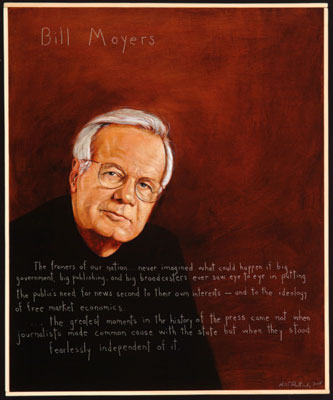 25 Mar 2007 @ 10:15, by Richard Carlson