|
|
 25 Sep 2014 @ 00:52 25 Sep 2014 @ 00:52
Right Action is No Reaction to Fear
By
Gerald W. Vest, ACSW, LISW, LMT Emeritus Professor, SNM Alliance, Organization Leader
Fear of loss, fear of failure, fear of being hurt, and so on, but ultimately all fear is the ego’s fear of death, of annihilation. To the ego, death is always just around the corner. In this mind-identified state, fear of death affects every aspect of your life. Practicing The Power of Now, Eckhart Tolle, p. 28
Right Action means No Reaction—our Being is honest, open, accepting, and allowing, as is Nature…suggests to me that when we are aware and conscious, there is No Wrong Action or Judgment. Our Being is not capable of producing an Action that is imperfect, as is God’s Will. I suggest that anything and everything in Nature is Perfect as all is Created…only, we human beings, who have a Mind that judges, evaluates, analyzes, interprets, assesses, is always in perfect contradiction. Mind operates linearly while Western Conventional Psychology has limited understanding or appreciation for the Power of our Mind and how she works, relates, reacts and functions.
Psychology labels these natural contradictions, a disease and illness. Bipolar for example, no cure in sight leads to those of you identifying with and given your psychic tattoos for life. (Disorder Labels) Mind knows and responds to everything on both sides of the spectrum or equation, like spiritual calculus, identifying and seeking balance, harmony and equilibrium…”The Natural State of Mind is Void.” (Oscar Ichazo)
One question is? How do we know we are responding and interacting in Nature as honest, open, aware and conscious human beings? Seems humans have demonstrated that we are selfish and have self-centered Egos believing everyone and everything was created for us. When we don’t “Get our way,” we cry, rant and rave endlessly. These Western Psychologists and Psychiatrists have manufactured the belief that our brain is the root of all evil, pain and suffering-offering a cocktail of chemicals to their patients-humanity, to keep ‘it’- the Brain, in check. However, they have never found a cure for this dichotomy of the Mind that moves too radically from one side of the contradiction or argument to another. For example, our egos don’t often have a favorable view of “us”. Our Image Ego can identify us as Insecure, unattractive, dumb and frightened on the one side of dichotomy and fault finding, arrogant, smart and fearful on the other.
Seems we will only be satisfied, loving, kind, happy, empathetic and compassionate when we experience our equilibrium, all systems balanced and integrated, within the home of our Being-Witness (True Nature), Here and Now, with awareness—as our innocent Fool participates and learns and embodies Knowledge, Wisdom, Love and Truth. (The Tarot)
I suspect that Fear has ruled and controlled our human behavior for as long as we’ve been on Earth. We are delicate creatures with no real self-defense. We are such delicate and sensitive creatures with a Mind that knows everything and nothing of our Being—always in apparent contradiction--defends and protects us except when fear and doubt enter the picture or experience. We can be very proud of our innovation and learn to create comfort, safety and security using the “Laws of Nature” by “Being One with Her-Him” as she gives us longevity and a fulfilling, meaningful and happy life. Hopefully we realize or accept ourselves as unique humans created with a purpose…not unlike our Pecan tree and our Birds, Insects and other creatures nesting, nourished and sheltered by her. (Recommend we Meditate on ‘our tree’ and join her state of Being-Living-Sharing-Protecting.)
Just know that when Fear raises our emotions, stress, anxiety or depression follows, not often knowing or realizing we are closest or near the Truth. Don’t cover fear over with the Shadow of drugs, but, rather, learn about our Mind and make her your best friend by experiencing the apparent contradiction and the domination and control of our minds by these strong characters and inhabitants.
My companions, students and teachers are my clients, friends and colleagues for learning. Our collective conscious teachings and practices are introduced on my Website. “Recommended Resources” for becoming whole-healthy, integrative, skillful, and responsible for achieving our best possibilities physically, mentally, emotionally, spiritually and socially are identified with many Links. May take humans several lives, much pain and suffering, to develop a very strong commitment and a daily health program to experience and discover our True Nature.
Finally, learn about our Mind and become free of her domination and control. These are my best practices and resources that serve as my guides, brothers, sisters, friends and teachers. And, as I started this essay, I remind myself that Freedom=No Effect. (Oscar Ichazo) [link]
Note: Pic by Robin Woolley, LISW, SNM Alliance with Injured Warriors and Families More >
|
|
|
|
 19 Sep 2014 @ 12:47 19 Sep 2014 @ 12:47
Awakening Our Consciousness with Awareness of Nature and Nurture are our Number One Priority as a Human Being and Citizen of our World
By
Gerald W. Vest, ACSW/LISW/LMT, Professor Emeritus
Organization Team Leader, Southern New Mexico Injured Warrior Alliance
“The real nature of mind is free from concepts. Even though we talk about a space ‘between’, this ‘between’ does not actually exist. There is no specific hole, but in order to point to this experience we use words like ‘space’ and ‘between.’ On the surface level, there may be many manifestations, but on a deeper, more subtle level, the mind is totally open and silent.
To contact this silent place, do not put your meditation or your mind in some ‘place’. Just be open, with no holding and no center. Once you learn to directly contact this higher level of awareness, then, without needing to oppose them, you will be able to control your thoughts and emotions quite naturally, for they will become completely infused by this awareness. When you are able to surrender your concept-bound mind and enter this open, natural space between thoughts, your higher awareness will function without interruption, and your whole world may be transformed.” (Tarthang Tulku, Openness Mind,, p.110)
This is September 16, 2014…received my new Dell Laptop that went “out” just over a week ago. Discovered how dependent I’ve become on using the computer, but, then, I must remember, I had a dozen discussion groups and a National Field Directors Forum with the Bulletin Board System (BBS) (1979-1982). Mike Connealy, me and our student interns had a great time using this technology for networking, exchanging, engaging, learning and exploring ways to get resources to those in need.
So, we went around the State and introduced our technology and left modems and computers with Shelters, Food Banks, Health and Aging Programs and with field faculty members. I did feel a loss of contact with our wider world as I love leaving my opinion around the world about social issues and support for Humanity One.
Humans, perhaps they were put on our Planet to do whatever they wish with our Mother Nature. She is alive and has been taking care of us for as long as we know. Yet, these tough guys and undeveloped beings on our Planet ‘believe’ all is created for them to do whatever they wish to our Mother.
Should be no surprise to anyone that Earth and our inhabitants are being endangered—with almost total disregard, prevention and promotion of a Health Environment by our Representatives in Congress, States and Local gov’t…accepting and appreciating the fact that we, All that Is, is in Total Interaction and Relationship….what affects-effects One affects-effects the Whole….everything and everyone is in Total Interaction without our Awareness!!!
It is time to recognize that our Leadership has failed us as has our schools, mental and behavioral health, justice-police, representative government, academics, military, corporations, religions and the very wealthy are all manifesting an unconscious ego, with a “Buyer and Citizen Beware” and fear based business model. These systems are totally Reactive, not Cooperative, Sharing or Caring and responding to the basic human-social-physical need requirements for our Living Planet and All of our inhabitants.
Dr. Tolle in his great book "A New Earth – Awakening to Your Life’s Purpose," nails it, “Awareness implies that you are not only conscious of things (objects), but you are also conscious of being conscious.” (p228) When we get over our fear and preoccupation with spreading and expanding our military force, secret service, drug war, homeland security, CIA, FBI, state, county and local police networks and other protective services, we can begin to examine and prioritize our real life, health, and basic need requirements for all of our inhabitants and our relationships. We are totally inter-dependent upon everyone and everything in our physical, mental, emotional, social and spiritual environments while awakening, preserving and securing our Planet and our lives, health and relationships.
Come on, every sick care physician, psychiatrist, psychologist, nurse practitioner, pharmacist, including conventional support, venting groups like social work, counseling, rehab and others in the mental health system, often offer or accept their patients with drug cocktails and psychic labels (disorders for life). Many teens I work with are learning how to blank out and suppress the pain and suffering of going to school and being forced to learn what others think is best for them. Teachers are going to have to find their courage to develop and design a teaching-learning experience with their students so that everyone is brought along together—“No One Left Behind…” Sound familiar…..Awaken the Consciousness of our leaders, parents, representatives and educators.
Our Natural Environment must be one of our Nation’s First Priority! We are only getting sicker by not accepting our True Nature—We Are One-All is One!
NOTE: Pic by Robin Woolley, LISW, SNM Alliance Health Promotion Team and Photographer More >
|
|
|
|
 3 Sep 2014 @ 14:51 3 Sep 2014 @ 14:51
All my Being!!!
We are all here Now, within this Space and Time, often with everything in our Mind bombarding us with information, often referred to as “Chi Cha" or confusion. Also, flooded with the Past-Future thoughts, and especially expresses unfinished life goals, concerns, fears including numerous inhabitants that will challenge our Human Development experience identified in The Tarot as “Knowledge (Wands), Wisdom (Pentacles), Love (Cups) and Truth (Swords). Being provides a recognition of respect and appreciation for our unique Being…All is one of a Kind discovering and answering the Question: Who Am I? Why Am I Here? What is Happening?
Hey this is not an easy Trip and Adventure….We get what we ask for. Our Mind is so Perfect “it” knows, will search every part of our consciousness for the answer and solution to any problem and question posed. It may take a life time or more to learn that our Mind is so perfect that “it” believes “it” is us…Not!!!
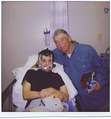
Mind has been with us, perhaps forever, knows its way around the social conventions, must survive at all “costs”—even while experiencing pain and suffering for many generations and before, *not* attempting to become united with “All That Is.” We don’t have to name her or give her any more control over our Being. She has brought us, again and again, on this eternal Human Journey to transform and transcend her-mind patterns of conditioning and her protective mechanisms into beautiful Images. For me, women are the most beautiful Beings-Creatures on our Planet Earth…I am so attracted to them as they touch my Heart-Soul and, all my Being lights up with their beautiful Presentation. Obviously, “I” am feeling separate from my darling who passed into the Light, nine months ago.) I am so grateful for my friends being with “me” during this transition.
Our Being knows everything so giving Lou space to free herself of the Past and Future, frees me as well…”Be Here Now” is my Mantra!!! I am here now with my Honey, Alley, Jack, Hopper and Goldie…We are one with “All my Being!” More >
|
|
|
|
 23 Aug 2014 @ 18:59 23 Aug 2014 @ 18:59
A Beginning without an Ending—such is Life
by Gerald W. Vest, ACSW, LISW, LMT
Choice implies consciousness—a high degree of consciousness. Without it, you have no choice. Choice begins the moment you disidentify from the mind and its conditioned patterns, the moment you , become present. Until you reach that point, you are unconscious, spiritually speaking. (“The Power to Choose, The Power of Now, Essential Teachings, Meditations, and Exercises from the Power of Now"), Eckhart Tolle, p. 138)
Beginning Life without a conclusion or Ending is an exciting adventure for humanity. Nature already accepts everything--everyone and everything coming, accepting and going her way. Humans React with great insecurity. For example, we judge, predict, test, assess, analyze, interpret and construct our actions with these mental constructs and patterns of conditioning. We analyze concepts, feelings and perceptions; others judging to the point of destroying relationships. Why this? Why That? What If? Maybe? Mind Games are Killers of our Spirt and our Relationships, especially when judging others with views, habits and feelings that we developed during our early development. Fears are perhaps the inhabitants behind these games to secure the Historical, Image and Adaptation or Doing Instincts. (Ichazo, “Theory of the Instincts.”)
“Delirium and Karma”----this mystic music with flute, drum and other instruments play with our body-mind – Time-Space. No doubts or beliefs allow us to dance and move through space with freedom of movements with our senses, and skeletal-muscular-nervous systems….attractive musical sounds move us through space as though on an airplane or like riding on a big bird. We are heading to some destination beyond the beyond and sooner or later may land or perhaps not at all. With No Beginning, can’t be an Ending of Energy….Energy never dies, just changes and alters itself. No real knowing until we land. Tolle suggests we join Space and become one with body-mind and earth.
With my Mind in Space, I breathe in and breathe out space…oxygen and nitrogen and toxins of all kinds enter us, hopefully filtered by our protective mechanisms and immune systems. Living is Breathing in and Breathing Out…Dying is joining the Eternal-Internal Breath, very quiet and calm living with our Chi energy, our invisible, calm and quiet energies, beyond measurement and senses. Being one with Consciousness is our Eternal State….All is Consciousness as All is Mind and All That Is. And, is presenting ourselves in the invisible mode…metaphorically like the thoughts from the past and all her inhabitants that become established as our social nature. Humanity is usually out of relations and out of touch with Mother Nature and with our true Nature. All That Is, is in Total Interaction and Relationship whether we are aware of this fact or not.
So, just relax, breathe, calm down and enjoy life as she presents herself with our creative spirit embracing and expressing her dance of our Divine energies.
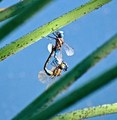
Picture of Butterfly Transformation by Robin Woolley, LISW, SNM Injured Warrior Alliance, Health Promotion Team and professional photographer. Thanks, Robin!!! More >
|
|
|
|
 29 Jul 2014 @ 12:31 29 Jul 2014 @ 12:31
The Power of Now by Eckhart Tolle, “Addiction and the Search for Wholeness,” p. 127
Every addiction arises from an unconscious refusal to face and move through your own pain. Every addiction starts with pain and ends with pain. Whatever the substance you are addicted to—alcohol, food, legal or illegal drugs, or a person—you are using something or somebody to cover up your pain. That is why after the initial euphoria has passed; there is so much unhappiness, so much pain in intimate relationships. They do not cause pain and unhappiness. They bring out the pain and unhappiness. They bring out the pain and unhappiness in you. Every addiction does that. Every addiction reaches a point where it does not work for you anymore, and then you feel the pain more intensely than ever.
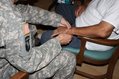
Our Injured and Wounded Warriors and Families have suffered these past 12+ years from wars with extreme stress, anxiety and depression affecting every cell, organ, nervous, sensory-motor, intestinal, cardie-vascular, sexual, expression, muscular-skeletal, mental and social-emotional systems. Psychiatry-Psychology are missing the point of the pain and suffering, identifying these injuries, primarily as Disorder's of the Mind. NOT!!!
Addictions are 3rd. Degree Compensations that open up when our safer outlets are closed--eg. marijuana, sex, meaningful work and opportunities to express our whole being physically, mentally, emotionally, spiritually and with social interaction-relationships. Alcohol is very big with our Vets and returning Warriors as an outlet to bury the enormous pain and suffering they are experiencing from their social environment, multiple long term deployments with no serious down time to find balance and equilibrium of our whole being. The Drugs and Psychic Labels-Psychic Tattoos only exacerbate and attempt to cover up the pain...just another addiction that carries with 'it', more pain and suffering.
Remember, when we are in Pain, we are in Fear....don't accept a name (disorder) and expect to ever be released from this shadow as we have witnessed and experienced historically with the development of The VA Shuffle from all of our Wars.
Join a Support Team and commit yourselves to transcend pain-addiction-suffering with a daily health care plan that works to restore and heal all of our systems. Even our Relationships improve as we find balance, harmony, creativity and enthusiasm in our life. Visit our Alliance recommendations for every service member and family returning to our communities. [link]
Gerald W. Vest, ACSW/LISW/LMT
Injured Warrior, TRICARE Provider--Individual, Couple, Family & Group
Holistic & Integrative Health Practitioner & Professor Emeritus NMSU
Las Cruces, NM 88005
575.524.2379 More >
|
|
|
|
 26 Jul 2014 @ 18:03 26 Jul 2014 @ 18:03
Our Adventure With The NOW!!! (Part 1)
By
Gerald W. Vest, ACSW/LISW/LMT, SNM Injured Warrior Alliance
I am so happy to introduce my adventure with the “Now.” Gestalt means whole in German and I am so pleased I can introduce you to my learning experience with Dr. Eckhart Tolle and with others who guided my evolution into the Now (Tulku, Ichazo, Capra, Pearls, Naranjo, Downing).
On Nov. 23, 2014, Louise, my life partner-friend-companion-lover-perfect being and partner for over 50 years completed her journey with us. Patrick and Christy are our proud and perfect adult children with remarkable life force—creative, honest, open, caring, loving with great Knowledge, Wisdom, Love and Truth being our Family Journey to Realize and Accept and Enjoy our Beings….we are no longer our greatest enemy with fear and doubt…We Are “In the Now”--Accepting, Allowing and Loving our Eternal Being—“FREE AT LAST!”
Thank you Dr. King and Colleagues, Teachers and Friends. Thank you, Patrick and Christy—You have empowered us as a family to fulfill the “I Have A Dream” and you are integral to our appreciation and love of family. And, thank you Dr. Tolle and other great teachers for bringing us to a close relationship and Being Here with NOW—and, with All that IS—Being Present.
Witness this remarkable life experience, beyond the conceptual words, beliefs, theories, dogma, fear, pain and suffering and join "the experience of being in the Now and Present." With our eternal Presentation of being integral to our Creation in Nature, we are often so disconnected, stressed and depressed to Be one with our closed and stressed Mind and disconnected with our ego's Contradictions, Conflict and with Past and Future thoughts and projections, not often realizing this chatter is an illusion and serves as our dream that prevents us from Being in Relationship with Nature and All That Is. Be Here Now is our true Nature's Way of being Human.
Do connect with Ram Das in his introduction to Be Here Now! (A great Master Guide for Being One with All That Is—Here and Now!!!) He introduced me to this state where creation flows naturally.
More >
|
|
|
|
 26 Jul 2014 @ 17:51 26 Jul 2014 @ 17:51
Power of the Now… Review by Gerald W. Vest (Part 2)
Do visit my website Bibliography that brings all of these adventures together as introduced by these great Mind Explorers and Metaphysical scientists together for me and with us. [link]
What is NOW? How can I improve my life while joining the Now? Ask yourself where your pain and suffering is originating and you will be able to transcend the Past using the Now to Recover and Restore your Whole Being and develop the Courage to Become Safe and Secure with Yourself by Living with and in the NOW!!! Exciting and Adventurous beyond words….just DO IT (Meaning-Be You!!!). Here and NOW!!!.
***********************************
Now is -- No Time, no measurement, non-existent, Present, gone, never existed, ever present, natural state of Mind, Open, Honest, Accepting and Allowing, Being, Awareness, Observer-Witness, Consciousness, Innocence, Beyond Belief, Beyond Fear, Beyond Everything, Beyond Everyone, Free, Unified with the Whole-One, No Contradiction, Total Interaction, Total Relationship with Mother Nature while Being the Truth-Law—Swords and interacting with All That Is!!!
Now is within the Experience of Being Present, Conscious, Aware and Mindful of Being Aware and Conscious…without Effort. With determination, curiosity, interest, vitality, love, kindness, honesty with openness.
Now is Mind-Mind Is Space…Space is free of structure…Space is Free of thought…..Space Allows…Space is Open and Accepting…Space is Opportunity…Space allows Creativity of All that Exists.
Now is the time for All Beings to Come to the Aid of our social family, lost in Time-Space—Body is Time; Space is Mind…when open, honest, accepting and allowing, we Join NATURE…All that Is and Everyone and Everything Benefits when Joining NOW!!!
Be Here Now,
Jerry Vest, LISW, LMT, Emeritus Professor, NMSU School of Social Work and Team Leader, SNM Alliance with Injured Warriors and Families. Join Us….. More >
|
|
|
|
 24 Jul 2014 @ 16:08 24 Jul 2014 @ 16:08
Gerald W. Vest - I am pleased to share this brilliant discussion by Nancy Weaver re: our Nation's politics and how corporations are taking over the administration--policies, programs, services, courts, prisons, natural and human resources. Currently, there is no end in sight about their influencing and promoting legislation that works against our values and historical interest in serving humanity as One Body-Mind-Spirit.
Nancy tells it as it is about our Politics here in this Nation that has turned against the people in favor of their corporate sponsors. Disgusting and reckless....how can they sleep at night knowing they have failed us/USA and are just a bunch of liars. Thank you, Nancy. I hope others will examine their beliefs and values so they can learn to vote for politicians who are highly developed beings with vast knowledge, compassion, understanding, respect for themselves and others, while appreciating we are in danger of losing our Bill of Rights and reason for Being Human-social creatures with a Mind that can Reason.
There's a lot going on behind the scenes in American politics -- we've been blind to it for decades. We're becoming aware of the Koch brothers' enormous influence, and their American Legislative Exchange Council -- [link] -- this is where corporations write bills for legislators state by state, and for Congress, too. Bills that become law favoring corporations, again and again. Laws against voting rights. Laws against women's reproductive rights. Laws against unions. Against the post office. Laws to deregulate industry. Laws giving tax breaks and subsidies to the wealthy and corporate interests. The Tax Code has been changed. The rich get richer. Millionaires become billionaires. We never had billionaires before. But the rich like to get Americans riled up about paying taxes -- and we are so blind to the tactic, we sign on. We don't want to pay taxes, either. Hell, no! And the nation crumbles .... as half of the taxes we pay continue to profit the military/industrial/congressional/media complex.
The NRA is closely aligned with ALEC. Partnership, really. ALEC sponsors lax gun laws. State by state, and Congress, too. Corporate money supports the NRA. Combined, this is a huge lobby and propaganda machine reaching into southern and rural America. Talk favoring guns and the Bible and fetuses go a long way... against education and evolution and voting rights. A moneyed machine with enormous political clout. If they don't like a politicians, they truly are political snipers. The PR machine places ads pro or con in every media outlet 24/7. There was a ton of ads in Oregon for the primary GOP candidate for Senate. Will Oregonians be persuaded by lying, glossy propaganda paid for with Koch money?
Intimidation is a big part of the blueprint for corporate control. The corporate GOP supports the NRA, or else! Our violent culture of mass shootings is something new in America. Why do corporations support lax gun laws? Killing machines are in abundance in the USA. Is it because they want angry white guys in America locked and loaded. To what purpose? Politicians are literally and figuratively in the cross-hairs if they don't do what corporations want. The gun toting/threatening rhetoric is all over the map in political-speak today. Threats of assassination are commonplace, when, in fact, that sort of talk ought to be abhorrent to all of US.
How gullible are Americans? The veil is beginning to peel away to show the ugly underside of corporate corruption in politics. Americans are beginning to see how much farther ahead are the wealthy, compared to all the rest of us, the 99 percent stagnating or under water. The Sandy Hook School massacre proved to America how ugly, callous, and irresponsible are the gun lovers, the NRA. But Americans still must tie this corrupt tangle of owners and politics together if democracy can survive; because it is a package deal of political corruption not seen before:
Koch +ALEC+NRA +GOP +Tea Party = the downfall of democracy.
The system has been rigged against us incrementally -- we hardly noticed for a decade or two. Our growing inequality wasn't mentioned in the corporate press. We paid for wars. We bailed out banks. We bailed the auto industry. We subsidize oil and gas. But our homes were foreclosed. College loans leave a life-time of debt. All other modern nations have universal health care. We don't. All other modern nations have a social safety net. All other modern nations have strict gun regulations. All other modern nations believe there is global warming. America is falling behind those other nations. Except in awful ways are we No. 1. Americans are gullible. Americans are going backward. Will we stand up for our principles and take our nation back to the Democratic Constitutional Republic we were meant to uphold -- a nation under law; with equality for all? Is there a light at the end of the tunnel, or is that a big train barreling down the track with a Koch logo ready to crush US?
Today's moneyed class, and the corporate owners, are worse than the Robber Barons of the Gilded Age -- they've already shipped manufacturing and other jobs offshore, and they own the media. We are being robbed!
The Golden Dove, our symbol of Peace which I have never experienced in my lifetime with these war mongering politicians is pictured, by Robin Woolley, LISW and SNM Injured Warrior Alliance, Health Promotion Team and our photographer. More >
|
|
|
|
 9 Jul 2014 @ 16:07 9 Jul 2014 @ 16:07
I am pleased to offer up this article written by Tina Olson, that appeared in the Santa Fe News related to Children being Diagnosed and Labeled for Life with a "psychic tattoo." Jerry Vest, ACSW/LISW/LMT, Professor Emeritus and Organization Leader.
Posted: Friday, June 27, 2014 7:00 pm
According to news sources, since the shootings at Sandy Hook Elementary School in Connecticut, there have been anywhere from 50 to 74 additional school shootings (depending on how they are counted). The numerous theories attempting to explain these can leave the average person shaking his head in despair and confusion.
From research done by my organization, let me dispel the mystery as to why these mass shootings continue in a seemingly epidemic proportion.
It’s time to connect the dots between psychiatric drugs and violence and suicide.
Harvard University’s Dr. Joseph Glenmullen warned that antidepressants could explain the rash of school shootings and mass suicides over the last decade. People taking them feel like jumping out of their skin. They cause irritability and impulsivity that can make people suicidal and homicidal.
Between 2004 and 2012, there have been 14,656 reports to the Food and Drug Administration’s Med Watch system that psychiatric drugs caused violent side effects. More than 1,400 of these report that psychiatric drugs caused homicidal ideation/homicide. Nearly 3,300 reported mania and 8,200 reported aggression.
Nine out of 10 children who are seen by a psychiatrist are prescribed dangerous mind-altering drugs for attention deficit disorder, depression, anxiety, etc. Yet there are 286 drug regulatory warnings citing the dangerous and life-threatening side effects of these psychiatric drugs to children.
At least 31 school shootings and/or school-related acts of violence have been committed by those taking or withdrawing from psychiatric drugs, resulting in 162 wounded and 72 killed.
I’ve been surveying parents here in New Mexico and found there is tremendous societal pressure to put their children on psychiatric drugs. Not a single one of these parents I surveyed was aware of the horrific side effects. I also found that parents are not told by the psychiatrist that there are non-drug alternatives to handle behavioral problems. Now we have nearly 20 million children on these clearly dangerous drugs. I know parents, for the most part, do not know what to do when their child is misbehaving and they are told by school personnel that they should have their child seen by a psychiatrist. Alternatives are rarely suggested to these parents.
Children diagnosed with a mental disorder may be experiencing malnutrition, head injuries, early onset diabetes, heart disease, worms, viral or bacterial infections, allergies, mercury or manganese exposure, and hundreds of other possible minor, major or even life-threatening medical problems.
They also may simply need more physical and creative activities or additional help and attention that one cannot get by taking a dangerous, mind-altering drug that only masks the child’s real problems.
Let’s think outside of the box. Don’t accept a non-verifiable psychiatric diagnosis that your child is mentally ill. Let’s work to prevent future deaths of our children.
Tina Olson is executive director of the Citizens Commission on Human Rights, New Mexico Chapter and a Health Promotion Team Member of the southern New Mexico Alliance of Injured Warriors and Families. More >
|
|
|
|
 19 May 2014 @ 14:09 19 May 2014 @ 14:09
Engaging Injured Warriors and Families
Engage Clients and Families with Awareness, Respect, Kindness and Empathy
By
Gerald W. Vest, ACSW, LISW, LMT
When we acknowledge that we are responsible for our own pain, we have the key to unlock ineffective patterns of avoidance. With practice, we can replace restraint and fear of pain with compassion and understanding. Tarthang Tulku, Knowledge of Freedom-Time to Change.
My good friend and founder Administrator for NMSU School of Social Work, Emeritus Professor Sallee, introduces us to the Social Worker approach to Engaging our Client with respect and dignity: Engagement is the first step in the planned change process and marks the establishment of a helping relationship between the social worker(therapist) and client. During the engagement the worker demonstrates a genuine interest in helping the client, an ability to understand the client's feelings and situation (empathy), and the capacity to listen carefully to what is being communicated, both verbally and non-verbally. To the clients, workers are expected to communicate warmth, genuineness, authenticity, and an interest in helping (empowering) them." Alvin Sallee, LISW, Social Work & Social Welfare: An Introduction, Eddie Bowers Pub., 2004
While engaging our clients and families in ‘therapeutic encounters-sessions’, I learned that analyzing, evaluating and assessing requires additional processes with our Mind. For example, every question brings our senses, past experiences-observations all into our analysis or assessment of our presenting ‘problem or concern.’ For example, looking for Symptoms to Identify a Post Traumatic Injury (disorder) or Brain Injury, conventional therapists often start their sessions to cover their system requirements and self-preservation by identifying a Code # 90XXX so that they can receive payment for meeting with our Injured Warriors and Families.
This is simply a violation of a helping person’s or professional responsibility knowing that to “Start where the Client Is” is an essential way to relate empathetical and to interact, provide comfort, compassion and understanding. Even in emergencies I’ve observed several providers seeking all kinds of extraneous information to fill out their “forms” and complete their business requirements before the patient introduces themselves and is tended to. All one has to do is visit your local medical system, hospital, behavioral-mental health agency and notice how long you are required to be in their waiting rooms to be attended to while you fill out these Insurance Forms…if you have insurance. Often patients sit in hospital reception for hours in our community without checking on their customers with courtesy, respect and kindness while waiting to be "served" and "treated."
“Eh HEY” (wake up)!!! “Start where the Client is” by being in the present moment. Here and Now!!! Don’t be concerned about the future while sitting with your laptop, often not even facing your client—of course you need to be informed about your client’s reason for being here and this will be addressed by your client when we listen, first and foremost. Remember what you are here to offer in terms of healing, restoration, resilience—respect, honesty, openness, acceptance, allowing with No Judgment, No Labels, No Belief and No Psychotropic. Provide ‘health’ practice options and opportunities. Explore with your client a professional self-care plan to recover fully with a commitment and a host of health practices—massage, Reiki, acupuncture, therapeutic touch, meditation, breathing strategies, outings, art, tai chi, Psychocalisthenics, Kath States, support groups, etc.
And, awaken your consciousness to the fact that you are not looking to fit diagnostic categories, unless you are doing research on the Psychic Meds given most everyone who sets foot in an office of a psychiatrist. They believe that these meds will help their patients for some reason; however, the evidence of efficacy is not present, nor is the appreciation that long-term use produces a reduction in the frontal lobe of the Brain, much like their earlier lobotomies. Psychiatry-Psychology-Clinical Social Work-Counseling Psychology are reckless with their labels and cocktails and it is time for us as Social Workers to Say Goodbye, So Long, we want nothing more to do with you, your labels, your drugs and your unwillingness to “Start where Your Patient Is.” Because you call yourselves Health Professionals, introduce your patients to health services and practices that work and “Cause No Harm.”
Visit our Southern New Mexico(SNM)Alliance Website that will introduce numerous options with Evidence Based Health Practices. Our 15 Minute Stress-Out Program and many other strength based programs and activities are introduced so that therapists can refer. Meditation and Awareness are key to developing empathy, understanding and compassion as practiced by Integrative and Holistic Health Practitioners.
Note: Visit and Plan a Workshop for your Program—Engaging Injured Warriors and Families Returning from the Wars: [link] (CEU’s Provided)
See “Guidelines for Empathic Therapy” that incorporates these values into our direct practice.
Picture by Robin Woolley, LISW, SNM Health Promotion Team More >
|
|
|
|
 11 May 2014 @ 15:01 11 May 2014 @ 15:01
With a more comprehensive knowledge, we can exercise mind and body to their full capacities and develop a positive, freer way of being that increases our appreciation of the countless dimensions of human life. Tarthang Tulku, Knowledge of Freedom - Time to Change.
In our Helping Professions we are generally required to learn statistics, various methods of research and generally understand how to evaluate or assess research produced in our professions. We learn to examine the Reliability and Validity of the studies, the Number of participants in the Study, and review their measurements, instruments and protocols.
Hey, wake up America, we are being deceived and intoxicated by Big Pharmaceuticals, Psychiatry, Psychology, Clinical Social Work, Counseling Psychology, etc., their professional schools, professional organizations and licensing boards. They promote, support, teach and require our Health Professionals to buy in to their Scam...there is nothing about the Diagnostic-Statistical "Sick-care" Manual(DSM) that can stand the examination of validity and reliability of their DISORDERS.
They plant a False Label on their Patients-Clients and secure their image with a "Psychic Tattoo" for Life....cruel and inhumane treatment and they never just go away!
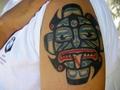
Note: See Injured Warrior Tattoos, with permission to post. Injured Warrior Tattoos on my Website--much like a "psychiatric-DSM label" they never just go away! [link]
Wake up and don't allow anyone to diagnose you and your children with a Disorder Label...sticks to the psyche like a Cancer.....makes you dependent on the "sick-care system" for Life, creating the VA Shuffle.
Please visit the Hidden Enemy, share it with friends, organize community presentations and report the abuse of these Cocktails and Labels...nothing at all scientific about them and they "get away with it" because you 'believe' in authority and don't do your RESEARCH. [link] More >
|
|
|
|
 20 Apr 2014 @ 13:34 20 Apr 2014 @ 13:34
Transforming and Transcending Pain and Suffering…and, Learning about their Roots, Beliefs and Patterns
“Genuine suffering can touch our hearts honestly to show us our need for greater knowledge. But, in order to benefit from its instruction, we need to look beyond painful experiences and transform the patterns that caused them. Of what value is our present education—in the largest sense—if it does not teach us how to do this? If it does not teach us to be free of suffering and pain?” Tarthang Tulku, Knowledge of Freedom and Time to Change
We can all identify with the experiences of pain and suffering, however, our Vets, Returning Warriors and Families serving in the Military from over a decade of wars have experienced excessive and extreme pressure--stress, anxiety and depression.
As Professor Tulku so wisely describes, “…we need to look beyond painful experiences and transform the patterns that caused them...” into healthy learning opportunities, interaction and relationships. Patterns of conditioning have their roots in the early moments of life. Once born, our education is focused on learning to secure our safety and security while guided by our “Self Preservation Instinct” (Oscar Ichazo, Between Metaphysics and Protoanalysis)—joining our being with a society established with historical beliefs about how to be, live and relate with one another and with Mother Nature. Mommy and others, hopefully have open arms and hearts to greet us and welcome us into our new home and social environment.
This “Self Preservation Instinct,” not unlike the “Relation’s Instinct and Adaptation Instinct” are always seeking a successful, healthy response or answer to a “Living Question” as introduced by Ichazo:
Self Preservation—physically related to the Digestive System--answers the internal question, “How Am I?” Mother secures us safely by providing us love, kindness, physical nourishment that also offers us an opportunity for learning to give touch as we reach out to grasp our surrounding environmental teachers and lessons for learning. Perhaps we can recall this big leap into “school,” much like the Fool falling into the ravine with the Alligator about to swallow us up around the age five. The Fool Card is in the First Position entering the World. And, within the Knapsack on her back, she carries the unknown tools or trump cards for having a successful, challenging, learning and evolving Life Journey—the 1st. Suit represented with Wands as Knowledge--“learning” from our problems--pain and suffering-- becomes Wisdom represented by Pentacles. All life experiences include all of the Cards—Cups represent our experience with relationships and is about Love; Swords represent transforming our belief systems into Truth. Beliefs are often based on fear, uncertainty, prejudice and ignorance. When we return to our entrance into the World--honest, open, accepting, allowing, trusting and innocent. We are Truth--One With Nature. (Ichazo, Abstracted from Advanced Arica Trainings, 1972, Pittsburgh, Pa and NYC) Also, see Between Metaphysics and Protoanalysis
STRESS is the Result.
2. Our Relation’s Instinct, physically related to the Cardie-vascular System--heart, lungs, kidneys, bladder--must answer the living question successfully every moment as we are born very delicate, no defense, with many years of preparation ahead to become independent and secure—“Am I Safe and Secure with Who I am With"—inside and out? (Friend or Foe?). Father is generally the figure who has the role for providing safety and security for the family, however, often hasn’t learned from his own early childhood development. When the Instinct's living question is not answered successfully every moment of our lives, ANXIETY is the Result.
Note: A reminder from Pema Chodran, "When Things Fall Apart...", See my Bibliography. [link]
3. The Adaptation Instinct physically related to Brain and Nervous System, must answer successfully the question about “Doing”—"What am I Doing?" Thinking-Reasoning-Analyzing-Interpreting reality in our heads can be overwhelming and produces activity—internal chatter that often appears and creates confusion and a host of inhabitants related to senses, association, questions, concerns, without awareness or mindfulness.
DEPRESSION is the Result when we can not calm or quiet the Mind.
So, what can we do to prevent such Pain and Suffering?
Practice our breathing strategies, movement exercises and other forms of meditation to balance our whole being without pain and suffering is the Way of our Alliance. Moving, strengthening, balancing, coordinating our whole being every day, throughout the day and before sleep is the Healthy Way. Becoming Mindful with Right Action is possible when we can listen and assure ourselves that we care about ourselves, others, Nature and Humanity. This is our mission as human beings who have passed successfully through the development of "Knowledge, Wisdom, Love and Truth" as a complete and whole being free of Fear, Ignorance, Prejudice--Pain and Suffering. The "World" is in our hands and in our heart.
Our Instincts, our Insecurities, and our Life Experiences lead us toward our realization, our uniqueness and our purpose for being without this Pain and Suffering? And, what will you do to transcend and transform this pain and suffering into health and resilience?
We begin this commitment and this Journey with a professional or individual Self-Care Plan as introduced on my webpage. We learn to give Pain, blocked energy and circulation, space to release with our breathing awareness. Our Health Promotion Team is here to guide and help you through this pain and suffering with Integrative and Holistic Health Services. Come join us on Saturday morning from 9-11:30, Jerry's US Army Health Studio. [link] More >
|
|
|
|
 31 Mar 2014 @ 16:13 31 Mar 2014 @ 16:13
Sensory-deprivation-tanks for Vets
"Because we lack the resources to respond effectively to pain, our emotions can easily override our reason and back us into a dark corner of despair. When Life experiences become overwhelmingly painful, we may even choose to end our lives prematurely: the final gesture of avoiding realities we have never trained ourselves to confront." (Tarthang Tulku, Knowledge of Freedom - Time to Change)
Our Southern New Mexico Alliance is exploring the use of the Dr. John Lilly "Emersion-Isolation Tank" for returning warriors and families. We would like to talk with you about your experience and/or interest in participating in this enlightening experience. Please respond if you share our interest.
Dr. John Lilly's floating deprivation tank research is available. I definitely believe that this experience will help our injured warriors returning from the wars. It's been my experience that it offers an opportunity to transcend all pain and suffering while in the tank; provides a learning lesson on allowing the mind to heal and restore with meditation practice; and, may well prevent suicides once the participant experiences this glorious and joyful experience of the void. [link]
Looking for organizations to bring this opportunity to the vast number of active and retired in our Southern Area of NM where we have WSMR, Holloman AB and one of the largest military bases in the World....FT BLISS. Just an hour in this Tank is like taking your next breath as we join with our Internal, very slow breath...much like "Being is Breathed and Breathing with All that Is." Offers such hope and encouragement knowing we can be free of our pain and suffering with a 'blink of the eye' as floating in Space beyond description.
"Organization Leader, Southern NM Injured Warrior Alliance; Injured Warrior Health Practitioner; TRICARE Provider--Individual, Couple, Family and Group--Served as Senior Social Worker, Ft. Bliss Restoration and Resilience Trauma Center (3 years) and Ft. Bliss Health Promotion Trainer, US Army Community Services (25 years)
Professor Emeritus, New Mexico State University, Las Cruces, NM 88005
575.524.2379 More >
|
|
|
|
 27 Feb 2014 @ 14:53 27 Feb 2014 @ 14:53
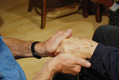
Death is part of Life as we all realize, especially when one of our partners, big brother, brother-in-law and Mackey (known as our attack cat)...all passed into the Light during the past 4 months. Learning to maintain an honest-open, accepting, allowing approach or outlook is my lesson. I consciously bring light, loving and friendly thoughts to my mind. My meditations may begin with thoughts, feelings, sensations, and quietude. Colors become more present with my eyes closed and my image often appears sad and forlorn, when open. I have a conversation with all of my spiritual friends in a mirror image while serving as our team leader.....my animals are deeply engaged with me and this experience as they often sit on my lap and rest on my feet.
My breath becomes very slow until 'it' (I) no longer exist...becomes very quiet, slow and calm...becoming united with this experience and while being is in relationship with 'all that is,' peace-love-appreciation manifests itself throughout. Toham Kum Rah-We Are One!!!
I thank all of my Master Teachers for assisting and guiding me through all of my life, health and relationships. I am so grateful and fortunate to have such beautiful life friends and family...'forever and ever.'
jerry More >
|
|
<< Newer entries Page: 1 2 3 4 5 6 7 8 9 10 Older entries >> |
|

