|
|
 31 May 2010 @ 22:18, by jerryvest. Medicine, Healthcare 31 May 2010 @ 22:18, by jerryvest. Medicine, Healthcare
In our webpages, I will introduce the basic need and requirements for human touch. While there is strong evidence that our society and human family are becoming an endangered species, many governments, such as the USA, pay little attention with minimal commitment, to global warming, nuclear stock piles, environment, natural and economic disasters, health & wellness, unemployment, poverty, abuse, neglect, pandemic health diseases, and little control over growing "...government-military-industrial complex" - corporate monopolies. We are now experiencing an unprecedented disaster in the Gulf with oil spilling out of the guts of our Earth with no end in sight. And, we now have a greater division and inbalance between the very rich, middle class, and impoverished. Unemployment is catastrophic for a rich nation in resources, yet bankrupt with the political leadership and a systemic failure of our social systems--economic, family. criminal justice, education, health, medical care, aging programs, etc. Quality of care is absent and lacking when these communities and resources deny and ignore the basic human need for Touch or Physical Interaction and the kindness, respect and dignity every human being desires.
While many of us are aware of these impending and current disasters, organizations such as New Civilization, are attempting to awaken humanity through mindfulness, virtual interaction on The Internet, and by forming healthy, respectful alliances to make a difference and encourage changing the direction we are heading.
Our international health promotion team is a modest effort, but hopefully an expanding opportunity, to awaken individuals, couples, families, groups, organizations and communities to an awareness that touch or physical interaction with mindfulness, respect and love are basic human need requirements for safety, survival, resiliency, and for the wellbeing of humanity and all that exists. Our 15-Minute StressOut Program is a great model and "Best Practice" for bringing about change and improvement for the quality of lives, health and relationship throughout our society and beyond.
Obviously, there are serious considerations for being circumspect and skillful in offering nourishing touch as a conscious intervention in the workplace, schools, programs for elders, military, and in a family environment. Guidelines for the Safe Use of Touch include:
1)providing the option for participants to self-administer our program;
2)receiving permission to touch and reminding participants that contact is always in safe areas;
3)having witnesses or partners present;
4)teaching the activity to others so that they can be the givers of the stressout program;
5)encouraging participants to use the teaching DVD & Study Guide (Vest,1995)if the participant chooses not to make physical contact.
INVITATION
You can join with us in advancing the use of healthy, respectful and nourishing touch throughout the world by visiting and studying our website. Interact with us on our Forum , as well.
Humanity, nature and earth are in a vital relationship that is interactive, integrative and participatory with a total interdependency--What affects one of us affects all of us. This recognition calls on all of us, including our decision makers, to begin taking responsibility for what we do and how we improve our conditions, relationships, and our planet. Money, power and greed have gotten us into this quagmire. We must now dig ourselves out of this 'sink hole' of an economy, wars and a growing or expanding military-industrial complex. It is time for all of us to change and to contribute our resources, knowledge, skills and values for the improvement of our planet.
This change requires us to have empathy and compassion for one another and our planet. The quality of our lives, health and relationships depend upon each of us to find our place and niche in our society and in Nature. I believe we are created for a purpose, much like a tree, an animal, fish or bird. We need one another and everything to live and enjoy our opportunity to be alive. It is for this reason that I have chosen Touch, one of our Basic Human Need Requirements for living and for being whole and healthy. Our approach is to advance our knowledge, skills, values and practices to achieve our best possible human and social conditions while discovering our lost dignity and self respect.
Come join with us NOW!!! my website
Jerry Vest, ACSW/LISW/LMT, Organization Team Leader
Professor Emeritus, NMSU and Holistic-Integrative and Senior Social Worker
Ft Bliss Restoration & Resilience Center
Note: Sand Painted Picture of War Dancer (Sands are all natural colored rocks)is by Daman Watchman, Sheep Springs, NM. More >
|
|
|
|
 27 May 2008 @ 13:31, by jerryvest. Medicine, Healthcare 27 May 2008 @ 13:31, by jerryvest. Medicine, Healthcare
You should not lose your self-sufficient state of mind. This does not mean a closed mind, but actually an empty mind and a ready mind. If your mind is empty, it is always ready for anything; it is open to everything. In the beginner’s mind there are many possibilities; in the expert’s mind there are few.”
In the beginner’s mind there is no thought, “I have attained something.” All self-centered thoughts limit our vast mind. When we have no thoughts of achievement, no thought of self, we are true beginners. Then we can really learn something. The beginners mind is the mind of compassion, it is boundless. Shunryu Suzuki, Zen Mind, Beginner’s Mind, pp. 21-22.
Dear Colleagues and friends,
I believe that as social workers or health professionals, we should begin to examine our use and support of the DSM as it causes more harm than good for our clients and students as introduced in this article and in several logs that I have posted here and on my forum. Many of our schools of social work and Board of Social Work Examiners continue to support this handbook for mental health professionals and present it in classes and for professional examinations as if it is a scientific measurement for mental health disorders. I am hopeful that our profession will abandon the use of this system and share this information with students, colleagues, and clients.
I have introduced my views of this system on my forum and also with our NCN in several logs; however, I believe that Dr. Zur has made the best case for abandoning this flawed system and stop labeling our clients and others. If for no other reason, we should be aware that once a patient or client is labeled with one of these disorders, it remains with them for their entire life. I don't know of any program that is designed to change a diagnosis to 'cured' once they are identified with a diagnosis. And, because these patient labels/codes are not held in confidence and are added to numerous databases with insurance companies and other health resources, we are causing great harm to those who trust us and believe that their records are private or confidential.[link]
***********************************************
"DSM:
Diagnosing for Status and Money - A Critical Look at the DSM and the economic forces that shape it."
In principal, mental health diagnoses can be helpful to clinicians and researchers in their formulation of treatment, research and communication with other professionals. Unfortunately, the DSM has been shaped by economic and political influences rather than by scientific and medical ones. The DSM assigns diagnoses in a biased manner, resulting in more harm than good to our patients, their families and society at large while delivering huge profits to pharmaceutical companies. Women, children, minorities, lower income and older people are the groups most likely to be negatively affected by the biases presented in the DSM.
A newly published article: DSM: Diagnosing for Status and Money
Online Course for 4 CE Credits: DSM: Diagnosing for Money and Power
DSM Recap:
The DSM has been called the billing bible of psychiatry and has become one of the most influential texts in the field of mental health.
The DSM is a powerful tool of social control: its criteria are used to judge who is normal or abnormal, sane or insane or who should remain free or be hospitalized against their will.
Most texts and graduate and postgraduate courses present the DSM as an objective, scientific document. It is neither.
The DSM is primarily driven by the psychopharmacological industry, which reaps huge profits from each new diagnosis that can be treated with medication.
The frame of the DSM is distorted by a primarily intra-psychic-individual focus and tends to ignore contextual factors. It does not address what cannot be solved with a pill. It does not appropriately address patients who, in fact, are wrestling with social problems, such as sexism, racism, or homophobia, or existential anxieties regarding loneliness or death. Unfortunately, using the DSM, the dis-ease of such patients will be redefined as medically treatable maladies.
The DSM perpetuates the myth that the medical-mechanistic model can simply be applied to psychology.
Some clinicians have used the DSM categories as a form of "name calling".
Accordingly, the DSM gives some therapists an illusory feeling of power and superiority driven by the "power to name".
DSM-based research has repeatedly been shown to be of questionable validity and is, in fact, very unreliable.
Since its inception in 1952, the DSM has consistently viewed pathology as residing within the individual. Subsequent revisions in 1980 and 1987 have evolved toward a more firmly biological perspective.
In response to insurance companies' need for increasing specificity in diagnoses and the psychopharmacology industry's need for new markets, the number of available diagnostic labels rose from 297 in 1994 to 374 in 2000. The upcoming DSM V is likely to include hundreds more "new" (and profitable) mental disorders.
DSM is big business, not only for its publisher, the American Psychiatric Association, but even more so for the psychopharmacological industry, which profits from prescriptions written for the ever-increasing numbers of DSM disorders.
DSM pathologizes many normal and healthy behaviors:
Shyness: You are mentally ill if you are very introverted or extremely shy.
Grief: God forbid if you intensely grieve the loss of a beloved one for more than six months.
Depression: You must be mentally ill if you respond to real life issues or injustices with deep sadness and intense despair. (For more, see our online course: Depression.)
Anxiety: You must be mentally ill if your reaction to the existential reality of mortality or loneliness involves profound or debilitating anxiety. (For more, see our online course: Anxiety.)
Lack of Sexual Interest: Lack of sexual interest is often not a mental disorder. Many women may have good reasons to avoid sex that may stem from domestic abuse, overwork or other reasons. Kaschak and Tiefer (2001) discussed Female Sexual Dysfunction (FSD) as "a textbook case of disease mongering by the pharmaceutical industry..." or what they call the "medicalization industry." (For more, see our online course: Feminist Sex Therapy.)
Spirited Children: DSM casts a very broad net around the ADHD diagnosis, and often includes millions of spirited, strong-willed, and highly gifted and creative children. It results in huge profits for medicating psychiatrists and pharmaceutical companies. (For more, see our online course: ADHD: Myths or Facts.)
Online Course for 4 CE Credits: DSM: Diagnosing for Money and Power
Over 90 Online Courses
Email Dr. Ofer Zur
Visit the Zur Institute website.
Phone: 707 935-0655
Fax: 707 935-3918
**************************************************************************
NOTE:
Do visit Dr. Zur's discussion on the myth of touch by our mental health professions:
I recommend that all of our members and students, visit Dr. Zur's website for the most thorough understanding of the myth of the use of touch by all professionals, health, education, and human service programs. [link]
More >
|
|
|
|
 4 May 2008 @ 02:25, by jerryvest. Medicine, Healthcare 4 May 2008 @ 02:25, by jerryvest. Medicine, Healthcare
Because breathing charts the life rhythms, the way we breathe signals the disposition of our energies. Agitation or excitement causes the breath to be uneven and rapid; but when we are calm and balanced, our breathing is even, slow, and soft. We can also change our mental and physical states by the way we breathe. Even when very upset, we can calm and balance ourselves by breathing slowly and evenly.
When you are aware of your breath, your whole life becomes balanced. Even when you find yourself in situations which arouse great anger, frustration, or pain, you can dissolve the disturbance by just being aware of your breathing, slightly paying attention and making the breath calm, slow, and rhythmical.” Tarthang Tulku, Kum Nye Relaxation, pp. 40-41
Warrior R & R Center - A Prototype for Soldiers-
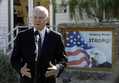
This announcement is very good for our soldiers who are suffering and great opportunities for them to receive care and treatment. I am very proud to be part of this health care work with our Wounded Warriors. We are currently engaged in research to validate what we do with soldiers every day. Our Warrior Restoration & Resilience Center is one of a kind as Gates describes and we are all hopeful that our prototype becomes available to every soldier returning from war throughout the world. I have posted a couple of logs describing some of my experiences with the soldiers. [link]
Jerry Vest, ACSW/LISW
US Army Social Worker & Professor Emeritus
Warrior Restoration & Resilience Center
Wm. Beaumont Army Medical Center, Ft. Bliss
[link]
[link]
************************************************************************
Gates Works to Reduce Mental Health Stigma
by Donna Miles
American Forces Press Service
FORT BLISS, Texas, May 1, 2008 – Seeking mental-health care due to post-traumatic stress will no longer be seen as an obstacle to getting a government security clearance, Defense Secretary Robert M. Gates announced here today. Video
Gates announced the new policy after touring the Restoration and Resilience Center that opened in July to treat combat veterans diagnosed with post-traumatic stress disorder. The center, part of Fort Bliss’ Beaumont Army Medical Center, uses treatments ranging from group and individual therapy to yoga, acupuncture, massage, chiropractic and hot-stone therapy.
Its goal, officials at the experimental facility explained, is to help troops recover so they can stay in the Army.
Gates told reporters he had an “extraordinary experience” visiting the new center and seeing work under way to help soldiers deal with combat stress.
“They are doing some amazing things here in terms of helping soldiers who want to remain soldiers but who have been wounded with post-traumatic stress disorder,” he said. “It is a multi-month effort by a lot of caring people, and they are showing some real success in restoring these soldiers.”
Gates said he’ll take the idea of possibly replicating Fort Bliss’ prototype program to other posts.
He also noted other techniques being developed in the combat theater to give troops additional tools to deal with the circumstances they face. “These are clearly worth additional attention as well,” he told reporters.
Gates called additional resources and capabilities to treat troops dealing with PTSD just one aspect of a two-part effort.
“The second, and in some ways equally challenging, is to remove the stigma that is associated with PTSD and to encourage soldiers, sailors, Marines and airmen who encounter these problems to seek help,” he said.
But he acknowledged that not every soldier returning from Iraq and Afghanistan is getting the treatment they need. He cited an Army inspector general report’s findings that troops often forgo mental-health care because they’re concerned it could prevent them from getting a security clearance and potentially could damage their careers.
Gates cited “Question 21” on Standard Form 86, the government security-clearance form that specifically asks applicants whether they have ever received treatment for mental-health issues.
The question asks if the person has consulted with a mental-health professional or other health-care provider during the past seven years about a mental-health related condition.
Respondents who answer “yes” must provide dates of treatment and the provider’s name and address.
“For far too long and for far too many, this question has been an obstacle to care,” the secretary said.
The Defense Department has been working with other agencies for eight months to strike a balance that enables troops to get the treatment they need and the intelligence community to get the information it needs, he said.
“It took longer than I would have hoped, but it is done,” Gates said. “Now it is clear to people who answer that question that they can answer ‘no’ if they have sought help to deal with their combat stress in general times.”
New language for “Question 21” asks if the person consulted with a health-care professional during the past seven years regarding an emotional or mental health condition. It specifies, however, that the answer should be “no” if the care was “strictly related to adjustments from service in a military combat environment.”
Gates directed in a policy letter dated April 18 that the revised language be used by anyone completing the SF 86 form.
A letter being distributed throughout the military explains the new policy and its rationale.
“Seeking professional care for these mental health issues should not be perceived to jeopardize an individual’s security clearance,” states the memo, co-signed by Undersecretary for Intelligence James R. Clapper Jr. and Undersecretary for Personnel and Readiness David S.C. Chu.
“On the contrary,” they wrote, “failure to seek care actually increases the likelihood that psychological stress could escalate to a more serious mental condition, which could preclude an individual from performing sensitive duties.”
The letter urges men and women in uniform who are exhibiting symptoms of PTSD to seek help and makes clear that this is not going to put their security clearances or their careers in jeopardy, he said.
“The most important thing for us now is to get the word out as far as we can to every man and woman in uniform to let them know about the change, to let them know the efforts under way, to remove the stigma and to encourage them to seek help when they are in the theater or when they return from the theater,” Gates said. “So this is a very important issue for us.
“We have no higher priority in the Department of Defense, apart from the war itself, than taking care of our men and women in uniform who have been wounded -- who have both visible and unseen wounds,” he said.
Gates called the new Restoration and Resilience Center an example of new approaches the military is taking to provide that care. “This center here is illustrative of what can be done,” he said.
Thirty-six volunteers participating in the program, all diagnosed with PTSD after serving in Iraq or Afghanistan, receive care that combines group and individual therapy sessions with meditation, yoga, acupuncture, massage therapy, chiropractic and hot-stone therapy treatments.
“They are all volunteers,” Gates said. “They all come here because they want to.”
Biographies:
Robert M. Gates
Related Articles:
DoD Changes Security Clearance Question on Mental Health
More >
|
|
|
|
21 Jan 2008 @ 20:58, by vaxen. Medicine, Healthcare
I know I'm not supposed to do this but the Chaplains situation so impressed me that I felt I had to post it post haste. I trust he'll understand and forgive me this slight transgression of copyright as really, if you read this, I think you'll understand what so impresses me about this guy. I'm not easily impressed, either, by anyone or any thing.
If you pray or meditate, and after having read this, I hope you'll keep the Chaplain and his daughter in your prayers and meditations till some light comes into the situation.
That being said do, please, continue on to the Chaplain's letter. Hope you, too, will be blessed in reading it as I have been.
Thanks,
Vax More >
|
|
|
|
 16 Jan 2008 @ 14:31, by jerryvest. Medicine, Healthcare 16 Jan 2008 @ 14:31, by jerryvest. Medicine, Healthcare
Social capital means more than a buzz word, more than invoking the mantra: It takes a village to raise a child. It means being willing to ask: what does it take to build, to restore, to sustain that village? It means building an infrastructure of trust and reciprocity and engagement, often in situations where distrust and alientation hold sway.(No More Throw-Away People - Edgar S. Cahn)
I am starting a group to organize and improve our mental health system in America and use the many scattered resources--organizations, professionals, patients/clients and others to help with the design and plan. This may sound like a very bold plan, but it is important for us to identify, organize and improve health systems when they are flawed, corrupt, and cause harm.
I have been invited to work with our New Mexico professional organization(NASW-NM) to examine the impact of the DSM, Insurance Industry, Big Pharmas, psychiatry/psychology on our licensing requirements in my profession of social work. I have observed that the licensing boards that are appointed by the Governor determine the requirements for professional practice and for supervision, often without discussing them with the schools of social work and professional organizations. Consequently, these boards invariably determine the curriculum priorities that must be taught in order for the students to pass their exam requirments, perhaps without realizing the impact of their decisions.
We have found that students who are taught psychiatric-psychological practices such as the DSM classification system (a flawed, unethical and unscientific program that classifies, codes and labels patients)as described in this log and several of my previous discussions, will pass the test. When special courses on the DSM are not included in the curriculum the student rate of failure is very high. However, why should our profession abdicate our valuable resources--ethics, values, skills, knowledge and best practice methods and replace them with questionable, unethical and irresponsible practices?
Perhaps the answer to this question is that money, power and control rules. I believe that once our public clearly see these corrupt relationships that exist with the mental health-insurance industries, the Big Pharmas, psychiatry and all of the related professional organizations that we can get the suppport to improve the quality of services and ethical health practices for our consumers. It is very unfortunate that these organizations and professionals have forgotten or ignored our primary premise and principles we agreed to when choosing social work as a profession--the dignity and respect we hold for our clients, our primary concern for our client, community and society and, to 'cause no harm!'
I am looking for persons interested in joining this group, provide case examples, secure colleagues and others with integrity, recruit others interested in helping to build a new or integrative health plan, and offer creative ideas that we can put into action plans at the local, state, national and global levels.
All helping comments are invited for sure.
Note:
Later this week I will start my new career as a clinical social worker with the US Army, Ft. Bliss, Texas. I am hopeful that I can work with the reintegration program (Warrior Program) for soldiers and their families using 'integrative health practices' that I have discussed in my logs. Thanks to all of you who have supported and joined with us as NCN members and our Global Touch Project.
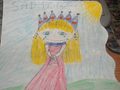
The picture of Crying Princess was drawn by Ariana, my 10 yr. old granddaughter. I can tell you that I can shed many many tears over the serious wounds and experiences of our Warriors. I'm sorry that most politicians will never know the complete story about the pain and suffering that they have caused our soldiers, their families and our communities. Please thank every soldier you see in the community for their devoted and dedicated professional service to our Country.
I love this short video that Ariana made -- Karate Adventures. She has also introduced several videos discussing Mindfulness and Not being Accidental
[link]
Jerry More >
|
|
|
|
 4 Jan 2008 @ 15:17, by jerryvest. Medicine, Healthcare 4 Jan 2008 @ 15:17, by jerryvest. Medicine, Healthcare
Most people seem convinced that since the body inevitably shows the "ravages" of Time, similar ravages must therefore affect the mind, the spirit. Not true. What is most important is that in our lives we have learned through the mind, the mind that is our spirit, and that is what will remain even when the body breaks down. (_Growing Young_, Ashley Montagu)
This "NY Times" article is a remarkable finding by British researchers that will certainly challenge conventional mental health treatment in this country and others. I suspect that the Big Pharmas are clamoring around to see how they can squelch this research and/or find ways to cover up their own studies that were suppose to be scientific and offer evidence based practice methodologies.
This study should also draw attention to all of the other psychotropic drugs and products created by the pharmaceutical companies. Congress and the FDA should call for investigations of their science, for their marketing practices, for their corporate political behavior and their greed. This is not the first drug that has proven to be of little value, useless and harmful to the consumer. It is especially fraught with corruption and abuse because those persons most vulnerable--mental health patients/clients--are not able to determine what is the best treatment for their pain, anguish and suffering. They depend upon psychiatry, mental health programs, and medicine to give them the treatment that has a scientific basis of validity and reliability and offers best practice interventions.
This "NY Times" series of articles also discuss psychiatry and concerns that the public and others should be aware of: [link]
For those of you who have followed my logs related to "Stop Drugging our Kids" and others describing the Big Pharmas' practices, this is just one more headline that will probably be overlooked while psychiatry continues to drug their patients while Big Pharmas go about their business, passing off their research as scientific evidence and paying off their professional customers and politicians. Hmm, I wonder why I am becoming so cynical in my "old age" when I feel as though I am "growing young" and spirited. "But the routine prescription of the drugs for aggression, they concluded, “should no longer be regarded as a satisfactory form of care.”
Finally, I am adding an additional article introduced in the International Journal of Mental Health Systems that describes the failures of the Diagnostic Statistical Manual(DSM) as a psychiatric system or model used to assess or measure depression and schizophrena. This is another remarkable article that questions the validity and usefulness of a system that is commonly used by mental health professionals. The authors recommend other system approaches that can be more helpful and effective for evaluating and treating patients suffering with depression and schizophrenia. "Classification in Psychiatry: Does it Deliver in Schizophrenia and Depression?"
[link]
************************
Drugs Offer No Benefit in Curbing Aggression, Study Finds
By BENEDICT CAREY, NY Times
Published: January 4, 2008
The drugs most widely used to manage aggressive outbursts in intellectually disabled people are no more effective than placebos for most patients and may be less so, researchers report.
The finding, being published Friday, sharply challenges standard medical practice in mental health clinics and nursing homes in the United States and around the world.
In recent years, many doctors have begun to use the so-called antipsychotic drugs, which were developed to treat schizophrenia, as all-purpose tranquilizers to settle threatening behavior — in children with attention-deficit problems, college students with depression, older people with Alzheimer’s disease and intellectually handicapped people.
The new study tracked 86 adults with low I.Q.’s in community housing in England, Wales and Australia over more than a month of treatment. It found a 79 percent reduction in aggressive behavior among those taking dummy pills, compared with a reduction of 65 percent or less in those taking antipsychotic drugs.
The researchers focused on two drugs, Risperdal by Janssen, and an older drug, Haldol, but said the findings almost certainly applied to all similar medications. Such drugs account for more than $10 billion in annual sales, and research suggests that at least half of all prescriptions are for unapproved “off label” uses — often to treat aggression or irritation.
The authors said the results were quite likely to intensify calls for a government review of British treatment standards for such patients, and perhaps to prompt more careful study of treatment for aggressive behavior in patients with a wide variety of diagnoses.
Other experts said the findings were also almost certain to inflame a continuing debate over the widening use of antipsychotic drugs. Patient advocates and some psychiatrists say the medications are overused.
Previous studies of the drugs’ effect on aggressive outbursts have been mixed, with some showing little benefit and others a strong calming influence. But the drugs have serious side effects, including rapid weight gain and tremors, and doctors have had little rigorous evidence to guide practice.
“This is a very significant finding by some very prominent psychiatrists” — one that directly challenges the status quo, said Johnny L. Matson, a professor of psychology at Louisiana State University in Baton Rouge, co-author of an editorial with the study in the journal Lancet.
While it is unclear how much the study by itself will alter prescribing habits, “the message to doctors should be, think twice about prescribing, go with lower doses and monitor side effects very carefully,” Dr. Matson continued, adding:
“Or just don’t do it. We know that behavioral treatments can work very well with many patients.”
Other experts disagreed, saying the new study was not in line with previous research or their own experience. Janssen, a Johnson & Johnson subsidiary, said that Risperdal only promotes approved uses, which in this country include the treatment of irritability associated with autism in children.
In the study, Dr. Peter J. Tyrer, a professor of psychiatry at Imperial College London, led a research team who assigned 86 people from ages 18 to 65 to one of three groups: one that received Risperdal; one that received another antipsychotic, the generic form of Haldol; and one that was given a placebo pill. Caregivers tracked the participants’ behavior. Many people with very low I.Q.’s are quick to anger and lash out at others, bang their heads or fists into the wall in frustration, or singe the air with obscenities when annoyed.
After a month, people in all three groups had settled down, losing their temper less often and causing less damage when they did. Yet unexpectedly, those in the placebo group improved the most, significantly more so than those on medication.
In an interview, Dr. Tyrer said there was no reason to believe that any other antipsychotic drug used for aggression, like Zyprexa from Eli Lilly or Seroquel from AstraZeneca, would be more effective. Being in the study, with all the extra attention it brought, was itself what apparently made the difference, he said.
“These people tend to get so little company normally,” Dr. Tyrer said. “They’re neglected, they tend to be pushed into the background, and this extra attention has a much bigger effect on them that it would on a person of more normal intelligence level.”
The study authors, who included researchers from the University of Wales and the University of Birmingham in Britain and the University of Queensland in Brisbane, Australia, wrote that their results “should not be interpreted as an indication that antipsychotic drugs have no place in the treatment of some aspects of behavior disturbance.”
But the routine prescription of the drugs for aggression, they concluded, “should no longer be regarded as a satisfactory form of care.” [link] More >
|
|
|
|
 25 Nov 2007 @ 20:05, by jerryvest. Medicine, Healthcare 25 Nov 2007 @ 20:05, by jerryvest. Medicine, Healthcare
We should accept things as they are without difficulty. Our mind should be soft and open enough to understand things as they are. When our thinking is soft, it is called imperturbable thinking. This kind of thinking is always stable. It is called mindfulness., (Zen Mind, Beginner's Mind by Shunryu Suzuki)
As many of you know, I have written several logs related to the Mental Health Industry, the increasing use of prescription drugs for treatment, especially for children and youth who are over-diagnosed and identified and labeled with Attention Deficit Hyperactivity Disorders(ADHD).
This article describes how a psychiatrist was recruited as a drug company representative, wined and dined, while receiving large sums of money to promote their drugs. He discovered that he was withholding vital information that could be hazardous to the health of his patients and to his reputation as a doctor. He began to see that he was losing his integrity and ethics so he dropped his position as drug representative(dealer) and told his story to the NY Times. This is worth your time to read as he describes how the Big Pharmas and the AMA are in collusion and showing their lack of respect for patients or customers who need help with depression and other mental health "disorders." (Daniel Carlat is an assistant clinical professor of psychiatry at Tufts University School of Medicine and the publisher of The Carlat Psychiatry Report.)
[link]
I have written several logs on the dangers of the Big Pharmas, the mental health industry, and about practitioners who have lost their way. Our helping professionals who close their eyes to corrupt practices and labeling, knowing that their "Code of Ethics" is their guide to practice, are also endangering their clients. "Our primary concern is our client...."
"The mission of the social work profession is rooted in a set of core values. These core values, embraced by social workers throughout the profession's history, are the foundation of social work's unique purpose and perspective:
service
social justice
dignity and worth of the person
importance of human relationships
integrity
competence.
This constellation of core values reflects what is unique to the social work profession. Core values, and the principles that flow from them, must be balanced within the context and complexity of the human experience."
I appreciate that you take the time to read these brief posts. Please feel free to respond to my logs/blogs. As a professor of social work, I am interested in learning how students, professionals and others feel about these practices and issues related to our core values.
Note: Photo by Mike Connealy More >
|
|
|
|
 14 Oct 2007 @ 14:27, by jerryvest. Medicine, Healthcare 14 Oct 2007 @ 14:27, by jerryvest. Medicine, Healthcare
Social capital refers to that willingness to step in. Communities, paralyzed by fear, are themselves a victim of violence. Do nothing and your worst fears will be realized. Residents have to become co-producers of safety. (No More Throw-Away People, Edgar S. Cahn - Creator of Time Dollars and Time Banking.)
Integrative Health Methods can provide a viable option for most persons currently referred to mental health centers and hospitals -, See our Mission Statement for the 15-Minute StressOut Program. [link]
For example our StressOut Program and Forum, reaches out to our colleagues as we make friends around the world. During this past month 39 different countries connected with our StressOut & Home Page and we average over 5,000 clicks a month by all populations around the world. We have many creative social workers engaged in advancing the use of technology through our forums, logs or blogs. I would especially recommend the New Civilization Network as another option for advancing our work. The 13,000 members share their common interests, goals and experiences with us as a network of Global Citizens who recognize that "Improvement for One is Improvement for All!" (Oscar Ichazo-Teamwork, Cooperation and Interaction Training)[link]
Case in Point-- I am interacting about the Cautions and Questions related to labeling and the DSM. Comments by participants usually include other resources to help us meet our goals. For now, I am throwing up a Red Flag!!!
Let's join together to move our profession in a healthy direction with and for those we serve as partners. This is not new, there are volumns written about the value of becoming one with your partner rather than treating them as a patient-- promoting helplessness, hopelessness and dependency. There are many alternatives to labeling and giving humans a psychiatric (#)number and a phony identity based on voting by committee without scientific evidence--reliability and validity tests.
Also, it is a human violation for mental health systems and workers to give the patient records--personal and confidential material and code numbers to others without security and protection measures. These records go beyond anyone's control and labels are rarely if ever changed, should the patient recover from their 'disorder.' When people are in pain or in need of our services, they should not have to accept our program's or system's disregard for their privacy. As one health practitioner stated: "To objectify people and treat them with such a lack of feeling is, in my opinion, a serious disorder of its own."
About Our Forums - Helps us become informed, develops our writing and reporting skills and advances our knowledge-
I have been interacting on the Newstudent forum and recently responded to a question that BT (anonymous) had about labeling his clients as required by his mental health program:
BT, I suspect that I am in the minority and have taken some abuse for stating my opinion in this forum; however, I feel that it is important for us as social workers to speak out and abandon the use of the DSM and let the Psychiatrists and Psychologists live with their unethical and harmful effects of labeling mental health clients/patients.
There are numerous articles and reports related to this subject and I have included many of them as links in my logs on the New Civilization Org. Perhaps this brief excerpt from an article will clarify some of the dangers, but it is well worth your time to visit this program:
****************
All doctors, including psychiatrists, take the Hippocratic Oath, which states "Do no harm." I believe that the DSM-IV diagnosis protocol, itself, violates that oath.
When people are labeled in this way, it does them harm. It is a judgment on their person, their character, and their value. It is a subjective opinion that places them under the control of so-called experts and will haunt their personal record for life.
In the wake of such a judgment, clients often conclude that there is something fundamentally wrong with them. Such a message can injure self-esteem, increase a sense of despair, depress the immune system, and endanger physical health.
We are not numbers. We are not labels. Our problems cannot be reduced to lists and multiple choice. To objectify people and treat them with such a lack of feeling is, in my opinion, a serious disorder of its own.
People already know they have problems - that's why they come for help. They don't need labels, they need understanding. Since emotional issues are a whole-person phenomenon, their causes and healing cannot be reduced to single categories. In fact, labels, by falsely simplifying, obstruct the healing process.
Professionals argue that they need the criteria and a common diagnostic language in order to discuss and act on the many "cases" they have to process. This is itself an indictment of the assembly line mentality of modern health care. If specialists took the time, and treated those in their care as people - not just cases and numbers - greater healing would take place at a lesser cost, without the need for numbers and labels. [link]
********************
Summary
How can we trust the DSM when it is controlled by the drug corporations? It is clear that the DSM Board and the classification system is a hoax and our profession continues to support this lack of integrity. Do read this article from the "Chicago Tribune." [link]
BT, you are right to question this sick care labeling system that endangers your/our clients and places them at great risk for life. Your question shows that you hold respect for others and do not wish to harm them. We need more social, health and medical organizations with allied health professionals to come forward and prevent further abuse, neglect and disrespect maintained by these corporations and psychiatry. And, I hope students, teachers and others who blindly follow and teach these labeling practices will put themselves in the 'shoes' of their clients and experience some empathy, respect and compassion. Do No Harm!!!
Finally, this latest investigation by Congress will hopefully improve the reporting, oversight and ownership of the research that is published by scientists. And, with this report I will go on to other important health opportunities, especially those related to children and their families.
Dear gerald,
Congress has given final approval to a bill that will significantly improve the drug review process at the Food and Drug Administration (FDA) and hold the FDA more accountable, protecting us from unsafe drugs. Thanks in part to your calls and letters, the law includes transparency language that will shine a light on the FDA drug approval process. By opening up the drug review process and documents to public scrutiny, the manipulation of research results becomes much more apparent and thus easier to counteract.
This legislative victory is crucial to public health and safety. Last year, when UCS surveyed nearly 1,000 FDA scientists, one in five reported that they had been asked by their supervisors to provide the public, the news media, and government officials "incomplete, inaccurate, or misleading information." When the unbiased research of qualified scientists was suppressed and distorted, flawed data led the FDA to approve drugs such as Vioxx, Avandia, and Ketek, which later proved to be harmful.
This bill requires that the views of drug reviewers are heard and not suppressed or ignored. In addition, the bill also protects scientists' right to publish their research, another way to safeguard the scientific integrity of FDA scientists and their work. Unfortunately the bill doesn't go far enough to restrict conflicts of interest on FDA advisory panels. Nonetheless, the new law will improve the FDA's drug review process and set the stage for similar reforms at other federal agencies.
Transparency is the cornerstone of scientific integrity—it's vital to the work of the FDA and all federal agencies to ensure that the work of scientists is not manipulated.
We will closely monitor the FDA’s performance, tracking whether the public gets full access to the information they need. And we will again rely on your support as we continue to push for similar reforms at other federal agencies where science has been politicized and scientists have been intimidated.
UCS surveys have revealed similar problems at the U.S. Fish and Wildlife Service, NASA, and the National Oceanic and Atmospheric Administration. But as long as scientists and citizens continue to play an active role in the fight to ensure scientific integrity and transparency, I am confident we will prevail.
Thank you for your continued dedication to scientific integrity and all you do to help UCS work for a healthy environment and a safer world.
Sincerely,
Michael Halpern
National Field Organizer
Scientific Integrity Program More >
|
|
|
|
 20 Jun 2007 @ 13:17, by jerryvest. Medicine, Healthcare 20 Jun 2007 @ 13:17, by jerryvest. Medicine, Healthcare
Meditation Proves to Relieve Stress-
"Mindfulness requires keen observation, but it must be free from interpretation and passing judgment. Practicing mindfulness develops our usual awarenss to its most subtle level; with this awareness, we can protect ourselves against being pulled off balance by our thoughts and emotions." (Tarthang Tulku, Openness Mind, p. 118)
While discussing the mental health movement in several of my previous logs, I also introduced meditation, exercise, Martial Arts, Psychocalisthenics, massage & skillful touch, theatre, photography, art, music and dance. As we become more interested and involved in developing ourselves--our knowledge and experience of the arts and of various meditations, we can learn first hand how we can balance our body, mind and emotions while experiencing very positive feelings and healthy relationships both internally and externally. Thus, it is no surprise to learn that depression, stress and anxiety can be improved with meditation and the arts because we are 'playing a part' in the healing processes. We develop will power or determination by maintaining a daily practice of being mindful and by being engaged in many integrative health practices.
For many years, while teaching full time for New Mexico State University, School of Social Work, I taught courses in Holistic Health Practice and Integrative Health Practices every semester for many disciplines that included all of these methods. Currently, I introduce these practices with the US Army, Ft. Bliss, TX as part of the "Stress Management-Health Promotion Classes," Army Community Services and annually with our course in "Social Work Practice with Elders."
With meditation, the healing takes place with the patient or client participating in this experience. With drugs, the participant is not often considered important to the healing process, especially with the psychotropic drugs. I have abstracted a couple of paragraphs from this Buddhist Meditation website that demonstrates through research how effective meditation practices can be for improving our whole being and for relieving our pain and suffering.
Buddhist Meditation and Health
"Duangjai Gasandigun (1986) has carried out research on how our moods affect our mental health: 'the effects of meditation on mental health, measured by comparing depression in individuals between 15 and 25 years of age at the Buddhist Center for the practice of Religious Precepts (Phrathamgai Temple) in Phatumthani province. A control group of 156 people who had been instructed in meditation, had to take a test that measured their level of depression both before and after meditation. The average score showed that depression was lower after meditation. This suggests that meditation relieves stress, bringing with it the ability to analyze, understand problems and alleviate the cause of depression.
It should be pointed out that all kinds of diseases are treated with medicine or with many procedures of medical science. Some treatments use our own intentions and will power, for example, psychotherapy or the practice of meditation. In such treatments, the patient must play a part in helping himself, not simply depending on medicine. These treatments demonstrate that the mind can look after itself and have an effect on the treatment of physical disease. In this way, if a patient receiving treatment is able to understand that his sickness is physical and doesn't allow it to affect his mental health, staying calm and cheerful, then that his sickness will inevitably improved and be cured more quickly. But if a patient reverts to being low-spirited, depressed or self-piteous then the sickness will be more difficult and take longer to treat. Therefore, staying calm, clear-headed and cheerful at all times is something that can protect us from disease. Phra Dhebhavedhi (Prayut Payuddho 1993 pp. 15-16) has listed all the benefits meditation can bring both to mental and to the development of the personality: will-power, determination, stability, politeness, gentleness, dexterity, liveliness, nimbleness, cheerfulness, dignity, altruism and the ability to know oneself and others truthfully. These are the attributes of a person who has achieved perfection in both in body and mind."
[link]
Another program in Toronto, Canada, "Meditation for Health," introduces meditation and mindfulness to treat a host of symptoms that are normally treated through drug therapies. These alternatives to medical interventions have proven to be very successful for thousands of years by many cultures--our western psychologies are only now beginning to do their research that clearly demonstrates the effectiveness of these practices. Lucynda Sykes,' MD, program as described here, introduces a health practice that is not unlike many integrative health practices throughout the US, many modeled after Dr. Jon Kabat-Zinn's, stress reduction clinic, the University of Massachusetts Medical center and introduced in his classic book - Full Catastrophe Living: Using the Wisdom of Your Body and Mind to Face Stress, Pain, and Illness.
Meditation for Health is:
a community-based medical program in Toronto, Canada, that teaches Mindfulness-Based Stress Reduction (MBSR) as a self-care treatment for chronic, stress-sensitive symptoms.
-a complement and support to regular medical treatment. It helps people to mobilize their own inner resources for coping and healing -- especially for symptoms no longer responding to more standard medical treatments, or for symptoms exacerbating the course of chronic disease.
-an instruction in self-regulating techniques that have been shown to change the experience of symptoms, and to promote healing by reducing the stress response in mind and body.
Has been useful for such conditions as:
o chronic pain
o anxiety and panic
o sleep disturbance & insomnia
o gastrointestinal distress
o fatigue
o headaches
o job or family stress
o skin disorders
o high blood pressure
o stress factors in heart disease"
Furthermore, Dr. Sykes introduces mindfulness that is taught throughout her workshops and sessions:
What is "mindfulness"?
"Mindfulness" is nonjudgmental, moment to moment awareness --- our experience of being here, now.
"Mindfulness can be cultivated by deciding to pay attention to things that we normally never give a moment's thought to:
.... Like the sounds you are hearing right now ....
.... or the feeling of your eyes as they scan this text ....
.... Can you feel your next breath beginning ? .............
This is mindfulness."(Lucynda Sykes, MD)[link]
These are two excellent models of health practices that can be used to replace the primary use of drugs while supporting and improving the whole health of clients, patients and participants. No diagnostic label is necessary and the participants are fully engaged in their complete process of knowing, changing and improving themselves. I suggest and recommend that mental health workers and social workers learn these various modalities so that they can be more skillful and effective. Also, they should learn to administer evaluation instruments so that what they teach can be evaluated and demonstrated in their practice.
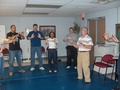
Note: The picture was taken during one of my experiential stress management classes with soldiers at Ft. Bliss, TX. More >
|
|
|
|
 5 Jun 2007 @ 10:03, by jazzolog. Medicine, Healthcare 5 Jun 2007 @ 10:03, by jazzolog. Medicine, Healthcare
In a single cry
the pheasant has swallowed
the fields of spring.
---Yamei
The real miracle is not to walk on water or thin air but to walk on the earth!
---Thich Nhat Hanh
Music is your own experience, your thoughts, your wisdom. If you don't live it, it won't come out your horn.
---Charlie Parker
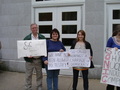
The family that protests together...: Richard, Dana, Ilona demonstrating against a nuclear dump they want to build down the road apiece. (Photo by Loraine McCosker)
I went to my dentist for the semi-annual checkup yesterday, and noticed a new product in the little bag of stuff they give you afterwards. I wisecracked to the receptionist that Listerine must be sending my doctor and his family on a cruise somewhere. She was quick to reply he never takes anything from companies except the free samples. I was happy to hear that.
Whereupon I gave her an earful about my family doctor's office. I said I hadn't been in there even once in the past 2 years (and I go maybe 3 times a year---they want to get all they can out of my insurance company) when there wasn't a drug salesperson pushing pills. These people are particularly sickening, as they try to get from the reception window into the back area to unload their suitcases full of drugs and bribe the doctors. The payoffs are free dinners, trips, and various toys to be strewn all over the place with big long names of pills on them. Undoubtedly they hope some patients will steal the toys to take home and spread the word. Free advertising. The dinners are gigantic feasts, and receptionists are encouraged to have to doctor invite all their friends if they want to. This is done in brazen broad daylight in front of a room of patients, waiting hour after hour to get that prescription.
I was in there last week, for a sprained foot I wanted X-rayed, and the drug lady was suggesting perhaps the doctors would like a new restaurant this time. Maybe one in Columbus or Parkersburg, a finer one, a richer one. The receptionist said she'd ask. "And oh!" the pusher said, "did you notice my new outfit?" She did a little swirl in front of the window. "It's color coordinated with our featured capsule!" I couldn't believe my ears. "See? The same colors as (she named the drug). Even the waistband is the color of the little separating line." I felt nauseated, and nearly stood up and let her have it. This is our health system in action, and I'm about to go in an office for treatment that will pay for this woman's salary, costume, and a doctor's free vacation courtesy of pharmaceuticals.
Maybe 20 years ago or more doctors started giving us free samples of drugs they were prescribing. I appreciated that because sometimes I was sick with flu or something, and just felt like going back to bed rather than a drug store to get medication. But since then, the practice has become obscene. Is this the free market the people in power tell us is a new religion solving the world's problems? If so, I want out! I'll gather roots and herbs in the woods before I'll take any more of this horror show. Have a look at TruthOut's article on the mess from yesterday afternoon~~~ More >
|
|
Page: 1 2 3 4 5 Older entries >> |
|
