|
|
31 Mar 2006 @ 17:10, by gsosbee. Legal, Justice
As I read the daily news reports of the corrupt and criminal fbi agents (as I have documented at www.sosbeevfbi.com), I must ask the nation a very common question ( in the minds of many activists ):
Where have all the true lawyers gone, long time passing ? Where are the JDs, the SJDs, the constitutional law scholars and thinkers in general (those who critically examined and took to heart the meaning of the Bill of Rights and the United States Constitutional safeguards against abusive and murderous government agents)? Then , I respond that these attorneys are busy in and out of court making money (hand over fist in some instances), striking plea bargains for innocent defendants,reaching settlement arrangements (in order to garner fast, easy money), seizing assets to cover legal fees, etc., so that by retirement age these prima donna guns for hire may continue the same comfortable life style that they have grown accustomed to over the years. They are seldom concerned with the destructive impact of corrupt law and policy upon the lives of those targeted for political persecution both under criminal and civil law.
E.G.:
[link]
The problem (in my opinion), aside from the obvious abandonment by these attorneys (including those in the law school and university ivory towers) of their civic responsibilities to their fellow man and to their profession (notwithstanding the puny pro bono records carefully documented for political show) is that the nation meanwhile is become a totalitarian state bent on the for-profit subjugation of all people by the strong arms (and weak minds) of the fbi and the cia (and others). The lawyers in the main have become tools of the emerging fascist state that even they now fear. The supposed defenders of our Rights at a most critical moment in history are in 'the other room ' (one that is soundproof and cut off from the reality of the inhumanity that is become the hallmark of the USA criminal justice system).
Specifically, the fbi for example recently charges a man with the newly discovered offense of:
"traveling in interstate commerce to engage in sexual activity with a minor and traveling in interstate commerce for the purposes of engaging in illicit sexual conduct".
The heart of such cases is the presumption by the fbi thugs that they may, by the use of an hypothetical construct, read the minds of the accused, predict his behavior with pinpoint accuracy, and determine the future course of events not yet clear to the otherwise objective mind, nor to the accused himself; in doing so the fbi predators have captured the supportive attention of the media which is always ready to get on board a moving freight train of decadent and destructive public policy.
* Note that the individual charged in the sex case referenced above has committed no offense, no plaintiff or complaining witness exists, no victim exists, no crime has been committed or reported, no evidence of any crime is extant, and no law has been broken (except for the imaginary one contrived in the perverse and often criminal mind of the fbi, or other accuser) who should himself be charged with false arrest or filing false charges, among other offenses, in connection with the preposterous charges against an innocent man. In essence the fbi and their minion police agencies pretend to safeguard the imagined rights of non-existent persons at the expense and destruction of real life human beings who are as innocent as may legally be conceived in a theoretical sense. See:
[link]
By studying this and similar cases the astute student may gain new and important perspectives from "inside the criminal mind" of the fbi and other accusing parties. For more on this see the links below.
Meanwhile, with regard to police and fbi misconduct, most lawyers are silent (out to lunch), or worse, the lawyers sometimes can be seen on TV also getting on board the popular movement which is profitable for all but the accused, or the targeted.
Alas, I have personally known many attorneys who, while representing drug dealers and other violent and dangerous types (often with real as opposed to imagined victims) in the general society, engage in the consumption of cocaine, marijuana, etc.,while publicly pretending to uphold the values of mainstream society. These same attorneys mostly avoid the truly difficult, complex and unpopular cases brought against the accused by a broken and corrupt regime headed by the fbi, or other incompetent police agency.
Attorneys also generally avoid Civil Rights and Human Rights cases against the fbi because the victim of the fbi criminal campaign has no money, and because the attorneys are fearful of fbi retaliation.[For examples of current violations see:]
[link]
Also see:
[link]
The instance cited above (regarding an imagined sex offense) is a hot potato with most lawyers because they do not want to be seen as apologists or defenders of an accused who may be facing a variety of illicit sexual conduct charges and the parade of horribles associated therewith. These attorneys do not mind representing murderers, drug king pins,or other despicable types; and these barristers boldly proclaim that their law firm does not ever represent defendants in alleged child sex abuse(and related) cases, period, even when no crime has been committed. Neither do many attorneys show any interest in prosecuting a civil case against the fbi or the cia because "there is no financial future in it".
Well, how convenient for these legal practitioners, as they now enjoy the best (from their perspectives) of both worlds: on the one hand they can join the lucrative freight train of popular opinion regarding the condemnation of any person falsely accused of largely imaginary sex related offenses; and on the other hand, these same attorneys can sell out their conscience (with handsome returns)in the representations of some extremely unsavory characters. When the smoke clears, these attorneys are left with one small problem (as I see it): they have allowed the fbi and the prosecutorial freight train to roll over and destroy the guarantees of personal freedoms and individual liberties afforded by the uSA constitution.
For more on imagined offenses and the criminal machinations of those who allege them,see:
[link]
Also see a summary of the crimes committed against a former fbi agent (Sosbee)and note that no attorney will come forward to prosecute the civil case inherent in the terrorists' assaults on Sosbee:
[link]
See:
[link]
Thus , the lawyers, mostly silent on Human Rights issues, slink from their civic duties, abandon their sworn promises to uphold the constitution, and otherwise cower before the menacing shadow of the fbi (and others) who have turned this nation into a virtual prison for all but the torturers and assassins of the ruling class. Indeed, all criminal cases (and many civil cases) today contain Human Rights issues, not just for the supposed victim (if one exist), but for the accused as well; the failure of American Jurisprudence to take this fact into account represents the continuing deterioation of the U.S. judiciary.
The answer to the question posed in the first sentence above is that the lawyers have gone to the black hole of greed, self absorption and pusillanimous retreat. The damage to our nation (and its social fabric) resulting from their incompetence/indifference is incalculable.
The statements above do not represent legal advice.See:
[link]
_____________________________________________________________
* On 4-5-06 the following news item appears:
By MICHELLE SPITZER, Associated Press Writer
MIAMI - A deputy press secretary for the U.S. Department of Homeland Security, Brian J. Doyle, was charged with using a computer to seduce a child after authorities said he struck up sexual conversations with an undercover detective posing as a 14-year-old girl.
See recent article on
press secretary arrested
Sosbee writes:
As suggested above in the context of the phony criminal charges in a different alleged sex abuse case,Brian J. Doyle is obviously innocent.
_____________________________________________________________
See:
[link]
--------------------------------
For more on imagined crimes alleged by the criminals of the United States government see:
[link]
|
|
|
|
7 Feb 2006 @ 23:50, by nemue. Legal, Justice
“Laws alone can not secure freedom of expression, in order that every man present his views without penalty there must be spirit of tolerance in the entire population.”
Albert Einstein (1879 – 1955)
Wise words indeed, however, what level of tolerance are we expected to show when the freedom to express is taken to an unacceptable level.
The events of recent days with thousands of Muslims around the world protesting (many in the most violent way) in response to the cartoons that were published by the Danish Press (in September last year) really brings home to me in the most graphic fashion the total of lack of acceptance and tolerance of the population at large. For me this is particularly worrying because this is symptomatic of how so many respond now to any number of issues that they do not agree with.
Expressing your opinion and the freedom to express your opinion is the essence of a responsible society. Many of our forebears lost their lives and others faced jail terms fighting for this right. Expressing your opinion and the freedom to express your opinion in a non-violent and responsible manner is not only the expectation of most of us but also the gift that we return to those who have gone before us. What we have witnessed over recent days and what we continue to witness in our everyday lives is not people expressing their opinion in a responsible manner but people rioting, destroying property, threatening death to innocent people, killing others (there have been a number of deaths reported as a result of the current protests) and whipping up hatred. The sight of young children carrying banners with messages such as death to all who insult Allah (and this is in London) are frightening and begs the question what are we teaching the young today.
Frenzy breeds frenzy.
One of the most chilling responses is that of British law enforcement operatives who have openly stated that they will not arrest people for inciting hatred and violence because it will only lead to more violence. They fear for themselves and with some justification. In see similar responses to a number of recent (what turned out to be violent) demonstrations in Sydney. So now we have a situation where radical Muslims can storm the streets whipping up violence and we stand by and do nothing.
“Laws alone can not secure freedom of expression, in order that every man present his views without penalty there must be spirit of tolerance in the entire population.”
Albert Einstein (1879 – 1955)
The more I think about this the more I am convinced that the ‘law’ firstly has removed the freedom of expression for the majority and has effectively placed the control in the hands of the minority. Death of tolerance…..
The legal system is now impotent when it comes to dealing with unacceptable behaviours of the minority. Trust me if I carried a placard with death to all Muslims and praise be to those who blow them up I would be arrested immediately and jailed for inciting hatred and violence and so I should be. But Muslims do this in the streets of London, and nothing happens. So why doesn’t it work in the reverse? Why would I be arrested and others now? But most importantly our spirit of tolerance and responsible freedom of expression is rapidly becoming a thing of the past.
What a sad state of affairs and what a frightening future we have if we can’t stem the tide. More >
|
|
|
|
 13 Dec 2005 @ 02:59, by jmarc. Legal, Justice 13 Dec 2005 @ 02:59, by jmarc. Legal, Justice
I don't like it. I'm against it. People who are for it will often ask,
well, what if you or your family were the victim of a killer? Wouldn't
you be for it then? Probably. But, so far, so good for us, we haven't
been hurt in that way thank God, If something like that happened to my
people, I would be thinking from a very emotional state. The government
should, SHOULD be operating from a rational state though. Shouldn't be in
the revenge business. Should be above that. Because if that is a final
solution for a government then it follows that it may be right for an
individual. Or that's how the thinking could go, followed to it's logical
conclusion. More >
|
|
|
|
2 Dec 2005 @ 21:53, by ming. Legal, Justice
As a webmaster I regularly receive requests to remove some kind of copyright-infringing material somebody has posted. I've never gotten anything for my own blog, but it has happened often for other's blogs. Usually it is an artist who objects to somebody posting one of their pictures. And typically is is stupid of them to object, as it usually is some kind of "Here's a lovely painting from ___ and here's a link to their site". Which really is excellent free promotion for the artist. But many artists seem to be not understand how the web works, so for inexplicable reasons they'd rather be unknown and in control than have lots of people freely mention their stuff. Anyway, typically they ask relatively nicely and the "offending" material gets removed quickly.
But now, I also have this Opentopia site, which has a lot of content that's copied from other places. Mainly places that have a license that allows it. Like, Wikipedia and Open Directory. And at some point I included a lot of articles from GoArticles. It is a site where people can upload articles in any of a number of categories, which are meant to be useful and informative somehow. They're posted with a license that says that anybody can repost them, as long as the footer with the author's information is included. Most of these articles aren't exactly great, but they're somewhat informative. The posters usually put them up for some self-promoting reason, to be able to mention their website, or book, or whatever.
I hadn't really thought of all the people who would contact me based on this content. I was mainly focused on getting some free content, and then thinking about ways of adding value to it, when I got around to it. But quite a few people write to get things corrected. Or, a few suddenly decide they don't like their article to be used by anyone. Usually they include some kind of onerous wording about copyright infringement, but typically they ask fairly nicely, and I just remove their stuff, a little puzzled about why they bothered to post it in the first place, if they didn't want it out there.
The latest one got my attention a little more than normally. A guy named "Kriss Hammond" sends a message with the subject line "Lawsuit against Opentopia.com", and which goes like this:Please remove all links or other refeence regarding Jetsetters Magazine back to your websites or blog. Please remove all feature stories from Jetsetters Magazine from your websites. Do not reference any of Jetsetters Magazine features within your websites.
We plan a ten million dollar lawsuit against your company unless all links to your sites are removed. Do not use Jetsetters Magazine material in your blogs or as an RSS feed. U.C.C. 1-207 We reserve all our rights without prejudice. We have legal representation to handle this matter. Thank you for removing any material from any of our sites from your sites, including www.jetsettersmagazine.com www.beachbooker.com or www.jetstreams.com or www.cabinweb.com
Ten MILLION dollars, wow, that's quite impressive. I'm really scared! Actually, I laughed out loud.
At first I thought it maybe was one of those magazines you get in planes, and somebody had copied some article without asking permission. But then I looked at the articles in question, and I looked around a little on the web, and saw that it was something quite different.
Kriss Hammond calls himself "The Travel Professor", and he runs some outfit that shows people how to get cheap travel, if they just pose as travel journalists and write articles about the sites and hotels and restaurants they go to. And each article must promote Hammond's site. And apparently they post these on any site they can think of that will take submitted articles. Which essentially that acts as his advertising.
Why he then suddenly doesn't want the articles is a bit puzzling. I looked through my article database and found that there were 162 of his articles, all following the same model, all with the same ad for Jetsetters Magazine at the bottom. So, I deleted all of them. Good riddance.
And I realized that the guy was just responding to Google listings. He sent me several identical messages, with a different Google listing in each one. He was threatening a 10 million dollar lawsuit to anybody who mentioned his own website. Strange. Usually that means one has something big to hide somewhere.
And I think I'm getting it. Among highly placed entries in Google we find blogs presenting a little bit of an exposee of Hammond's possibly questionable business operation. So I think he decided to just write and threaten anybody who says anything about him, without even noticing that some of them were his own promotional articles. Not too smart. I would never have cared the slightest bit who he was if he hadn't done it in such a ridiculous manner. I'd still be providing him with 162 promotional articles, and I wouldn't have been writing this little thing here.
Anyway, a professional travel writer named Carl Parkes had written in his blog a post originally entitled "The Jetsetters Scam". You can now find it in this version: The Jetsetters Story. Parkes changed a couple of words, because Hammond started sending his famous "10 million dollar lawsuit" thing to anybody and everybody. The company that made the blogger template he was using, to Google, and to who knows who.
Read follow-ups: here, here, here, here, and well, there's more after that. Parkes wisely shifts over into posting general good information about travel writer scams, fake publishing houses, etc.
Below you can see one of the letters Hammond sends out to people who're interested in his Travel Writers Network. And you can see his business plan at work there. You pay $300 for membership in his network, and he provides you with templates for how you can present yourself as a travel writer to hotels around the world, and, I assume, get cheap or free rooms, meals, etc. And then you promise to write those articles, mentioning Jetsetters Magazine as much as possible.
Is that a scam? Not necessarily. It sounds kind of questionable. But, yes, for it to be a scam, there'd have to be some victims somewhere. The hotels maybe?
But I'd say that nobody goes around threatening to sue everybody who talks about them unless they have something to hide. You be the judge. More >
|
|
|
|
 12 Nov 2005 @ 00:53, by uncleremus. Legal, Justice 12 Nov 2005 @ 00:53, by uncleremus. Legal, Justice
The passing away of Rosa Parks comes as a reminder of another time, a bygone era when strong connections still used to link activism and spiritual practice. A connection that is not gone, maybe, but which has lost a lot of its momentum, and which is even sometimes frowned upon in certain contemporary spiritual circles. More >
|
|
|
|
8 Jul 2005 @ 22:28, by vaxen. Legal, Justice
The author consents to republication of this article as long as it not altered or edited. It should not be cited as authority since authority begins with the sovereign reading the article.
Law Is A Practice Without License
I recently attended the memorial service of a man I have held in high regard for some time. His name was Richard Oakes and he was what many would hail as the founding father of Hamline University School of Law. I loved Professor Oakes as a teacher and a mentor. I had the good fortune to study under him, share with him a bit of my life and learn a bit from his. While I drew many lessons from him there is one thing he said in class on a particular spring day, which has remained with me always. It is his words I often borrow for my own whenever I'm drinking coffee with other cops and one of them whines about the inefficiency of our criminal justice system, as did one student in our Criminal Procedure Class, that day back in the spring of 1993. Professor Oakes smiled and responded,
"If you seek efficiency in a criminal justice system, look no further than Nazi Germany. The Gestapo was one of the most efficient law enforcement agencies of the twentieth century. Our nation, on the other hand, was founded on a underlying conflict between the concept of security and the concept of liberty. The principle our system stands for is that the importance of liberty must always be placed above security."
More >
|
|
|
|
25 Jun 2005 @ 05:24, by vaxen. Legal, Justice
Eye Witness Testimony Is Conclusive That North Tower Collapsed From Controlled Demolition
By Greg Szymanski – The Arctic Beacon June 24, 2005
What happened to William Rodriguez the morning of 9/11 is a miracle. What happened to his story after-the-fact is a tragedy.
But with miracles and tragedies comes truth. And truth is exactly what Rodriguez brings to the whole mystery surrounding 9/11.
Declared a hero for saving numerous lives at Ground Zero, he was the janitor on duty the morning of 9/11 who heard and felt explosions rock the basement sub-levels of the north tower just seconds before the jetliner struck the top floors.
He not only claims he felt explosions coming from below the first sub-level while working in the basement, he says the walls were cracking around him and he pulled a man to safety by the name of Felipe David, who was severely burned from the basement explosions.
All these events occurred only seconds before and during the jetliner strike above. And through it all, he now asks a simple question everybody should be asking? How could a jetliner hit 90 floors above and burn a man’s arms and face to a crisp in the basement below within seconds of impact?
Rodriguez claims this was impossible and clearly demonstrates a controlled demolition brought down the WTC, saying "Let’s see them (the government) try to wiggle out of this one."
Well, they haven’t wiggled out of it because the government continues to act like Rodriguez doesn’t exist, basically ignoring his statements and the fact he rescued a man burnt and bleeding from the basement explosions.
His eye witness account, ignored by the media and the government, points the finger squarely on an official cover-up at the highest levels since the government contends the WTC fell only from burning jet fuel. And after listening to Rodriguez, it’s easy to see why the Bush administration wants him kept quiet.
Bush wants him quiet because Rodriguez’s account is ‘proof positive’ the WTC was brought down by a controlled demolition, not burning jet fuel. And Bush knows if he’s caught lying about this or caught in a cover-up, it’s just a matter of time before the whole house of cards comes tumbling down.
In fact, Rodriguez’s story is so damaging – so damning – it literally blows the lid off the government story, literally exposing the whole 9/11 investigation as a sham and a cover-up of the worst kind.
And it appears the cover-up also extends to the media.
NBC news knew about his story several years ago, even spending a full day at his house taping his comments. But when push came to shove, his story was never aired. Why?
His eyewitness account, backed up by at least 14 people at the scene with him, isn’t speculation or conjecture. It isn’t a story that takes a network out on a journalistic limb. It’s a story that can be backed up, a story that can be verified with hospital records and testimony from many others.
It’s a story about 14 people who felt and heard the same explosion and even saw Rodriguez, moments after the airplane hit, take David to safety, after he was burnt so bad from the basement explosion flesh was hanging from his face and both arms
So why didn’t NBC or any other major news outlets cover the story? They didn’t run it because it shot the government story to hell and back. They didn’t run it because "the powers at be" wouldn’t allow it.
Since 9/11, Rodriguez has stuck to his guns, never wavering from what he said from day one. Left homeless at times, warned to keep quiet and subtly harassed, he nevertheless has continued trying to tell get his message out in the face of a country not willing to listen.
Here is his story: More >
|
|
|
|
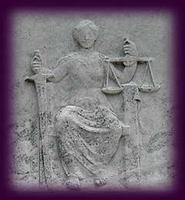 31 Mar 2005 @ 23:59, by ming. Legal, Justice 31 Mar 2005 @ 23:59, by ming. Legal, Justice
There are some logical problems involved in some of the things that people would consider making into law. Some of the hot political issues that lawmakers are arguing about, which seem to have clear for or against sides, really don't.
Take abortion. Are you for or against the right for a woman to choose to have an abortion? Those two views are usually presented as being sort of equal. Like it is a cross road and one needs to choose if it is left or right.
But the right to choose is not the opposite of abortion being illegal. The opposite of abortion being forbidden would be abortion being enforced. I.e. you have to have it. And there are places where that might indeed be a law. I don't know if China still has such laws. But, actually, logically, that fits better as the alternative.
If one is free to choose, one is free to choose. Meaning the result might be an abortion or it might not be. Depends on the situation and what the people involved think is right and meaningful and safe. Taking away that choice and making the answer always be the same is not comparable. The structure of that option is totally different from the option of choice.
Whether guns are illegal or not would be a similar set of opposites that aren't really opposite. The opposites of guns being forbidden would be that you have to have a gun. There's no real opposite of free choice, as free choice is not a particular choice, but rather the freedom to choose it when the situation comes up.
So, we could at least better say that no-choice is the opposite of choice. It would be worthwhile to be extremely aware of that whenever one chooses a no-choice option.
The particular option that is being enforced is merely clouding the issue. The real situation is that choice in a certain arena is being forbidden.
That's always a dangerous thing. However smart you are, you will not be able to predict all possible situations that any possible individual might find themselves in. Trying to pretend that you know the answer in advance to all such possible situations is rather arrogant and presumptuous. And wrong. You don't. So if you make an absolute law and you somehow, regrettably, have the power to make it be enforced, you most certainly will make things be wrong for a whole bunch of people, in situations you didn't take into consideration, or that you didn't want to consider.
Politicians in many places will take laws as some kind of statement of intent. Making a point. Setting a standard. So they will actively be part of establishing an absolute law, without needing to take much responsibility for all the situations where it doesn't fit, and without taking the responsibility for the fact that other people, wielding a large amount of force, will enforce that law rather blindly.
So, a politician might think: "We need to protect the children" and will vote for some law that forbids nude pictures on the internet, or that forbids people under 18 from having sex or something. He's trying to make some kind of moral point, and he's trying to influence the world into being like a certain picture he has in his mind, of what is good and proper, and how things "should" be. It is just that it isn't how it is, for most people. And a law might not change that much. It might simply authorize a fairly unlimited amount of violence in trying to make the world fit the "should". And it came from somebody trying to solve some problem, trying to avoid some "wrong" in their mind, and frequently picking a solution that doesn't at all fit the problem. Because the sense of logic necessary for even understanding this is not one of the requirements for being a politician or a policeman.
Many politicians who stand for a certain issue, and who would vote for making it law, will, if cornered, admit that they would choose differently in their own lives. What would you do if it were your own 16 year old daughter who got pregnant and she wanted an abortion? George Bush Senior had the honesty to answer that he of course would support her in her choice. But what if he already had made it illegal, without thinking of the consequences?
Once something is a law, a big state apparatus is in place to enforce it. How absolutely they do that will depend on the area, on the traditions of that country or region. For example, in the U.S. the law is not typically something you can reason with. Oh, there are great loopholes in the system, so one might get away with all sorts of things, because nobody's watching, or nobody currently has an interest in enforcing the law. And there are all sorts of legal small print and procedures that might help you get away with things. But if you really are in the search light of the law, and the law has decided you're wrong, there's no particular limit to the amount of force that will be applied to make you comply.
The fictional example I'd usually give would be if you decided to park somewhere you're not supposed to, like in an intersection. There would be a gradient of increasingly severe interventions that would be applied to make you not do that. First somebody might ask you to move. They might give you a ticket. If you're still there, they'll send a tow truck. If somehow you've bolted the car to the street, and you insist on defending your right to be there, it will quickly escalate. Armed cops will arrive, and if you somehow manage to prevail, it will eventually be teargas, then snipers and tanks. And they will eventually kill you, if they fail to remove you. And somebody will be able to say that they felt threatened and you lifted your arm suspiciously or something. So the public wouldn't think much about the insanity of being killed for a parking violation. You'd be some crazy, dangerous person. Even if all you had done was to park and stay parked.
Now, that would be in the U.S. And probably in China or in Russia. In most EU countries it would never go that far. In France they'd start a dialogue with you about why you're doing it, and what point you're trying to make, as they have an innate respect for the right to publicly make a point, even if it is inconvenient. In Denmark they might just leave you alone, if no good non-violent solution could be found, and hope you'd get tired of being there. OK, I'm making it a little more stereotypical than it is.
The point is simply that to make a law that is of the kind that is absolute and that will be enforced with physical and economic force, and threat of violence or incarceration - you need to be very, very careful to actually think through the consequences of that.
Very few things are suited for being legislated that way. Actually, maybe there's nothing that's suited for being legislated in absolute terms. Where there's a need to some absoluteness is mainly in the regulation of the requirements for participating in certain activities. If you want to drive a train on this railroad, the wheels of your train need to be 1435mm apart. If you're sending in your tax return, it must be on A4 paper. But that's more like regulations than laws. You can go and make trains of any width you want in your back yard, and write letters on any paper size you want, without going to jail.
Big wide-reaching laws would have to have a lot of qualifiers to them to work. Doesn't work to say that if you kill somebody you go to jail for 20 years. Because it depends. Sometimes, very, very rarely the right choice might be to kill somebody. You know, self defense, when all other options have been exhausted. Of course the laws in most places have some leeway built in in that regard. But hot political issues often end up with the least leeway in the law. In California there's a three strikes law. You will go to jail for life, without any room for choice, even if your third strike was stealing a loaf of break because you were hungry.
Taking away choice is generally a bad idea. The existence of a choice doesn't mean all choices are equal. A society might need to have negative consequences for making bad choices. Simply having a law with an enforced fixed outcome is a bad way of doing it. Laws that provide guidelines for what one is trying to accomplish is a better idea. And some guidelines are more important than others. Health, safety and happiness might be more important than any specific rules for how one might get there or not. A lot of choices might need to be made, on things that aren't known in advance.
Legal systems typically always have some kind of room for maneuvering. The cop will have to make the choice on whether he arrests you or not. There are lawyers and court cases and juries who will make choices. There are loop holes. The system might not work great, but there is room for reason and luck.
Now, however, technology might make it possible to enforce policies or laws without any room for choice or for maneuvering around them. You know, the automatic radar and camera that catches you speeding and sends you a ticket in the mail. No room for explanation or for reasoning about whether it was safe or there was a good reason for what you were doing. Same principle with an assortment of Digital Rights Management schemes that various media publishers are trying to push through. Like a DVD that will self-destruct in 24 hours, or a song you can only play on one piece of equipment, or a TV show where you can't skip the commercials. Your choice of how you will use things is suddenly gone. And the frightful thing is that the media publishers legally might be considered to have the right to control how you use what you buy from them. Which makes life a lot more boring and complicated, as you no longer are free to make your own choice of what you do when and how. It is a trend that this kind of thinking spreads to other kinds of technologies. A printer that will refuse toner cartridges bought in another country. Or that will refuse to copy certain images. If you've bought a printer fairly recently, you might be surprised to know that it is programmed to not be able to copy US dollar bills. Now, you're legally not supposed to, so you would be the looser in any argument against it. But your choice of whether you do so or not is gone.
Our societies are traditionally designed to have lots of loopholes, or maybe they accidentally ended up that way. There are all sorts of laws and rules and control mechanisms in place, but there are so many holes in them that even if those laws and rules are unfair or crazy or oppressive, you can still live your life somewhat sensibly around them. But if suddenly those laws can be monitored and enforced consistently and maybe automatically, we'd be in a whole lot of trouble. Imagine if you would get a speeding ticket in the mail whenever you passed the speed limit, because a sensor in your car wirelessly informed the police department. Imagine you couldn't make a photocopy of anything that is copyrighted, because the photocopier just wouldn't work. Imagine the tax department automatically calculated your taxes based on having watched everything you'd done, every penny you've gained or spent. Imagine you'd instantly be charged when you do or say something that could be construed as sexist or racist or subversive. Imagine automatically being hauled off to jail for practicing sexual activities in your bedroom that you didn't know were illegal in the state you live in. Oral sex is punishable with prison terms of one to twenty years in several U.S. states.
The law in most places is an incomprehensible self-contradictory mess. As the world gets more complex, and as more pervasive monitoring and enforcement methods become available, that becomes all the more clear. So you might either see a more and more surreal police state, or somebody will have to go back and rethink law altogether. Based on the diversity of choice. Choices with consequences. And one size never fits all. More >
|
|
|
|
 26 Feb 2005 @ 11:11, by jazzolog. Legal, Justice 26 Feb 2005 @ 11:11, by jazzolog. Legal, Justice
Right is not right; so is not so. If right were really right, it would differ so clearly from not right that there would be no need for argument. If so were really so, it would differ so clearly from not so that there would be no need for argument. Forget the years; forget distinctions. Leap into the boundless and make it your home.
---Chuang-Tzu
The only preparation I can make (for death) is by fulfilling my present duties. This is the everlasting life.
---Ralph Waldo Emerson
The spiritual life is, then, first of all a matter of keeping awake.
---Thomas Merton
La Révolution, 1896
Valentine Cameron Prinsep
I confess I was caught flat-footed yesterday afternoon when a TruthOut update hit my mailbox containing a bulletin William Pitt had sent out the evening before. I scarcely took time to read it all until this morning so even though I can find absolutely no mention of this in the media or even most of the sites and blogs still awake to the issue, it may be old news to some of you. This is about Election 2004 and the Ohio Recount which most of us thought was dead and gone...and I must say I haven't even visited many of the sites in a long time and my whole computer research system on this stuff is rusty and in disarray. But guess who still is awake and watching! Kerry-Edwards. More >
|
|
|
|
 30 Oct 2004 @ 09:30, by jazzolog. Legal, Justice 30 Oct 2004 @ 09:30, by jazzolog. Legal, Justice
God does not die on the day when we cease to believe in a personal deity, but we die on the day when our lives cease to be illuminated by the steady radiance, renewed daily, of a wonder, the source of which is beyond all reason.
---Dag Hammarskjold
Keeping on and on,
a traveler gets farther, farther away;
dust without cease
follows a horse through the world.
---Chia Tao
The butterfly counts not
months but moments,
And has time enough.
---Rabindranath Tagore
Les photographies de l'éclipse du 27 octobre 2004 seront bientôt disponibles ici par Sébastien Gauthier.
[link]
My title attempting summary doesn't intend grandiosity. Far from it. I think most of us here---both parties plus 3rd parties and independents...and we've got plenty of all in Southeast Ohio---are nearly fried with last minute efforts to phonebank, canvas, contribute, get to rallies (Jesse and Michael Moore will descend on OU this afternoon), avoid talk radio, only very selective TV, dress up for Halloween, and figure out what all to take with us when we attempt to vote Tuesday. What about Saturday chores? Groceries? Firewood? A ton of political mail piles up on the dining room table. Where can I find a space to eat supper tonight? More >
|
|
<< Newer entries Page: 1 2 3 Older entries >> |
|
