|
|
15 Jun 2016 @ 07:58, by erlefrayne. Alternative Money Systems
Light there may be for the global economy, but that light no longer comes from the Western economies. Definitely no longer from the once mighty ‘economic superpower’ USA that had lost the leadership leverage this decade when it suffered two (2) successive recessions within a short span.
I’ve already treated the matter of declining Western techno-economic power and hegemony over the rest of the globe in many articles. There is hardly any serious, highly-informed analyst in the world today who doesn’t share the same view, a view that Western (Caucasian) social forecasters do likewise hold even as they forewarned the West of the catastrophes that will confront them. More >
|
|
|
|
 28 Apr 2016 @ 17:25, by sreevatsa. Education 28 Apr 2016 @ 17:25, by sreevatsa. Education
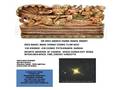
sub: Cosmology vedas Knowledge Expansion-Links up Cosmos- multi-universe
This Book covers two sections: Hinducosmolgy in Consonance with Modern Cosmology, key talk by author 2007,Tirupathi Conference,and Divine knowledge and knowledge Expansion Inter-links. Search beyond the present domains of knowledge for comprehension and function of the Universe as part of Cosmos. A neutral approach of Data in Nature helps to evolve new models that form interlinks Universe, mult-Universe and Cosmos with scale-up beyond 10^9 LY. projections and Divine images help Cosmologists, Astronomers, particle physics groups beyond milky-way. The origins are distinct to interpret Space Data and evolve new techniques.Cosmic universe is complete energy.out of the northern part emerged a lower Southern Cosmos and the present observational universe is an envelope emerged out of this southern cosmos.Cosmology- Myth or Science-knowledge base must be made self-evident to develop cosmos Quest- Rishi Vision with a spirit of dedication and respect ancient texts and revelations.Divine images carry energy and power.
[link]
Keywords:
Cosmology Definition, Divine Cosmic Function, cosmic Consciousness, cosmological index, Paradigm shift, Hindu Cosmology, Sristi Stithi Laya, Cause-Effect, Divine Vedic Knowledge, Ancient Texts, Cosmology Primer, Multi- Universe, Cosmos, Prime Concepts, Mahat Tatvam More >
|
|
|
|
 31 Jan 2016 @ 10:00, by sreevatsa. Peace 31 Jan 2016 @ 10:00, by sreevatsa. Peace
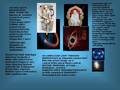
Sub: PRIDHVEEM SHANTIH-EARTH REGION -FIRSTTIER-PEACE [COSMOLOGY WORLD PEACE]
International year of Light 2015 transcende to conscious enlightened Spirit.
Promote UNITY of consciousness in Science, Religion and philosophy.
PRIDHVEEM SHANTIH- Earth region covers 100 AU. HAUT -Space Image confirmatory index. Save earth planet below Ionosphere and protect Life Support
Noble Cause : Human-Being, Environment, Divine Nature and Harmony
Cosmology vedas: Unity in Diversity
search Lulu [dot]com-Spotlight-Jnani108.
http://www.lulu.com/spotlight/jnani108
http://www.lulu.com/shop/vidyardhi-nanduri/unity-of-consciousness-om-in-science-religion-and-philosophy-2002/paperback/product-22354769.html
http://www.lulu.com/shop/vidyardhi-nanduri/cosmology-world-peace-interlinks-section-i-utthista-cosmos-quest-section-ii-2008/paperback/product-22384290.html
REF:http://www.parliamentofreligions.org More >
|
|
|
|
18 Jan 2016 @ 11:17, by erlefrayne. Globalization
It’s dusk time as I write, and this dusk at a time of intensifying monsoon rains seems to bode images of a grim future for the West at large. The European Union or EU members and the USA, the gigantic pillars of the global economy, are particularly in dire straits as they have entered the zone of flat growth and perpetual recession. More >
|
|
|
|
9 Dec 2015 @ 10:52, by erlefrayne. Personal Development
From my genius grandfather, Estanislao Argonza, did I first learn my Mozart appreciation. From him too did I learn Ybanag folk music and dance of Mascota. An ‘old soul’, Grandpa (as we fondly called him) was the core reason why I was embodied in my family, as both of my parents, who are of average intelligence, are inadequate to understand nor handle a tot who was born a gifted child. A math & music genius, he and my grandmother, a retired teacher, also taught me breeding and culture. More >
|
|
|
|
 4 Nov 2015 @ 15:32, by jerryvest. Natural Health & Healing 4 Nov 2015 @ 15:32, by jerryvest. Natural Health & Healing
Witnessing and Calming Thought Storms
By
Gerald W. Vest, ACSW/LISW/LMT Emeritus Professor
A Thought in our Mind and one that follows can be observed and determined to continue or not. Thus, we won’t have to be caught up emotionally in the drama, stress, theatre and passion by learning to observe and witness our breath. Our Breath becomes our instrument or tool to maintain Balance and Equilibrium of Body, Mind, Emotions, Spirit and Relations. “Let your Breath Chart your Rhythms.” (Tarthang Tulku, Gesture of Balance)
We have a tendency to hold on to almost everything, even our Breath, not realizing that our Mind is ‘wide open.’ Mind accepts and allows our senses and other systems to measure, interpret, analyze, judge, evaluate, assess, inquire, examine, while on the other side of the dichotomy: Mind can drive us crazy by triggering worries, actions, plans, associations, fear, ignorance, prejudice, jealousy, envy and many more human ‘inhabitants’ and ‘beliefs’ that dominate and control us as we are delicate, sensitive and fearful creatures. Stress, Anxiety and Depression are the outcome of not being able to Witness, Accept and Allow our Mind to be our Best Friend and Companion for life.
As students and teachers of our Mind, we have learned to calm ‘her’ and allow her to rest, relax and enjoy Freedom. When we get carried away with the past and our unfinished businesses (karma) of this life and others, we can use Mudras that produce a calming effect of our Passion (fear, jealousy, anger, etc), beyond words and thoughts. For example, holding broad swords and crossing your arms in front of chest, produces Courage, releases fear from our heart center and opens up our ability to relate more openly with ourselves and others. (See, "King of Hearts," The Tarot.)
Everything of Mind is remembered, not always recalled, however, associations of life experiences, interaction and relationships connect us with Mind as an internal and computer type that records everything of value or not. (see, Ichazo, Between Metaphysics and Protoanalysis as Oscar introduces systemic approaches to clarifying our Mind and joining Consciousness--True Nature. “Freedom=No Effect)”
So this is what my Mind is sharing with humanity and with me at this moment that has passed, now recording thoughts as they arrive to introduce and experience Breathing with Awareness of Mind.
As we begin to become aware of the vast thoughts entering our Mind we can observe Nature as she unfolds her wings and freely continues her function with Life, Health and Relationships.
One example, perhaps by association, right now I see birds flying in many varied formations, one leading the pack, yet changes position with another as they move through space. And, one or two of the flock are very independent and take off in another direction, knowing they will catch up if they wish….fearless and courageous these beautiful creatures, so delicate yet brave, encountering many storms and other energy ‘forces’ that often take humans ‘Out’ of life, health and relationships.
Note: Visit my Bibliography for these integrative and holistic health resources.
Gerald W. Vest, ACSW/LISW/LMT
SNM Injured Warrior Alliance, Integrative and Holistic Health Provider--Individual, Couple, Family & Group, Professor Emeritus NMSU
Las Cruces, NM 88005
575.524.2379 More >
|
|
|
|
 31 Oct 2015 @ 03:51, by sreevatsa. Space Exploration 31 Oct 2015 @ 03:51, by sreevatsa. Space Exploration
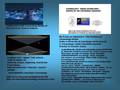
SPACE COSMOLOGY VEDAS -KNOWLEDGE BASE.
HOW TO INTRODUCE THE SUBJECTS
BOOKS : COSMOLOGY VEDAS INTERLINKS-BY DR VIDYARDHI NANDURI 1993-2015 .
BOOKS AVAILABLE
[Search LULU Bookstore- ebooks and Paperbacks]
HOW TO INTRODUCE THE SUBJECT- PROJECTION
SPACE COSMOLOGY VEDAS INTERLINKS-KNOWLEDGE BASE-WORLD PEACE
Dr Vidyardhi Nanduri promotes the Unity in Science and Philosophy
for Cosmology World Peace
Presently Cosmology is undergoing REVISION and BIG-BANG, Singularity, LHC
Dark Matter, DARK ENERGY and Black-holes are all under question.
Evolution needs to catch up with creation.
String theory has origins to Cosmic Dance of Lord SIVA.
Space-Cosmologists and Particle Physics groups are searching TOE-THEORY OF EVERYTHING.
These books provide search links, routes and many COSMOS QUESTIONS and COSMOLOGY DEFINITION that form links to COSMOS YOGA SERIES as follow-up.
PURPOSE OF INTERLINKS:
1. The Science of Philosophy: Divinity, Vedas, Upanishads, Temples and Cosmos Yoga
2. Philosophy of Science : Plasmas, Electro-magnetic fields and Cosmology
3. Resource : Source, Fields and Flows,Reflectors,3-Tier Consciousness
4. Noble Cause : Human-Being, Environment, Divine Nature and Harmony
INSPIRATION: Sree [1008] Seetharama Yathindrulu.Pedamuttevi- MUMUKSHUVU-PEETHAM
DEDICATION: Lord of Seven Hills: Sree Padmavathi-Sreenivasa, Tirumala-Tirupathi, S. India
BOOKS AVAILABLE THROUH LULU
Information: http://www.lulu.com/shop/vidyardhi-nanduri/cosmology-vedas-interlinks-books-by-dr-vidyardhi-nanduri/ebook/product-22388039.html
CONCENTRATION-MEDITATION-DEDICATION -KEYS FOR PROGRESS-INDEX JNANAM
SPACE COSMOLOGY VEDAS INTERLINKS © Vidyardhi Nanduri
https://www.scribd.com/doc/51679863/Books-COSMOLOGY-DEFINITION-COSMOLOGY-VEDAS-INTERLINKS-VIDYARDHI-NANDURI
http://vidyardhicosmology.blogspot.in
http://archive.org/details/CosmologyDefinitioncosmologyVedasInterlinksVidyardhiNanduriCosmology
https://www.scribd.com/doc/51679863/Books-COSMOLOGY-DEFINITION-COSMOLOGY-VEDAS-INTERLINKS-VIDYARDHI-NANDURI
http://www.lulu.com/shop/vidyardhi-nanduri/cosmology-vedas-interlinks-books-by-dr-vidyardhi-nanduri/ebook/product-22388039.html
http://drvidyardhicosmology.wordpress.com
www.newciv.org/nl/newslog.php/_v162
Edit Summary: space-Cosmology World Peace,Cosmology Definition,Ancient Texts
Cosmology, Cosmogony, Space Science, Philosophy,consciousness, interlink fields, alternate cosmology, cosmology-vedas, Cosmology Interlinks, Space Exploration, Knowledge Expansion,Question Big-Bang, GOD-Particle, ORIGINS, Remove Cosmos Anarchy, Reduce Cosmic Confusion, Search cause-Effect,Cosmos Quest More >
|
|
|
|
 27 Oct 2015 @ 02:04, by gsosbee. Activism 27 Oct 2015 @ 02:04, by gsosbee. Activism
Thanks to all, especially The Conspiracy Zone/Joe Lanier, for working with me to make our domains the tremendous success they are today.
Domain
sosbeevfbi.com Geral W. Sosbee vs. fbi, Whistle Blower, ex-FBI Agent of the United ...
sosbeevfbi.ning.com FBI/CIA ARE TERRORISTS - fbi/cia's own torturers, assassins ...
sosbeevfbi.com Statement
ttu.academia.edu Geral W Sosbee | Texas Tech University - Academia.edu
sosbeevfbi.com ELF High Tech Assault
disqus.com geral sosbee · Profile · Disqus
sosbeevfbi.com Affidavit-2007
texasbar.com State Bar of Texas | Find A Lawyer | Geral W. Sosbee
academia.edu Overthrow Of United States Government By fbi/cia | Geral W Sosbee ...
theconspiracyzone.podcastpeople.com The Conspiracy Zone : STOP FBI/CIA TERROR & TORTURE More >
|
|
|
|
6 Oct 2015 @ 03:38, by erlefrayne. Religion
The plot of New Age thickens by the year in real life, as a fruition of Lucifer’s own dream of seeing it replace Great Religions. So this messenger, teacher & volunteer in Mahatma El Morya’s Ashram, Initiate of a certain degree, will continue on the subject, with focus on the agendum of New Age in lieu of Great Religions. More >
|
|
|
|
2 Oct 2015 @ 22:16, by guisingr. Economics, Financing, Banking
A campaign to create a civilitic framework for human provisioning (i.e. economic relationships), called the iviCivi Project, was released by the International Civilitics Institute (ICI) on October 1, 2015.
This initiative will design and build the framework to extend group support systems based on benevolence, gifting, and gratitude. As a system that is not itself exchange-based, the iviCivi Project relies entirely upon the gifts of those who seek a world where work is meaningful, productive, and benevolent.
The ICI is also accepting applications for fellowship positions in a variety of specialized fields needed to accomplish the goals. Please read more about this unique initiative and support the crowdfunding effort to build an equitable social infrastructure.
|
|
Page: 1 2 3 4 5 ... 279 Older entries >> |
|

These are news items gathered or contributed by NCN members
|
Categories
Activism (97)
Altered States (32)
Alternative Money Systems (17)
Broadcasting, Media (20)
Business (19)
Children, Parenting (28)
Communication (63)
Communities (71)
Conspiracy (34)
Counseling, Psychology (23)
Crime, Policing (7)
Death & Dying (14)
Developing World (19)
Economics, Financing, Banking (51)
Education (34)
Energy Sources (19)
Engineering (1)
Entrepreneurs, Money Making (19)
Environment, Ecology (123)
Exercise, Fitness (1)
Extraterrestrials (27)
Farming (14)
Futurism (13)
Globalization (29)
Government, Public Sector (46)
History, Ancient World (38)
Housing, Building, Architecture (10)
Ideas, Creativity (318)
Internet (49)
Inventions (6)
Investigation, Intelligence (23)
Knowledge Management (21)
Legal, Justice (24)
Liberty, Sovereignty (14)
Medicine, Healthcare (46)
Music (30)
Natural Health & Healing (27)
Neighborhood (12)
Networking (19)
Nutrition, Cooking (7)
Old Age, Retirement (4)
Organizational Development (12)
Paranormal (12)
Peace (35)
Performing Arts (9)
Personal Development (80)
Philosophy (94)
Politics (120)
Poverty (4)
Preparedness, Self-Reliance (12)
Privacy, Security (1)
Publishing (3)
Recreation, Fun (59)
Relationships (19)
Religion (40)
Science (48)
Sexuality (16)
Shared Purpose (30)
Social System Design (47)
Space Exploration (23)
Spirituality (391)
Systems Thinking (31)
Technology (37)
Transportation (9)
Travel (22)
Violence, War (103)
Visual Arts, Graphics (63)
|
| Mon | Tue | Wed | Thu | Fri | Sat | Sun |
|---|
|
|
1 |
2 |
3 |
4 |
5 |
| 6 |
7 |
8 |
9 |
10 |
11 |
12 |
| 13 |
14 |
15 |
16 |
17 |
18 |
19 |
| 20 |
21 |
22 |
23 |
24 |
25 |
26 |
| 27 |
28 |
29 |
30 |
|
Members can post news items and comments in the member area.
Information and opinions are the responsibility of the posters and do not represent any official position of NCN. Please do your own verification and make up your own mind.

Syndication
|
|

