 |
New Civilization News: Ancient Geoglyphs |
Category: History, Ancient World 36 comments 23 Mar 2011 @ 06:10 by Hendon Harris @71.109.225.219 : Ancient American Art of Hindu Origin?I believe that Church Rock, Utah and the ancient Ellora Caves in India may be religiously connected and possibly built by priests who had been in both places. There is no doubt that Hindu/Buddhist priests were doing enormous rock carvings at the Ellora Caves in the early 1400s. Google "Ellora Caves" You can access my work at chinesediscoveramerica.com or go directly to my article by googling "Ellora Caves Church Rock" 8 Apr 2011 @ 03:22 by Hendon's Harris @71.109.216.85 : Chinese Earthwork Expertise For those of you who need more proof that the ancient Chinese had extensive earthwork expertise look no further than the ancient Chinese pyramids. As impressive as the height of the tallest Egyptian pyramid is it is less than half the height of the tallest pyramid in China. Huge earthenware blocks were made and then placed to erect this project. Google it for yourself! Once you can comprehend the skill required to do this then the recently discovered geoglyphs in China and North America make more sense. Isn't it interesting that some of the earliest people acknowledged to have been in North America were also known for their expertise in earthworks to the point that they are known today as the "Mound Builders". 9 Apr 2011 @ 16:23 by thomas boston @69.118.107.51 : theromagnetic difusion the reason why man has yet to find the path of zero resistance in relation to planetarey and intraplanetary trasportation is as a result of his lack of consideration as to just how the alliens accomplished what they did allien is a fairly discriminitory lable that refers to an over all unfamiliarity of the theory of everything its very simple consider the properties of general magnativity and thats the key to closing the gap of time travel zero resistance is the pivotal perspective from which the alliens developed their technology or the 12th demension 25 Apr 2011 @ 04:21 by Hendon Harris @71.109.220.18 : Ancient Asians in America For those who need more evidence of pre Columbian Asian contacts in the Americas google "The Aboriginal Bow and Arrow in America and Eastern Asia" or chinesediscoveramerica.com Asian bow construction techniques and Mongolian arrow release methods found in the Siouan family of tribes (Plains Indians). How is this possible without Asian contact? 24 May 2011 @ 03:59 by Hendon Harris @166.205.139.97 : Why Are Geoglyphs Largely Ignored? Geoglyphs are ignored for the most part by mainstream academia because they do not fit into the program of how cultures are deemed to have developed over the millinea. Faced with evidence that doesn't fit what you've been taught or what you're teaching---ignore it. If you think this is an overstatement then I challenge you to google "evolutionary diffusionism" or "cultural diffusionism". This is where the real battle is being fought over what if any value will ever be given to these signs of ancient highly advanced cultures and possible advanced technologies. If you have preconceived ideas of how culture developed from the very simple to the complex on a straight line upward then it's more that a little awkward to explain highly developed societies that appear out of sequence. 24 May 2011 @ 07:30 by bushman : Large Rock Carvings You might like to check this out, see the chinese dog on the right? This is the entrance to the mine. http://www.newciv.org/nl/newslog.php/_v13/__show_galpic?picno=484 29 May 2011 @ 15:19 by Arthur Faram @75.20.224.21 : Geoglyphs unlock the ancient past. There is a now book on the market that, using geoglyphs,sheds new light on Caral and Nazca peru. This is a book that promises to change history forever. Much of the speculation about the history of man over the past ten millinia is brought to light in Ancient Signposts. While researching his family history the author discovered an ancient secret which has been passed down by ancient civilizations for over 10,000 years. This secret is a window into man's past from before 10,000 BC until now. Once you start reading Ancient Signposts you will not want to put the book down. Ancient Signposts unveils the real purpose of the Egyptian Pyramids, explains why Stonehenge was built, uncovers the history of ancient man in the Americas, documents 10,000 year old land claims, reveals the true purpose of the Nazca lines in Peru, and much more. Over 200 documentary photos. The book can be previewed at http:www.farum.us/bookad.htm Regards, Arthur Faram 18 Aug 2011 @ 05:01 by Hendon Harris @71.109.221.31 : Church/ Stupa Rock Utah USA In southwest Utah may be the long awaited proof that Buddhists from ancient India not only arrived In N America but also created religious structures and taught East Indian customs to Native Americans that they still widely use to this very day. (Seven Step Wedding Ceremony and the use of the Manji--Swastika). Church Rock Utah appears to be a stupa crafted in the Gupta period of ancient India. Goggle: "along highway 191 in southern Utah church rock" for the best photo image. Stupas have a long history in India that predate Buddhism. These structures were built according to such strict design standards that it's possible to date them according to how they were constructed. They were always built from the top down so scaffolding was never needed. Church Rock appears to have been abandoned before it was completed because although it is finished and quite steep on three sides the fourth side (seldom seen but available by googling "church rock images") still slopes down from near the top of the formation where the rock carvers were last working. When viewing the first google site I mentioned if you zoom in to the area on the rock to the upper right of the carved arched entrance at ground level you'll see what looks incredibly like It could be a huge idol. To me it looks like a monkey head which was a puzzle to me until I read about the role of the monkey in the early days of Buddhism and Hinduism which goes back so much further. Church/Stupa Rock does not occur there in a vacuum. There are numerous other evidences of previous advanced civilizations in that immediate area. www.chinesediscoveramerica.com or google "Hendon's geoglyphs" very steep on three sides 28 Oct 2011 @ 21:33 by Hendon Harris @71.109.154.128 : Is This An Image of King Ashoka of India How can anyone explain this away as a natural rock formation? http://www.flickr.com/photos/15197746@N03/3424222671/ 28 Oct 2011 @ 21:39 by Hendon Harris @71.109.154.128 : Is This King Ashoka? King Ashoka? http://www.flickr.com/photos/15197746@N03/3424222571/ 4 Nov 2011 @ 23:03 by Hendon Haris @71.109.154.128 : Ancient Chinese Coin Found in the Yukon Breaking News: On November 1, 2011 the story broke that in June 2011 archaeologists had unearthed a Chinese coin minted between 1667-1671 in Canada. You can access all the newspaper articles written on this topic by googling: "news for 17th century Chinese coin dug up in Canada". More and more evidence of early Chinese presence in North America continues to surface while the main stream academics continue to ignore it. 21 Dec 2011 @ 01:15 by Hendon Harris @71.109.220.8 : Ancient Asians Sailing to the Americas Some scholars have said that there is no way for ancient Asians or anyone to have sailed to North America before Columbus because it was too far and early people didn't know how to navigate and move safely about the ocean. Setting aside then the mystery of how the Pacific Islanders (to name one culture) knew how to navigate back and forth between the "needle in the haystack islands" scattered throughout the Pacific we now have absolute proof that the above premise is just not correct. Nine months ago (March 2011) there was a major earthquake in Japan which caused a devastating tsunami. Thousands of human lives were lost and by some estimates a million tons of debris was washed out to sea. For years authors such as Charlotte Harris Rees and numerous others have written of the Kamchatka current (a major ocean current) which flows north past China and Japan up to Alaska and then south along the North American coast. This current is a conveyor belt just like a river that moves anything in it thats loose in the direction it flows. This current is not new. Its been in place as long as humans have been on this planet. The advance portion of the tons of material swept to sea is now beginning to arrive in British Columbia at least a year in advance of its expected arrival. What does this prove? It proves that if you enter the Kamchatka Current in Asia either knowingly or unknowingly and you don't take moves to get out of the current You Will End Up In North America. This has been discussed numerous times before but never before has the power of the Kamchatka Current been so clearly demonstrated. All ancient Asians had to do to arrive in North America in 9 months or less was to get in the current and thats assuming they did not have sails which would have made the trip much quicker. Also this trip never takes the traveller very far from land so one can replinish their food and water supply all along the way. In addition it is much easier to travel on the deck of a boat than trudge the thousands of miles by foot or pack animals. Its not magic. Its science. 19 Jan 2012 @ 20:32 by Hendon Harris @71.109.153.102 : Hindu Pacific Travels Those who believe that Hwui Shan travelled to the Americas in 458 AD with four other Buddhist priest probably know by now how closely connected the Hindu, Buddhist and Jain faiths of India were at that time. An excellent example of this cooperation can be seen at the Ellora Caves in India that were carved about the same time as Hwui Shan's expedition. At first it was a puzzle why so many Hindu artifacts and customs were showing up here in a place so far away from India. Now it makes sense. The swastika used by several Native America tribes is but one example. How about the Hindu Seven Step Wedding Ceremony that is now practised as an ancient tradition by our own natives. Or how about the ancient Hindu image of Lord Shiva dancing in a circle of flame that can be seen in a huge geoglyph in Colorado by googling "ancient buddha lotus flower tree of life images". Here is an article that much better explains how and why it happened. http://www.hinduwisdom.info/Pacific.htm or google "India on Pacific waves a tribute to Hinduism" 21 Apr 2012 @ 19:04 by Hendon Harris @71.109.220.15 : Tibetan Geoglyphs In Southwest Colorado Two geoglyphs have been located near Egnar Colorado that not only appear as ancient Buddhist images but also appear to be of Tibetan origin because of their style. These images can be accessed at http://www.flickriver.com/photos/10749411@N03/5220272640/ The geoglyph on the left appears to be The Three Jewels of Buddhism symbol done in the Tibetan motif while the geoglyph on the right appears to be the image of a popular Tibetan Buddhist deity--Vajrabhairava. www.himalayanart.org/search/set.cfm?setID=1419 For the best likeness of the geoglyph go the the Vajrabhairava image on the bottom row of the first page. Its the one in blue. Notice the positions of the left and right legs as well as the location where the wings or fan originates just below the waist on both bodies. Is this possible? Need more proof?? Google "Lizard Rock" Utah and then google "Newspaper Rock" Utah. Both of these sites are just a few miles from the geoglyphs in Colorado. When you get to Newspaper Rock look for the "footprints" and the "circles" all over the rock face. In ancient Buddhism carved images of Buddha himself were not allowed so symbols were used to signify Buddha and Buddhism. One of the most common images used were footprints to demonstrate where Buddha or the influence of Buddhism had reached. This major study area of Buddhism is called Buddhapada. In addition its curious that wheels appear at all on Newspaper Rock because there is No Record of wheels of any type used by Native Americas. Yet here on the rock is clearly evidence that ancient Americans knew of the wheel. Why then did they not used the wheel for utilitarian purposes?? I have a theory but that will have to wait for another time. Concentric circles are a basic part of the Buddhist mandala. The famous Tibetan and Native American "sand painting" as well as the medicine wheel and medicine shield tie back to the Buddhist mandala. These are just a few of the images and ancient symbols of Buddhism that are showing up all over the American southwest. 21 Apr 2012 @ 19:11 by Hendon Harris @71.109.220.15 : Tibetan Geoglyphs In Southwest Colorado For images of the geoglyphs google: "Ancient Buddha Lotus Flower Tree of Life Images Colorado" 28 Jun 2012 @ 06:42 by Hendon Harris @71.109.218.31 : Sphinx Like Persian Manticore in Utah? In March of this year I went to SouthEastern Utah to personally see rock formations that I believe are ancient rock art and not simply the random erosion that most believe they are. While I was at Arches National Park near Moab Utah I made sure to personally see what at least two photographers are calling "The King" which is right next to the Double Arches and actually visible from the parking lot there. While there I made sure I took numerous photos of all sides of The King. It may come as no surprise that this feature has the identical facial parts in the appropriate places on all sides. That's quite remarkable for "random erosion" don't you think? For images of The King and the article I've written on the topic google: "Persian Manticore North America" or to my website at www.chinesediscoveramerica,com . 6 Jul 2012 @ 13:39 by Katherine @99.23.241.121 : Geoglyphs or earth art? Hi I too found some amazing pictures in the desert. I thought you might want to see them. I learned how to blog to show people. www.americangeoglyphs.com If they are earth art, then wow, can mother earth paint!!!! 3 Oct 2012 @ 05:45 by Hendon Harris @71.110.109.86 : Huge Grids Below Priest Lake Utah Joseph Needham, leading western China scholar, wrote extensively on the use of huge grids by ancient Chinese for land measurement, mapping and divination (fortune telling). If you use "Google Maps" you can type in Priest Lake Utah to see the beautiful alternatively colored "chessboard type" grids to the immediate south of the lake. For more information on this topic as well as satellite images of these grids along the eastern side of the Rocky Mtns google: "Phei Hsiu Zhang Heng" or "Joseph Needham Grid Collection". 13 Nov 2012 @ 05:56 by Hendon Harris @71.110.109.86 : Were the Anasazis Buddhists? There are increasing evidences coming to the surface that point to a link of Vedic influences (possibily Buddhist) with the Anasazi culture of ancient North America. Dr Stephen Lekson has written extensively on the building of the Anasazi people along the 108th Meridian West. This is major because the number 108 is an extremely significant number to all Vedic religions including Buddhism. For those skeptics and scoffers who say "I've got you now. That culture never had the engineering and navigational skills to pull that off." you are misinformed. The measurements are in and numerous engineers have been totally amazed by the knowledge we now have learned the Anasazi possessed. If they could survey with such accuracy then oceanic navigation would not have posed a problem. They apparently had the world's meridians on a grid in their time. Their astrological and navigational skills can not now be disputed. But what about the Anasazi and Hopi deity Kokopelli? There are those that are making a convincing argument that the Native American god Kokopelli may in fact be a Vedic god with almost identical attributes. Check this out for yourself. Google: "Hopi Deity Kokopelli Hindu God?" or www.viewzone.com/kokopelli.html There are mounting evidences that seem to point to a major Vedic/Buddhist connection between India and North America. Google: "Mandalas, Manjis, Mantras, Meridians and Monuments". 3 Dec 2012 @ 19:46 by Hendon Harris @71.105.127.62 : Bisti Badlands Just south of the City of Farmington in the Four Corners region of North America is a most amazing site. Google: "The Canadian Goose Bisti" or "The Sleeping Lizard Bisti" or "the Flying Turtle Bisti". You can spend hours looking at these images that given their age are in incredible condition and seem to reinforce the argument that these "carvings" are in fact styles that originated from Vedic India and appear to have a definite Buddhist influence to them. I feel comfortable in making this claim because of two separate types of rock formations there among scores of others. The most common feature there are the "mushroom rocks" like "Mexican Hat Rock" in Southern Utah also served by the San Juan River. In Sanskrit (the ancient language of India) this type of rock formation is called the "Chattra" which literally means "mushroom" but also means "Parosol" as in one of The Eight Auspicious Symbols of Buddhism--The Parasol. Google this for exactly what the Chattra means to Buddhism and Buddhists. The other image I found here that specifically ties this site to Vedic/Buddhism is a two toned Phallic Symbol exactly like the ones in Arches National Park not far away. Google "Phallic Symbols North America" You can access the huge Phallic Symbol in the Bisti Badlands by googling "Ian Parker Hoodoos" On the third and fourth lines of his site in pictures entitled "Hoodoo Pool" and "Hoodoo Reflections" you will see the image I have mentioned framed between two other rock formations. There are dozens of other incredible rocks there that I believe were carved using artistic and engineering skills that I don't believe anyone has previously realized were present in ancient America. You will be told by almost anyone you talk to about this that these formations are the result of wind and rock erosion. They'll tell you that because they have no other explanation. But you know better because you know these skills are recognized to have been present in another part of the ancient world at the time these formations in North America were most likely made. In the history of the world what other cultures have been expert in detailed rock carving (especially certain types of features like those that are put on the tops of Buddhist temples like the Chattra and the Phallus Symbol) and are known for having traveled enormous distances to share their belief in Buddhism? How about the ancient Chinese court document that details the missionary trip of Hwui Shan and four other Buddhist clerics to the beautiful country they called FuSang? 20 Jan 2013 @ 05:05 by Hendon Harris @71.110.109.86 : Article Connects Navajo With Tibet Professor Jeannie Martinez Welles of the University of New Mexico in 2007 wrote an article comparing women's roles in Din4 (Navajo) culture with Tibetan Tantra Buddhist traditions in pre Columbian America. This article can be accessed by googling: "Dimensions of Dine (Navajo) and Buddhist traditions". Once you reach the page click on "Quick View" for access to the article. Most scholars are refusing to even acknowledge the mounting evidence like The Seven Step wedding ceremony from India which is even today celebrated as the most common wedding ceremony used by Native Americans as their own tradition or even to consider any possible connection between the Tibetan Ghost Dance and the Native American Ghost Dance practice celebrated so famously between 1888 and 1890 when their Ghost Dance experience was effectively crushed by the 7th Cavalry on December 29th 1890 at Wounded Knee South Dakota where at least 153 and possibly many more Lakota Sioux men, women and children were killed. Few scholars are brave enough to explore and publish their findings on this topic. Professor Welles is an exception to this. Bravo!! Hopefully more scholars will research and publish their findings on the numerous apparent connections that have been found by others. 18 Feb 2013 @ 05:31 by Hendon Harris @71.110.109.86 : Navajo and Tibetan Buddhist Connections Read "Navajo and Tibetan Sacred Wisdom: The Circle of the Spirit" by Peter Gold for a scholarly book on the topic of incredible Navajo and Tibetan Buddhist similarities that are far too numerous to explain away as simply random. As further evidence that "insiders" don't need to be convinced and most likely already believe this hypothesis read the letter written by the Dalai Lama himself and positioned in the front of this book. Isn't it safe to assume that the fact that His Holiness allowed his name to be associated with this book that he believes this theory or at a minimum leans in that direction? 18 Jun 2013 @ 04:41 by Hendon Harris @173.55.183.118 : Enormous North American Grids For those who have actually studied ancient Chinese science and technology it's old news that Asia was hundreds of years ahead of western technology and had been for at least centuries if not longer. But when did the Chinese actually have access to longitude and latitude? Longitude and latitude obviously has a lot to do with highly scientific and technical grids. Chinese mapping grids go back to Zhang Heng and Phei Hsiu of the first and third centuries respectively. Google: "The Joseph de Guignes Coadtal Oregon Grids". These ancient grids on our Pacific coast were created by deforestation. It's clearly apparent that the grid itself was far more important to whoever did this because although lumber was harvested no serious lumberman or lumber company would ever go to these lengths to build or protect a grid while collecting lumber from often almost inaccessible areas. Is it possible that these Oregon and other western grids were the precursors of Asian longitude and latitude lines? China has been in a rapid deforestation process all the way back to Pre Shang dynasty days. They have needed to look to other places to supply their lumber needs throughout history. Is it possible that the lumber cleared from the Oregon grids found its way back to China? Sound farfetched? Right now China is rapidly deforesting Tibet a country they just took over in the late 1950's. Is that a coincidence or a historical pattern? 28 Nov 2014 @ 03:34 by Danuta @93.118.74.75 : Danuta Love the website-- extremely individual pleasant and great deals to see! If you adored this article and you simply would like to acquire more info regarding treadmill reviews independent generously visit our own web site.| http://findyourtreadmill.com 25 Feb 2015 @ 16:55 by Masonry Homes @39.36.246.226 : Very interesting article. I would love t Very interesting article. I would love to read the book “Start with Why”, by Simon Sinek. I think he has taken a great topic to deal with. 28 Feb 2015 @ 09:24 by zlxgzz @62.210.91.186 : zlxgzz vscemvl 7 Mar 2015 @ 09:24 by konighealthcare @182.186.221.151 : Us Owner of a house Insurance policies – Us Owner of a house Insurance policies – Learn How To Save Close to 20 % Having a Security Established-Up 18 Mar 2015 @ 05:32 by newfairfieldhealth @182.186.206.74 : It's very easy to find out any topic on It's very easy to find out any topic on net as compared to textbooks, as I found this article at this website. 28 Mar 2015 @ 10:51 by stvincentshouse @182.186.227.168 : Most of the time I don’t make comments o Most of the time I don’t make comments on websites, but I'd like to say that this article really forced me to do so. 5 Apr 2015 @ 13:36 by Brien Holmes @184.147.18.30 : Understanding geoglyphs While living and working in the Middle East, I documented two areas where the gravel desert was covered with thousands -- perhaps tens of thousands -- of small piles of stones. No pottery or artifacts were located nearby and none of the residents had any explanation; when asked they simply said the geoglyphs were 'very old'. I concentrated on two areas and the only thing in common was the proximity of burial mounds from the Hafit Period, approximately 4500 years ago. There was no evidence to support a link between the piles of stones and the tombs; as anyone who has travelled along the western slopes of the Hajar Mountains knows, tombs from the Hafit Period are numerous. I did not observe any array of stone piles near any other Hafit Period tombs. In one location, the stone piles appeared to be arranged to construct shapes by piling the stones in lines. However, the number of these shapes was almost insignificant given the number of stone piles. The piles were small -- about a half a meter in diameter -- and consisted of small stones, about the size of a fist. But there is no evidence the stones were sorted or arranged other than the construction of these piles. When mapped, the piles of stones did not resemble any shape. The stone piles were in areas, some very large -- a square kilometer or more -- and some very small -- perhaps 25 square meters in area. Dating the construction of the piling of the stones is difficult given the lack of artifacts but one can begin to estimate the dating by considering the climate and population numbers. Since no one seems to have any recollection of the piles being constructed, one might assume they are more than one or two generations old. If the construction -- which would have taken considerable time -- was done in the period after the arrival of the Europeans, notably the Portuguese, it is reasonable to assume the activity would have been recorded by the Europeans, notably the Portuguese who kept detailed journals. If the activity pre-dates the arrival of the Europeans, it seems illogical for a population that was almost always in search of water and food to spend the time and energy to construct piles of stones that do not seem to serve any practical function. I would be interested to hear from anyone who has any thoughts on the stone piles or who may have seen similar constructions. One example has been shared of stone pile constructions in Iceland. And there are small examples of similar small piles of stones from Nasca. However I have not uncovered any other location of such large areas of these geoglyphs. A copy of my discussion paper is available at Academia.edu. 16 Apr 2015 @ 07:56 by software4airlines @39.36.188.125 : Awesome information. I am really surpris Awesome information. I am really surprised with this topic. Keep up the good work and post more here to read. 17 Jul 2015 @ 17:14 by Hendon Harris @173.55.242.78 : More Information Now Available More information continues to be uncovered pointing to additional evidence of Pre Contact Asian cultural and religious influences in N America. Google: "Disqus Hendon Harris" and "Ancient Buddha Tree of Life Lotus Flower" for more information and the images of two geoglyphs near Egnar, Colorado that appear to be of Vajrayana (Tibetan) Buddhist origin. Some of these geoglyphs in N America are huge. Some like "The Harris Horse" almost defy imagination. But just because we don't know how they did it doesn't mean they didn't create this. Just that they were much more advanced than we have been told. Huge populations of people need a lot of water. Civilizations have handled this by building reservoirs. From high altitude (Google Maps) all bodies of water are either primarily blue or black. All recently man made lakes are black. The oceans and the Great Lakes are blue. The largest Black Water Lake in the world is Great Bear Lake in Canada. It's huge? However, if you look at this lake using Google Earth etc you can see a resemblance to a headless man. I say man because where on the body (shape) of this "man" where you would find male body parts they are there in exaggerated dimensions. In addition to that there are lakes in front of that feature. Its like something you would see on a bathroom stall wall. However, just in case you think I am seeing things that are of natural formation and I am saying they are man made look below one of the two legs. Google: "The Gang Deng Sea Horse Black Water Lake" for the image of a sea horse below that leg. Google: "Howie Harris Reclining Dog Black Water Lake" These are just a few of the Black Water Lakes that I believe were shaped as specific images in addition to being reservoirs made by ancient inhabitants of N America. 2 Jan 2016 @ 14:31 by Jugar Juegos Gratis @198.211.110.92 : juegos online Diviértete con los mejores juegos de Disney Channel, Disney XD, películas Disney y mucho más! 2 Jan 2016 @ 14:32 by Jugar Juegos Gratis @198.211.110.92 : telecherger jeux Diviértete con los mejores juegos de Disney Channel, Disney XD, películas Disney y mucho más! 29 Apr 2016 @ 09:17 by Bandar Togel @103.12.162.4 : brilliant! I would like to share this ar Togel Online Singapore Togel Online Hongkong Bandar Togel Singapore Bandar Togel Togel Online Terpercaya Bandar Togel Online Terpercaya Togel Online Agen Togel Online Terpercaya Agen Togel Online 17 Oct 2016 @ 03:27 by www.quester.pk @39.42.173.177 : www.quester.pk Quester is a Pakistan-based questioning answering website where people can ask questions and we try our best to provide them with the best answers. Anyone can ask any legit question in English or Roman Urdu and we provide answers in the same language format. Other entries in History, Ancient World 9 Jun 2010 @ 18:38: House of Perpetual Pain 5 Dec 2007 @ 06:46: 1418 World Map 2 Oct 2007 @ 20:26: The Ark and The Grail - An evening of fascination and discernment 4 Aug 2007 @ 18:21: Some Intriguing Mathematical Properties of the Mayan Calendar 2 Aug 2007 @ 18:42: What is our history? 26 Apr 2007 @ 16:23: Lost Worlds 8 May 2006 @ 17:27: Ancient News Monthly 1 Mar 2006 @ 01:57: A&AC Ancient Picture Gallery 21 Feb 2006 @ 18:55: Stonehenge 18 Nov 2005 @ 15:51: New Civilization: United Peoples Organization? And UPO's HQ??
|
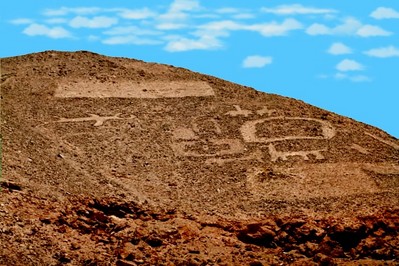 21 Apr 2006 @ 20:29, by Roni Gemma